
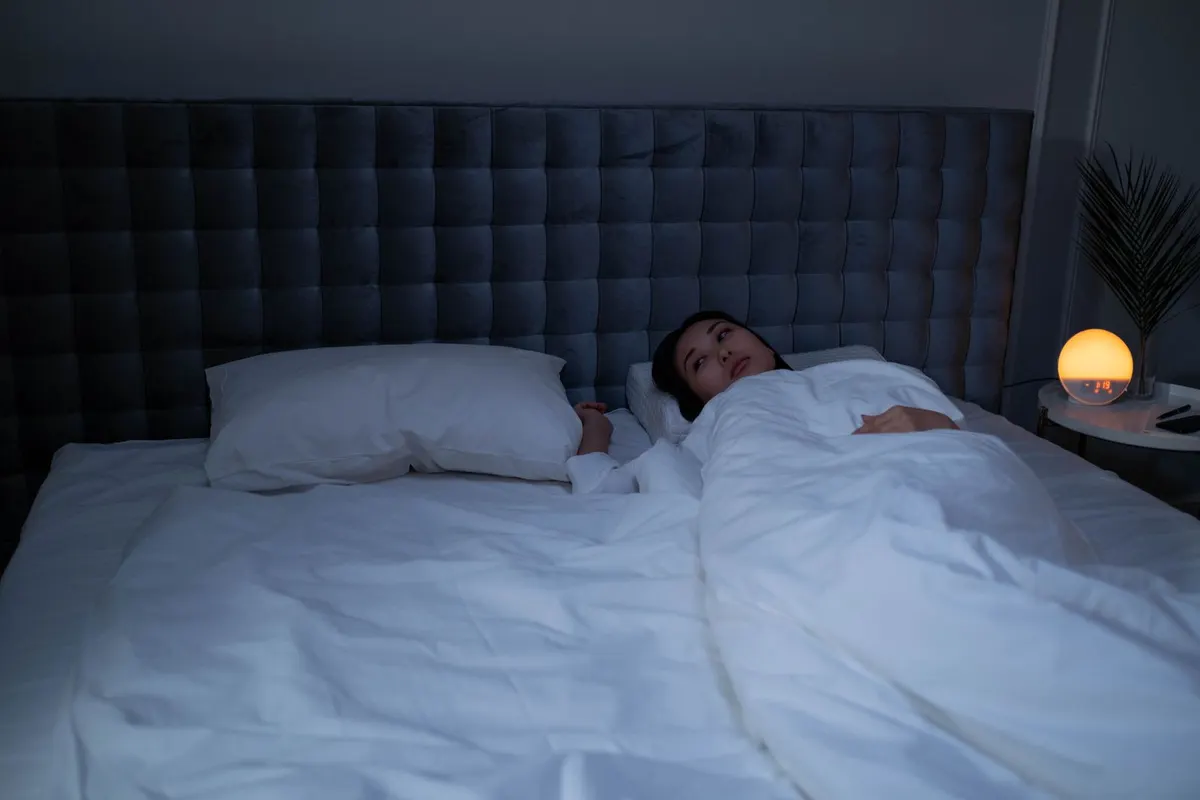
You fall asleep without much trouble. Then your eyes open, the house is silent, and the clock says 3:07. Ten minutes later you are hot, then cold, then running through tomorrow's to-do list, and sleep feels very far away. If that is your night more often than not, you are in very good company. Broken sleep is one of the most common complaints of the menopause years, and the small hours are when it shows up most.
I write Primaurea from my own experience after menopause (my story is here). During my own transition, hot flashes woke me up three times a night, and even after they eased, the 3 a.m. habit stayed for months. I am not a doctor, so this guide is a research review: every number comes from a source I read, and I link each one so you can check it yourself.
Why Do You Wake Up at 3 AM During Menopause?
There is rarely one single cause. Most 3 a.m. wake-ups come from several small things stacking up in the second half of the night:
- Lighter sleep after midnight. Deep sleep is concentrated early in the night, so the later hours are easier to wake from, and that gets more noticeable with age.
- Hot flashes and night sweats. Falling estrogen makes the body's thermostat more touchy, and a night sweat can pull you awake.
- Lower progesterone. The Office on Women's Health notes that low progesterone can make it hard to fall and stay asleep.
- Cortisol and stress. Your stress hormone naturally starts climbing toward morning, and stress during the transition can make that rise harder to sleep through.
- Bladder, alcohol and breathing. Night-time trips to the bathroom, a glass of wine in the evening or snoring can all break sleep in the early hours.
The good news is that each of these has something you can do about it. Below I go through the causes one by one, then the habits, therapy and gentle supports that help.
How Common Are Sleep Problems in Menopause?
Very common. The Study of Women's Health Across the Nation (SWAN) asked more than 12,600 women aged 40 to 55 about their sleep. In that community survey published in Menopause, 38% reported difficulty sleeping, and the rate rose to 45.4% in late perimenopause, the stretch just before periods stop for good. The researchers found that the menopause stage itself was linked to poor sleep, separate from age.
A later SWAN analysis followed about 3,000 women for seven years. It found that the odds of difficulty staying asleep rose through the menopausal transition, and that more frequent hot flashes went hand in hand with every type of sleep trouble the study measured. In other words, the 3 a.m. pattern is not in your head. It is one of the most typical sleep changes of these years.
The Office on Women's Health sums it up simply: many women in perimenopause and menopause find it hard to sleep through the night. Low progesterone can make it hard to fall and stay asleep, low estrogen can bring night sweats, and urinary symptoms can get you up several times a night. Most adults still need seven to nine hours, so those interruptions add up.
Why 3 AM, of All Times?
Sleep runs in cycles of about 90 minutes, and they are not all alike. According to the Sleep Foundation, you spend the most time in deep sleep during the first half of the night. As the night goes on, those deep stretches get shorter and more of your sleep is lighter or dream sleep. If you go to bed around 11, by 3 a.m. you have used up most of your deep sleep, and a small nudge is enough to wake you.
Age adds to this. MedlinePlus, from the US National Library of Medicine, explains in its page on aging changes in sleep that older adults spend less time in deep sleep and wake up an average of three or four times each night. They are also more aware of being awake. Waking briefly is normal at any age; what changes is that you notice it, and it gets harder to drift back off.
Then there is your body clock. Cortisol, the main stress hormone, follows a daily rhythm. MedlinePlus notes that cortisol levels are normally at their highest in the morning and much lower by late afternoon. That morning peak does not appear out of nowhere at 7 a.m.; it builds in the early hours to help you wake up. Lighter sleep, a rising wake-up signal and a body that runs warmer than it used to: that is why 3 a.m. is such a common time to find yourself staring at the ceiling.
Do Night Sweats Wake You, or Does Waking Bring the Hot Flash?
It works both ways, and that surprised me when I read the research. In a sleep-lab study published in the journal Sleep, researchers recorded more than 500 night-time hot flashes in women in the menopausal transition or after menopause. About half of the hot flashes (51.1%) came with an arousal or awakening. Hot flashes were less likely to wake a woman during deep sleep or dream sleep, and older women were more likely to be woken by them.
A second study in the Journal of Clinical Sleep Medicine looked at the timing more closely in 28 women whose menopause was brought on with medication. Of the hot flashes recorded overnight, 66% happened within five minutes of an awakening, most of them just before or during it. So sometimes the heat wakes you, and sometimes you wake first and then notice the flush. Either way, a cooler bedroom and calmer wake-ups help.
If night sweats are a big part of your picture, my guide to hot flashes after 50 goes through the triggers and what helps, step by step.
What Role Do Cortisol and Stress Play?
A bigger one than most of us were told. The Seattle Midlife Women's Health Study measured overnight cortisol in 132 women over many years of the transition. The researchers found that overnight cortisol levels were linked to the shifting menopause hormones and to the body's other stress hormones, epinephrine and norepinephrine.
Put simply, the hormone changes of menopause and the body's stress system move together. Add the life stage itself, with grown children, aging parents and work all pulling at you, and it is easy to see why a busy mind switches on in the quiet of 3 a.m. That racing-thoughts feeling is the part many women tell me bothers them most. For the bigger hormonal picture, my article on hormonal balance after menopause explains how estrogen, progesterone and cortisol fit together.
What Else Can Wake You Up After 50?
Before blaming hormones for everything, it is worth checking a few other common causes. They are often easy to fix once you spot them.
- Your bladder. The Office on Women's Health notes that many menopausal women get urinary symptoms that wake them to use the bathroom, and that these are not a normal part of aging and can be treated.
- An evening drink. MedlinePlus says alcohol at bedtime may make you sleepy but can wake you up later in the night. The Sleep Foundation explains that alcohol leads to lighter sleep and more awakenings, and suggests avoiding it in the three to four hours before bed.
- Caffeine. Coffee, tea, cola and chocolate count. MedlinePlus advises avoiding them for at least three to four hours before bed; many women do better stopping by early afternoon.
- Snoring. The Sleep Foundation reports that sleep apnea affects about a quarter of women in the years before menopause and more than a third in the years after. Loud snoring, waking up gasping or morning headaches deserve a proper check.
- Restless legs, pain or medicines. An urge to move your legs at night, joint aches or a medicine taken late in the day can all play a part. Ask your doctor or pharmacist whether any of your medicines affect sleep.
What Helps You Sleep Through the Night?
Habits will not erase every wake-up, but they make the wake-ups shorter and less frequent. These are the ones recommended by MedlinePlus, the Office on Women's Health and the Sleep Foundation, and the ones that made the biggest difference for me:
- Keep the bedroom cool, dark and quiet. A fan, layered bedding you can kick off and breathable cotton nightwear help with night sweats. Keep a glass of ice water by the bed.
- Same bedtime, same wake time. Weekends included. A steady schedule strengthens your body clock, which tends to weaken after menopause.
- Move during the day, not late at night. Regular exercise is one of the best ways to sleep better, but finish workouts at least three hours before bed.
- Skip long daytime naps. They take the edge off your sleep drive at night.
- Dim the screens. Bright light from a phone or tablet tells your brain to wake up. Leave them out of the bedroom if you can.
- Build a wind-down routine. A warm shower, a few pages of a book, a cup of caffeine-free herbal tea and slow breathing signal that the day is over.
- Watch the evening glass of wine. If you notice more 3 a.m. wake-ups after drinking, you have found one of your triggers.

Food matters too. A light snack is fine, but a big meal late in the evening can keep you up, and spicy dishes are a common hot flash trigger. My guide to the best foods to ease menopause symptoms has a simple day of eating that works well with better sleep.
What Should You Do When You Wake Up at 3 AM?
What you do in the first few minutes decides whether you are back asleep in ten minutes or awake until dawn. This is the routine I use, built on the advice from MedlinePlus and the Office on Women's Health:
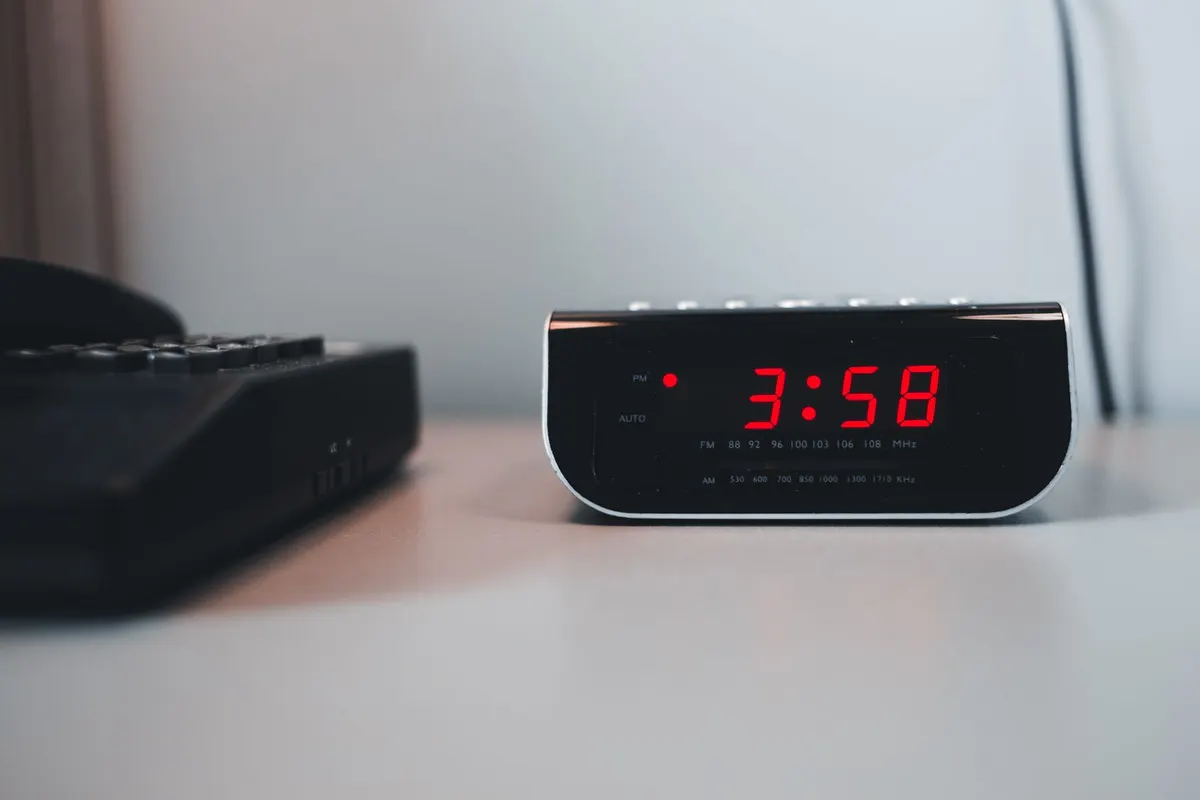
- Step 1: Do not check the clock. Knowing it is 3:12 starts the mental math of how many hours are left. Turn the clock away from the bed.
- Step 2: Cool down first. If you are hot, push the covers back, sip ice water and let the flush pass before trying to sleep.
- Step 3: Breathe slowly. The Office on Women's Health suggests slow, deep breaths when a hot flash starts; they tell your body it is time to relax and may make the flash shorter.
- Step 4: Use the 20-minute rule. MedlinePlus advises that if you cannot fall asleep after about 20 minutes, get out of bed and do something quiet, such as reading or listening to music, then go back when you feel sleepy.
- Step 5: Keep the light low and the phone away. A dim lamp is fine; scrolling is not.
- Step 6: Park the to-do list. Keep a notepad by the bed and write the worry down so your mind does not have to hold it until morning.
Does Therapy for Insomnia Work in Menopause?
Yes, and it is one of the most effective tools there is. Cognitive behavioral therapy for insomnia (CBT-I) is a short, structured program that retrains your sleep habits and the thoughts that keep you awake. The American College of Physicians recommends CBT-I as the first treatment for chronic insomnia in adults, and the National Heart, Lung, and Blood Institute describes it as a 6- to 8-week plan that can be done in person, by phone or online.
It has been tested in women like us. In a randomized trial in JAMA Internal Medicine, 106 perimenopausal and postmenopausal women with insomnia and daily hot flashes had six phone sessions over eight weeks. Insomnia scores fell by 9.9 points in the CBT-I group, compared with 4.7 points in a group that received menopause education. If your sleep has been poor for months, ask your doctor about CBT-I; it pairs well with everything else on this page.
Can a Supplement Help You Stay Asleep?
Many women like to add a gentle nightly support on top of good habits, and that can be a comfortable part of a routine. The National Center for Complementary and Integrative Health (NCCIH) has a useful overview of supplements and sleep, including a 2021 review suggesting magnesium may help older adults with insomnia fall asleep faster. It also reminds us that supplements can interact with medicines, so the one rule is to run any product by your doctor or pharmacist first. These are the two formulas readers ask me about most for menopause sleep, and they work on different sides of the 3 a.m. problem.
Yu Sleep: low-dose drops for staying asleep
Editor's pick for 3 a.m. wake-ups
Yu Sleep is the formula built most directly for this exact problem. It is a liquid you hold under your tongue about 30 minutes before bed, with just 0.9 mg of melatonin per serving. That is a deliberately small dose: the Sleep Foundation says most adults are advised to start with 0.5 to 1 mg, and that older adults should use the lowest dose that works. Around it sit tart cherry, magnesium glycinate, L-theanine, GABA, lemon balm, apigenin (the compound behind chamomile tea's reputation) and 5-HTP, plus vitamins B2 and B6.
What I like is the logic: a gentle "it is night" signal for the body clock, and calming ingredients for the racing mind that shows up in the small hours. There are no pills to swallow, and every package comes with a 60-day money-back guarantee, which covers the two months of nightly use the maker suggests. I looked at the full label in my Yu Sleep review.
MenoRescue: daytime support for the cortisol side
MenoRescue works earlier in the day and on a different thread of the story. It is a two-capsule daily formula built around cortisol and menopause balance, with Sensoril ashwagandha (125 mg), a caffeine-free green tea phytosome, sage leaf, rhodiola, schisandra, red clover, black cohosh and chaste berry. Every dose is printed on the label, and it is vegan and free of the most common allergens.
It is a natural fit if your sleep trouble comes with daytime stress, hot flashes and mood swings, the pattern I described in the cortisol section above. Each package is covered by a 180-day money-back guarantee, one of the longest I have seen. You can read how I scored it in my MenoRescue review.
How to choose: if your main complaint is waking in the night and not getting back to sleep, Yu Sleep is aimed squarely at that. If the nights are part of a wider picture of stress, hot flashes and mood during the day, MenoRescue covers more of that ground. If you would like to use both, show both labels to your pharmacist first. For more options by symptom, see my guide to menopause supplements.
When Should You See a Doctor About Menopause Insomnia?
The Office on Women's Health encourages women to talk to their provider about sleep problems, because they can sometimes point to something more serious, and treating hot flashes usually improves sleep too. Book an appointment if:
- Poor sleep has gone on for weeks and is affecting your days, your mood or your driving.
- You snore loudly, wake up gasping or have morning headaches, which can point to sleep apnea.
- Night sweats are frequent and severe. Hormone therapy and some non-hormonal medicines can help, and your doctor can tell you whether they suit you.
- You feel low, anxious or hopeless. MedlinePlus notes that sleep problems are a common symptom of depression, and depression can be treated.
- You need to get up to urinate several times a night.
- You take several medicines and want to check whether one of them is keeping you awake.
One more point from MedlinePlus: older adults respond differently to sleep medicines, so talk with your provider before taking any sleeping pill, and use prescribed ones only as directed. For a wider look at sleep, energy and health in this decade, my healthy aging after 50 guide is a good next read.
The Bottom Line on Menopause and 3 AM Wake-Ups
Waking at 3 a.m. during menopause is common, and it makes sense once you see the pieces: lighter sleep in the second half of the night, hot flashes, a cortisol rhythm that is already turning toward morning, and a few everyday triggers like an evening drink or a full bladder. Start with a cool bedroom, a steady schedule and a calm plan for the moment you wake up. If sleep has been poor for a while, ask about CBT-I. And if you would like a gentle nightly support, Yu Sleep is built for exactly these wake-ups, while MenoRescue covers the stress and hormone side during the day. Small, steady changes are what bring the full nights back.
Frequently Asked Questions
Why do I wake up at 3 AM every night during menopause?
Usually it is several things at once. Deep sleep is concentrated in the first half of the night, so by 3 a.m. your sleep is lighter and easier to break. Hot flashes and night sweats, lower progesterone, a cortisol rhythm that starts rising toward morning, a full bladder or an evening drink can all tip you awake in those lighter hours.
Is waking up at 3 AM a sign of high cortisol?
Not necessarily. Cortisol naturally builds in the early hours and peaks in the morning, so some rise at that time is normal. Research from the Seattle Midlife Women's Health Study linked overnight cortisol to the shifting menopause hormones and to other stress hormones, which helps explain why stress makes 3 a.m. wake-ups more likely. Only a test ordered by your doctor can tell you whether your cortisol is actually high.
How long do menopause sleep problems last?
It varies a lot from woman to woman. Sleep difficulties are most common in late perimenopause, when they affected 45.4% of women in the SWAN survey, and night sweats can continue for years after the last period. The good news is that habits, CBT-I and treatment of hot flashes can improve sleep at any stage, so there is no need to simply wait it out.
What is the best way to fall back asleep at 3 AM?
Keep the lights low and do not check the clock or your phone. Cool down if you are hot, sip some ice water and take slow, deep breaths. If you are still awake after about 20 minutes, get up and do something quiet, such as reading, then return to bed when you feel sleepy. Writing down whatever is on your mind can also help you let go of it.
Does melatonin help with menopause insomnia?
Melatonin can help some women, especially at a low dose. The Sleep Foundation says most adults are advised to start with 0.5 to 1 mg and that older adults should use the lowest dose that works. Yu Sleep, for example, uses 0.9 mg along with calming ingredients such as tart cherry, magnesium glycinate and L-theanine. Check with your doctor first if you take other medicines.
Can hormone therapy help me sleep better?
For many women it can. The Office on Women's Health says menopausal hormone therapy helps relieve hot flashes and night sweats, and treating hot flashes usually improves sleep. Hormone therapy has risks as well as benefits, so it is a decision to make with your doctor, who can also suggest non-hormonal medicines if hormones are not right for you.
Can I take Yu Sleep and MenoRescue together?
They work at different times of day: Yu Sleep is taken as drops before bed and MenoRescue as two capsules during the day with food. If you would like to use both, show both labels to your doctor or pharmacist first, especially if you take any prescription medicine, so they can confirm the combination suits you.
Ready for Calmer Nights?
Visit the official website of either formula to see the full label and current offers.
Statements about dietary supplements on this page have not been evaluated by the Food and Drug Administration. These products are not intended to diagnose, treat, cure or prevent any disease. Talk with your doctor before starting a supplement, especially if you are taking medication or have a medical condition. Do not drive or operate machinery after taking a sleep supplement.