

You walk into the kitchen and forget why. You read the same paragraph twice, and by mid-afternoon the thoughts that felt sharp at breakfast have gone soft around the edges. If that sounds familiar, you are in good company, and it is a very common reason women start looking at focus formulas.
I write Primaurea from my own experience after menopause, and I am not a doctor. So I read what the National Institute on Aging, the CDC and the National Center for Complementary and Integrative Health say, and I looked at what each plant in a popular focus capsule actually is. Below you will find four everyday habits, a plain-language look at ginkgo, turmeric, lutein and green tea, and where a daily capsule such as VapoCept can sit beside them.
Why Does Focus Feel Different After 50?
The National Institute on Aging describes cognitive health as the ability to think, learn and remember clearly, and says that many factors contribute to it, from genes to the environment to lifestyle. You cannot change the genes, but the same page makes an encouraging point: there are steps you can take, and these small changes can add up when you make them part of your routine.
Sleep is a good place to look first. The CDC lists better attention and memory among the benefits of sleep. If hot flashes or 3 a.m. wake-ups are chopping up your nights, my guide on menopause and sleep walks through what helps, and my piece on hormonal balance after menopause covers the bigger picture.

Which Everyday Habits Support Focus After 50?
The National Institute on Aging page points to a handful of habits again and again. These are the four that fit most easily into an ordinary week.
1. Protect your sleep
The CDC recommends 7 to 9 hours a night for ages 61 to 64 and 7 to 8 hours from age 65, and 7 or more hours for adults up to 60. The National Institute on Aging puts it at generally seven to nine hours each night. A regular bedtime and a screen-free last half hour are small changes that make that number easier to reach.
2. Keep moving
The National Institute on Aging notes that federal guidelines recommend at least 150 minutes (2.5 hours) of physical activity a week, and that walking is a good start. It also describes a randomized trial in which exercise increased the size of a brain structure important to memory and learning, while adding that more research is needed. A ten-minute walk after lunch is a friendly way to begin. My guide to weight gain after 50 has more on walking and strength work.

3. Keep your mind busy with something new
In one study the institute cites, older adults who learned quilting or digital photography had more memory improvement than those who only socialized or did less demanding activities. Learning a new craft, a language or a card game gives your attention something enjoyable to work on, and the institute also says that staying engaged in meaningful activities may have important cognitive benefits.
4. Stay connected
In the Health and Retirement Study, which analyzed data from more than 7,000 participants age 65 and older, high social engagement, such as visiting with neighbors and volunteering, was associated with better cognitive health in later life. A weekly walk with a friend covers habits two and four at once.
Food counts too. The institute describes a healthy, balanced diet as fruits and vegetables, whole grains, lean meats, fish and poultry, and low-fat or nonfat dairy. My list of best foods to ease menopause symptoms has easy ideas, and if appetite swings are part of your afternoon slump, see why you are always hungry after 50.
What Are Ginkgo, Turmeric, Lutein and Green Tea?
These are the plants you will see on most focus labels, and VapoCept brings all of them into one daily capsule. Here is what each one is, in plain language.
Ginkgo
Ginkgo biloba is a tree that NCCIH calls a "living fossil," and its leaf extract is the form most often sold as a dietary supplement. It has a long history in Chinese medicine, and today it is marketed for brain health. NCCIH says it is still uncertain whether ginkgo affects cognitive performance in healthy people and that much of the research is of low quality, so I treat it as a well-known botanical with science that is still catching up.
Turmeric
Turmeric is a plant in the ginger family, grown mainly in Southeast Asia and India. Curcumin, a major component of the root, gives the spice its yellow color, and Chinese, Ayurvedic and Thai traditions have used it for generations. NCCIH notes that researchers do not yet know enough to draw conclusions about it, which is why I look at it as a kitchen favorite that is now also sold as a concentrated root extract.
Lutein from marigold flowers
Lutein is a plant pigment, and in VapoCept it comes from marigold flower extract standardized to 5% lutein, a detail the label spells out clearly. It sits on the ingredient list right next to ginkgo and turmeric.
Green tea
Green tea comes from the Camellia sinensis plant, the same plant as black and oolong tea, and its leaves are steamed, pan fried and dried but not fermented. NCCIH mentions catechins and caffeine among its components. In VapoCept the green tea extract is standardized to 98% polyphenols, 80% catechins and 50% EGCG, the best-known catechin in green tea.
A bamboo leaf extract, standardized to 70% silica, rounds out the formula.
What Does a Simple Day for Steadier Focus Look Like?
You do not need to change everything at once. Here is one way to spread the habits across a normal day:
- Morning: a glass of water, breakfast with some protein and a ten-minute walk outside.
- Midday: a proper lunch away from your screen, and one real conversation with a friend or neighbor.
- Afternoon: a cup of green tea, then twenty minutes on something that makes you think, such as a crossword, a recipe you have never tried or a chapter of a book.
- Evening: dinner at the table, then a calmer last hour so you can aim for the 7 to 9 hours the CDC suggests for your age.
Give it two or three weeks before you judge. If one change feels easy, keep it and add another.
Where Can a Daily Focus Capsule Fit In?
Sleep, movement, good company and a curious mind come first, and no capsule takes their place. Some readers like to add one plant-based supplement to the routine, and if you are one of them, the label is the place to start. The one I have on Primaurea for this is VapoCept.
VapoCept: five plant extracts in one capsule
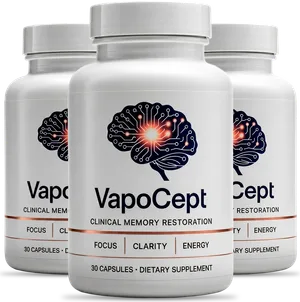
VapoCept is a once-daily capsule, 30 per bottle, and its label says it supports focus and mental clarity. It combines ginkgo leaf extract, turmeric root extract, marigold flower extract with lutein, green tea leaf extract and bamboo leaf extract. It is made in the USA in an FDA-registered facility, and the full label lists every ingredient.
You take 1 capsule a day with a glass of water (8 oz), ideally 20 to 30 minutes before a meal, and keep the bottle in a cool, dry place away from heat and light. On the official order page on October 19, 2026, two bottles were $158 ($79 each, plus $9.99 shipping), three bottles were $207 ($69 each, free US shipping) and six bottles were $294 ($49 each, free US shipping). It is a one-time payment with no autoship, and every order comes with a 60-day money-back guarantee. As the label advises, ask your physician first if you are pregnant, nursing, under 18 or have a medical condition. I go through the details in my VapoCept review.
Prices are in US dollars, as listed on the official site on October 19, 2026, and may change.
Ginkgo, Turmeric and Green Tea After 50: My Verdict
Start with what you control tonight: a regular bedtime, a walk tomorrow, something new for your mind to chew on and a plan to see a friend. Those four steps are free, and each one makes the next easier. Give them a few weeks of steady effort before you decide how you feel.
If you would like one plant-based capsule alongside those habits, read the VapoCept label first and keep the habits going next to it. My healthy aging after 50 guide brings sleep, movement and everyday habits together in one place.
Frequently Asked Questions
What do ginkgo, turmeric and green tea have in common in a focus capsule?
They are three familiar plants that many focus formulas combine. Ginkgo is a tree whose leaf extract is sold as a supplement, turmeric is a root in the ginger family and green tea comes from the same plant as black tea. VapoCept adds marigold lutein and bamboo leaf extract to the mix.
Can a supplement improve focus after 50?
NCCIH says it is uncertain whether ginkgo affects cognitive performance in healthy people, so a supplement works best as an extra layer on top of good habits. Sleep, regular movement, a mind that keeps learning and time with friends are the places the National Institute on Aging points to first.
How much sleep do I need for better focus after 50?
The CDC recommends 7 to 9 hours for ages 61 to 64 and 7 to 8 hours from age 65, with 7 or more hours for adults up to 60. It lists better attention and memory among the benefits of sleep.
What helps focus besides supplements?
The National Institute on Aging mentions regular physical activity (at least 150 minutes a week under federal guidelines), learning something new, staying socially connected, a balanced diet and enough sleep.
What is in VapoCept?
VapoCept is a once-daily capsule with ginkgo leaf extract, turmeric root extract, marigold flower extract standardized to 5% lutein, green tea leaf extract (50% EGCG) and bamboo leaf extract (70% silica). It is made in the USA in an FDA-registered facility.
How do I take VapoCept?
Take 1 capsule a day with a glass of water (8 oz), ideally 20 to 30 minutes before a meal. Each bottle holds 30 capsules, a 30-day supply, and it keeps best in a cool, dry place away from heat and light.
How much does VapoCept cost?
On October 19, 2026, VapoCept was $158 for two bottles (plus $9.99 shipping), $207 for three and $294 for six, which works out to $49 a bottle with free US shipping on the six-bottle option.
Is there a subscription or a guarantee with VapoCept?
There is no subscription: the official checkout is a one-time payment with no autoship. Every order also comes with a 60-day money-back guarantee.
Want to See the Label for Yourself?
Visit the official website to read the full label and see the current offer.
Statements about dietary supplements on this page have not been evaluated by the Food and Drug Administration. This product is not intended to diagnose, treat, cure or prevent any disease.