
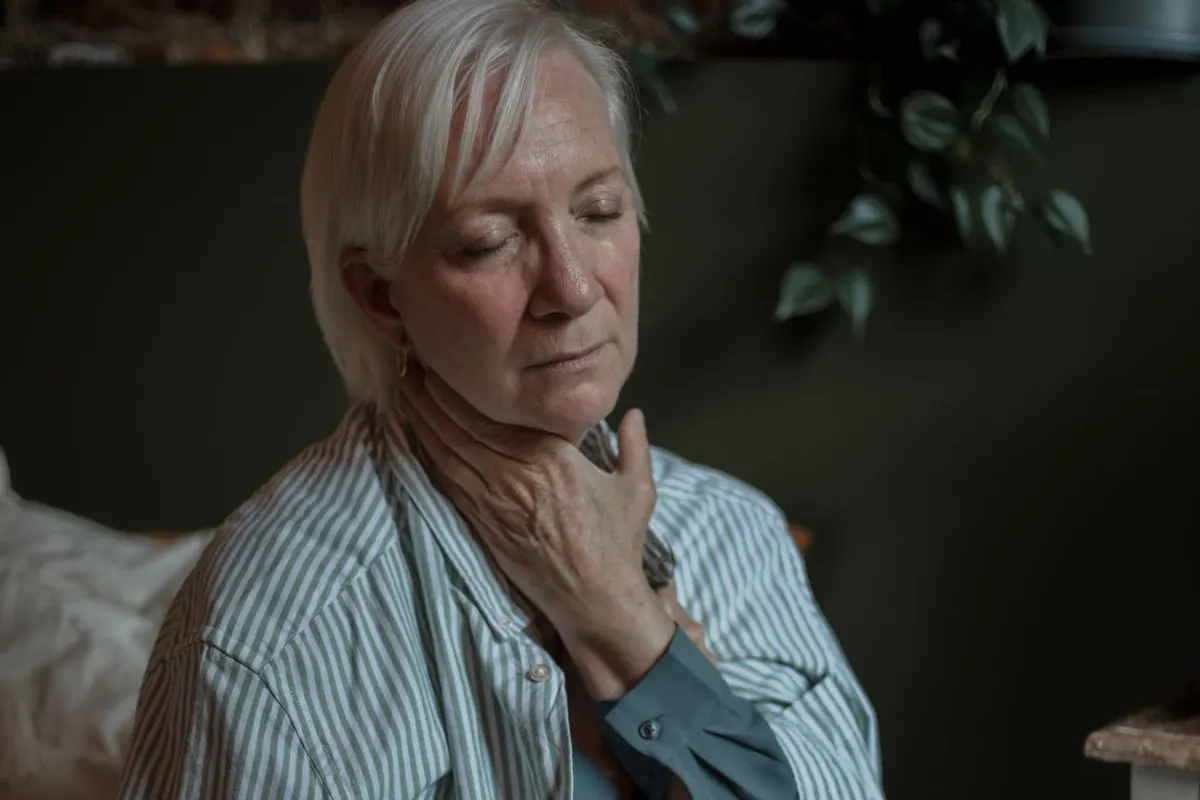
Hot flashes were part of my own menopause transition, and at my worst they woke me three times a night. When I went looking for real answers, I found a lot of noise and very little that explained what was happening or what actually helps.
I started Primaurea after that transition (my story is here), and this guide sticks to what the National Institute on Aging, the FDA, the NIH-funded SWAN study and other official sources say: what a hot flash is, why it happens, how long it can last, what helps, and where supplements honestly fit.
What Is a Hot Flash, Exactly?
The National Institute on Aging (NIA) describes a hot flash as a sudden feeling of heat, most often in the upper body and face. Your face and neck may turn red, blotches can appear on your chest, back and arms, and heavy sweating or cold shivering can follow. Night sweats are simply hot flashes that happen while you sleep. Doctors group both under the name vasomotor symptoms.
A single episode usually passes in a few minutes. The FDA describes them as periods of sweating, flushing and chills lasting for several minutes, and says hot flashes occur in around 80% of menopausal women. The Office on Women's Health puts it a little lower, at as many as three out of four women. Either way, if you are having them, you are in the majority.
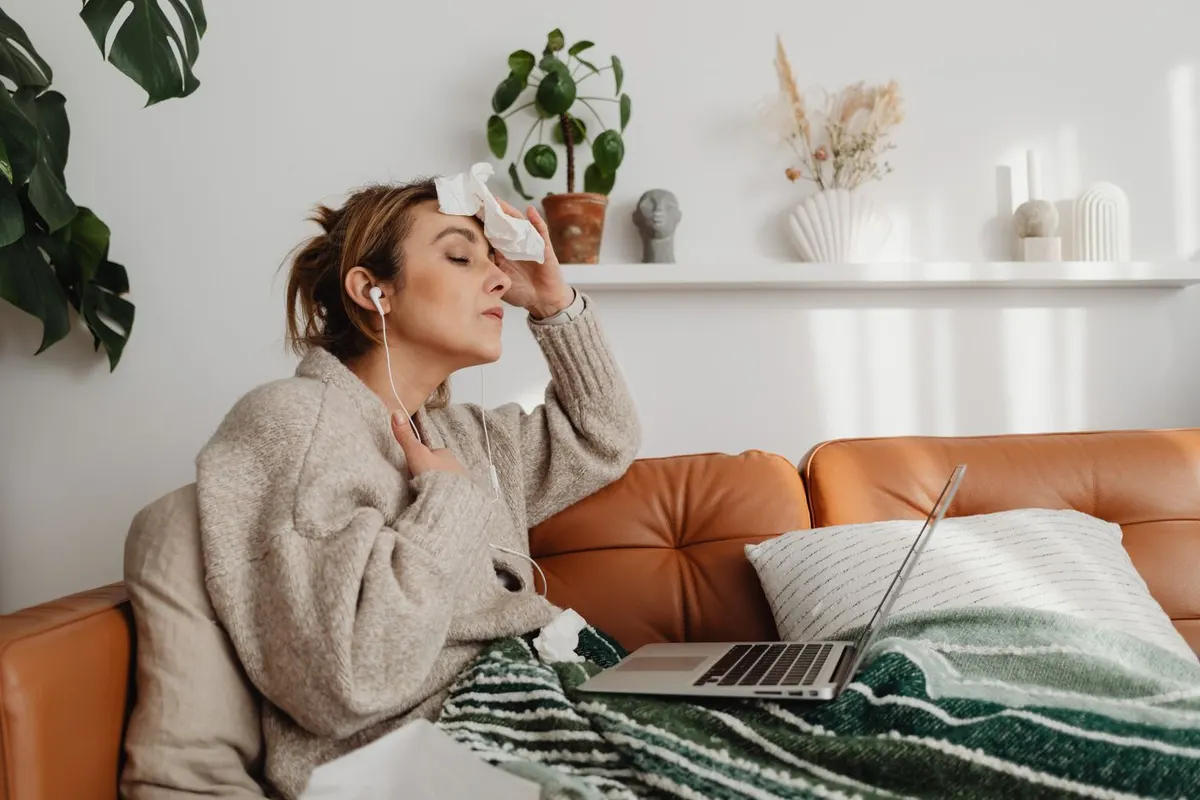
Some women barely notice them. Others get a dozen a day, or wake up drenched. The NIA points out that severity varies a lot from woman to woman, and that many women have only mild symptoms that lifestyle changes can manage.
Why Do Hot Flashes Happen After 50?
Most women begin the menopausal transition between ages 45 and 55, and the average age of menopause in the United States is 52, according to the NIA. During that transition the ovaries make less and less estrogen and progesterone, and the changing hormone levels are believed to be behind hot flashes and other menopausal symptoms.
Here is the honest part: nobody has a complete answer yet. The NIA says it is not clear why hot flashes are so common during the transition, only that they are likely related to shifting hormones. What researchers do know is that the trigger involves the brain's temperature control. The first non-hormonal drug of its kind, fezolinetant, works in the part of the brain that regulates body temperature, which is a strong clue that the body's internal thermostat becomes more sensitive as estrogen drops.
Timing matters too. The Office on Women's Health says hot flashes are most common in the year before your period stops and the year after, and that some women start having them while they still get a period. That is why a first hot flash in your late 40s, well before your period stops, is not unusual.
How Long Do Hot Flashes Last?
Longer than most of us were told. The best data comes from the Study of Women's Health Across the Nation (SWAN), an NIH-funded study that followed women through the transition for years. Among women who had frequent hot flashes or night sweats, the median total duration was 7.4 years, and symptoms lasted a median of 4.5 years after the final period.
The averages hide big differences between groups of women:
| Group in the SWAN study | Median years of frequent hot flashes |
|---|---|
| All women combined | 7.4 years |
| Began before or early in the transition | More than 11.8 years |
| Began after menopause | 3.4 years |
| African American women | 10.1 years |
| Hispanic women | 8.9 years |
| Non-Hispanic white women | 6.5 years |
| Chinese women | 5.4 years |
| Japanese women | 4.8 years |
Source: Avis et al., JAMA Internal Medicine, 2015 (SWAN). These are medians, so half of the women in each group had symptoms for longer.
The same paper found that women with higher stress, anxiety or depressive symptoms when their hot flashes began tended to have them for longer. Those are things we can sometimes work on, which is one reason I take the calming habits below seriously.
What Triggers Hot Flashes?
Hormones set the stage, but everyday things can set off an episode or make it stronger. The NIA and the Office on Women's Health both name these:
- Alcohol, caffeine and spicy food. The NIA says they can make menopausal symptoms worse.
- Stress. Listed as a possible trigger by the Office on Women's Health.
- Heat. Being in a hot place is on the Office on Women's Health list, so a warm room or heavy bedding is worth watching.
- Smoking. Quitting helps your overall health, and the NIA lists it among the steps for hot flashes too.
- Extra weight. Women who are overweight or have obesity may have more frequent and severe hot flashes, according to the NIA.
Triggers differ from person to person, so both agencies suggest writing yours down. A small notebook or a note on your phone is enough: what you ate or drank, what you were doing, how warm the room was. After a couple of weeks a pattern often shows up, and the notes are also useful when you talk to a doctor.
What Helps Hot Flashes at Home?
The NIA's advice is to try lifestyle changes before medication. None of these are glamorous, but they are free and they carry no side effects:
- Dress in layers you can take off at the first sign of heat.
- Carry a small fan and keep one by the bed.
- Cool the bedroom and layer your bedding so it can be adjusted in the night.
- Sip cold water. The NIA suggests small amounts before bed, and the Office on Women's Health suggests keeping ice water close by.
- Limit alcohol, caffeine and spicy food, especially in the evening.
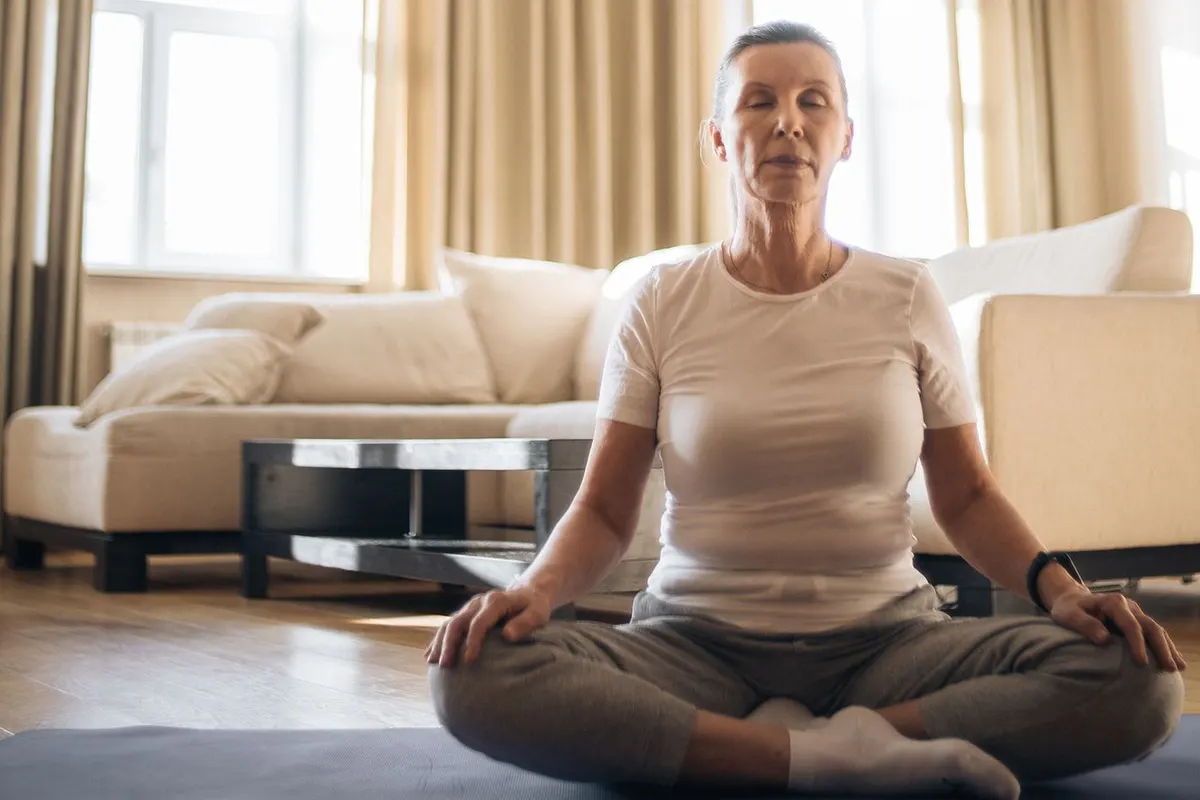
Slow breathing and other mind-body habits
The Office on Women's Health suggests taking slow, deep breaths when a hot flash starts, and says this may make it shorter. The NIA adds that early-stage research has found hypnotherapy and mindfulness meditation could help with management, and the National Center for Complementary and Integrative Health (NCCIH) reports that a hypnotherapy study it funded reduced how often women had hot flashes. The research here is still young, so I treat these as low-risk things worth trying, not guaranteed fixes.
One that did not hold up: the NCCIH says acupuncture has not been shown to work better than simulated acupuncture for hot flashes.
Movement, weight and sleep
Regular exercise is on every list. The Office on Women's Health says studies show certain exercises, such as yoga and stretching, may help improve hot flashes, and the NCCIH says yoga seems to be at least as effective as other types of exercise for menopause symptoms. Keep the harder workouts earlier in the day, because exercise too close to bedtime can keep you awake.
If night sweats are wrecking your sleep, the NIA notes that managing them may help your sleep as well. My own healthy aging guide covers the broader sleep habits, and if weight has crept up along with the heat, the slow metabolism guide explains what changes after 40.
What Medical Treatments Are Available for Hot Flashes?
If home habits are not enough, there are real options, and a lot has changed in the last few years. The NIA notes that many women do not need treatment at all, and for those who do, the choices fall into hormones and non-hormonal prescriptions.
Swipe the table sideways to see all three columns.
| Option | What it is | What the official sources say |
|---|---|---|
| Menopausal hormone therapy | Estrogen, or estrogen with progesterone, as pills, patches, gels, rings or other forms | Very effective for hot flashes in women who can use it. Carries risks, so use the lowest dose for the shortest time that works. |
| Paroxetine (Brisdelle) | An SSRI antidepressant approved by the FDA for hot flashes | Taken at a lower dose than when it is used for depression. |
| Fezolinetant (Veozah) | A non-hormonal daily pill that blocks the NK3 receptor, approved May 2023 | Carries an FDA boxed warning for rare but serious liver injury, so blood tests are required before and during treatment. |
| Elinzanetant (Lynkuet) | A non-hormonal capsule taken at bedtime, approved October 24, 2025 | Approved on three clinical studies with 1,423 participants. |
Hormone therapy: effective, with trade-offs
The NIA calls hormone therapy a very effective treatment for hot flashes in women who are able to use it, and the NCCIH calls it the most effective therapy. It can also help with vaginal dryness, sleep and bone density.
It also has risks: the NIA lists heart attack, stroke, blood clots, breast cancer, gallbladder disease and dementia, and says the risks vary with your age and whether you have had a hysterectomy. A 2002 NIH-funded study, the Women's Health Initiative, made many women wary of hormones. The NIA says later research found younger women are at less risk than that study suggested, and that the negative effects mostly affected women over 60 who were postmenopausal. Whether hormones make sense for you is a conversation about your own history, not a yes or no I can give.
Non-hormonal prescriptions
For women who cannot or would rather not take hormones, the FDA has approved fezolinetant (Veozah) for moderate to severe hot flashes. It was approved in May 2023 as the first drug of its kind, and it works in the brain's temperature-control system rather than replacing hormones. In December 2024 the FDA added its strongest warning, a boxed warning, about rare but serious liver injury. Liver blood tests are done before starting, then monthly for the first three months and again at months 6 and 9.
In October 2025 the FDA approved a second non-hormonal prescription, elinzanetant (Lynkuet), taken as two capsules at bedtime. The Office on Women's Health adds that certain antidepressants, epilepsy medicines and blood pressure medicines may help hot flashes even if you do not have those conditions. Every one of these has side effects, so this is a decision to make with a prescriber.
Do Supplements Help With Hot Flashes?
This is the question most women have, and the honest answer is: maybe a little for some women, and the science is mixed. Two NIH sources, the NIA and the NCCIH, do not paint identical pictures, so I will give you both.
- Black cohosh. The NIA lists it among products that are not proven to be effective. The NCCIH says studies have had inconsistent results, yet a 2023 review of 22 studies found black cohosh extracts potentially beneficial for overall menopause symptoms, with improvements in hot flashes.
- Soy and red clover isoflavones. The NCCIH says studies have had inconsistent results, and the NIA says phytoestrogens have not been consistently shown to work and their long-term safety is unclear.
- Flaxseed. The NCCIH says flaxseed products were no more effective than a placebo for hot flashes.
- Vitamin E. The NCCIH says the research is small and the effect is small. In one study, women taking it averaged one fewer hot flash a day.
Safety points worth knowing
- Rare cases of liver damage, some very serious, have been reported in people taking commercial black cohosh products. It is uncertain whether black cohosh caused them.
- The NCCIH says some commercial products have been found to contain the wrong herb or unlisted mixtures.
- It is uncertain whether black cohosh is safe for women who have had hormone-sensitive conditions such as breast or uterine cancer.
- Herbs and medicines can interact, so tell your doctor or pharmacist about every supplement you take.
So where does that leave a supplement? For me, as an optional add-on you try with your doctor's knowledge, not a replacement for hormone therapy or a prescription, and never something to take instead of getting an unexplained symptom checked. If you decide to try one, this is my checklist:
- Every ingredient and dose is printed on the label. A "proprietary blend" that hides amounts makes it impossible to compare with the research.
- You can look up the ingredients on NIH pages such as the NCCIH and the Office of Dietary Supplements.
- The wording is about support, not cure. Be wary of anything that promises to eliminate hot flashes.
- There is a real refund policy, because results build gradually and vary.
I have reviewed three formulas for this stage of life, each built around a different idea, and you can read the full label breakdown in my Menovelle, MenoRescue and MenoSoothe reviews. None replaces medical care, and each one lists every ingredient, so it is easy to check with your doctor:
- Menovelle, a 10-mushroom formula aimed at hormonal balance and hot flash comfort.
- MenoRescue, a cortisol-focused formula for women whose stress is making symptoms feel worse.
- MenoSoothe, built on fenugreek, black cohosh and diosgenin.
For the wider picture of ingredients, doses and what to look for, my complete menopause supplements guide goes deeper, and my guide to natural ways to support hormonal balance after menopause looks beyond hot flashes. When you are ready, each official site shows the current packages, prices and guarantee.
If night sweats are mostly costing you sleep, my Yu Sleep review covers a different kind of help. Yu Sleep is not made for hot flashes themselves; it is a low-dose sleep drop that fits into a calm bedtime routine and supports more restful nights.
When Should I See a Doctor About Hot Flashes?
The Office on Women's Health says to talk with your health care provider if any menopause symptom bothers you. You do not need to wait until they are severe. A few situations deserve a call sooner:
Book an appointment if
- Hot flashes or night sweats are disrupting your sleep or daily life.
- You have gone a full year without a period and then start bleeding or spotting. The Office on Women's Health says this could be caused by cancer or another serious health problem.
- You want to consider hormone therapy or a prescription and need to weigh your own risks.
- You take medication, or have a liver, heart or hormone-sensitive condition, and want to try a supplement.
Bring your trigger notes and a list of everything you take. The Office on Women's Health suggests discussing how much your symptoms bother you, your health risks, whether you have used hormone therapy before, and how long ago you reached menopause. The Menopause Society, which is listed as a resource on the NIA page, keeps a directory of menopause-trained providers if your usual doctor does not feel comfortable with the topic.
One more thing worth mentioning at checkups. SWAN researchers have found that hot flashes are associated with markers of higher cardiovascular risk and greater bone loss. An association does not mean hot flashes cause those problems, but it is a good reason to make sure your heart and bone health are on your doctor's radar.
What Is a Simple Four-Week Plan to Get on Top of Hot Flashes?
This is the order I wish someone had handed me, built from the sources above. Give each step a full week before you judge it.
- Week 1, notice. Write down every hot flash, what came before it, and how much it bothered you.
- Week 2, cool down. Layer your clothes and bedding, add a fan, cool the bedroom, and move your last coffee and glass of wine earlier.
- Week 3, calm down. Add slow breathing for a few minutes twice a day, plus a walk or stretching session earlier in the day.
- Week 4, decide. Look at your notes. If you are still bothered, book the appointment and bring them.
Hot flashes are common, they are real, and for many of us they last longer than expected. The good news is that the options are better today than they were even three years ago. You do not have to just wait it out.
Frequently Asked Questions
How long do hot flashes last after menopause?
It varies widely. In the NIH-funded SWAN study, women with frequent hot flashes had them for a median of 7.4 years in total, and they continued for a median of 4.5 years after the final period. Women who started having them before or early in the transition had them the longest, with a median of more than 11.8 years.
Are hot flashes and night sweats the same thing?
Yes, in effect. The National Institute on Aging explains that when hot flashes happen at night they are called night sweats. Doctors group both under the term vasomotor symptoms, and they usually have the same cause and the same treatment options.
What triggers hot flashes?
Hormone changes set the stage, but alcohol, caffeine, spicy food, stress and being in a hot place can set off or worsen an episode. The NIA also says women who are overweight or have obesity may have more frequent and severe hot flashes. Writing down your own triggers for a couple of weeks helps you see your pattern.
Can hot flashes start before menopause?
Yes. The Office on Women's Health notes that some women begin having hot flashes before menopause, while they still get a period. They are most common in the year before the period stops and the year after.
Does hormone therapy help hot flashes?
The NIA calls menopausal hormone therapy a very effective treatment for hot flashes in women who can use it. It also carries risks, including blood clots, stroke and breast cancer, that vary with age and health history, so the NIA advises the lowest dose for the shortest time that works, chosen with a doctor.
Is there a non-hormonal prescription for hot flashes?
Yes. The FDA has approved paroxetine (Brisdelle), fezolinetant (Veozah, approved in May 2023) and elinzanetant (Lynkuet, approved in October 2025) for hot flashes. Veozah carries a boxed warning for rare but serious liver injury and requires liver blood tests. Ask a prescriber whether one fits your health history.
Do supplements for hot flashes work?
The evidence is mixed. The NIA says black cohosh, DHEA and soy isoflavones are not proven to be effective and some carry risks such as liver damage. The NCCIH reports inconsistent results for black cohosh and soy, although a 2023 review of 22 studies found black cohosh extracts potentially beneficial for hot flashes. Talk with your doctor or pharmacist before taking any herb or supplement.
Are hot flashes a sign of a health problem?
Hot flashes are a normal part of the menopausal transition for most women. SWAN researchers have found that they are associated with markers of higher cardiovascular risk and greater bone loss, which does not mean they cause those problems, but is a good reason to mention them at checkups. See a provider promptly if you bleed or spot after a full year without a period.
Ready to See the Official Pages?
Each official site shows the current packages, prices and guarantee.
Statements about dietary supplements on this page have not been evaluated by the Food and Drug Administration. These products are not intended to diagnose, treat, cure or prevent any disease. Talk with your doctor before starting a supplement, especially if you are taking medication or have a medical condition.