
The scale barely moves, yet your jeans close a little differently around the waist, and the weeks that feel the most stressful seem to leave the most behind. Many of us notice this after menopause, and cortisol gets blamed more often than it gets explained. I am a writer, not a clinician, so I stayed with what the research and the federal health sites actually say about cortisol, stress and fat around the middle. Below is what I found, a way to measure your own waist and the habits I would start with.
What Is Cortisol and Why Does It Matter for Your Waist?
MedlinePlus describes cortisol as a steroid hormone made by the adrenal glands. It plays a role in how your body handles fats, carbohydrates and protein, in blood pressure, in immune function and in the stress response, and its level changes through the day. Nothing about that is bad: cortisol is part of how your body gets through a hard day.
The trouble is not a single stressful moment. The National Institute of Mental Health points out that stress can be short or can happen again and again over a long time, and that when it lingers it can affect sleep, the immune system, digestion and the heart. That is the stress I mean here: the background kind that does not switch off when the day ends.
Does Stress Really Add Belly Fat After 50?
One of the best-known studies on this was small and had a clear design. Researchers put 59 healthy premenopausal women through three stress sessions and one rest session over four days. Thirty of the women had a high waist-to-hip ratio, meaning more of their fat sat around the middle, and 29 had a low one. The women with more central fat released significantly more cortisol in the first stress session. Among lean women, those with the higher ratio kept releasing more cortisol on days two and three, even after the tasks were familiar.
Two cautions keep me honest. The women were premenopausal, and a study that compares two groups at one moment cannot prove which came first. The authors only say that stress-induced cortisol may contribute to central fat. I read it as a useful clue: the way your body reacts to stress and where it keeps fat seem to be connected.
After menopause there is a second push in the same direction. The National Institute on Aging notes that your waist could get larger, with less muscle and more fat, and a study that followed 156 women through the transition found more visceral fat only in those who became postmenopausal. I walk through that study in my weight gain after 50 guide. Stack the two and a stressful stretch can feel like it lands right on your waistline.

How Can You Measure Belly Fat at Home?
Start with the cheapest tool you own. The National Heart, Lung, and Blood Institute explains that if most of your fat is around your waist rather than your hips, your risk for heart disease and type 2 diabetes is higher, and that a waist circumference above 35 inches for women increases it. To measure, stand, place a tape measure around your middle just above your hipbones and read it right after you breathe out.
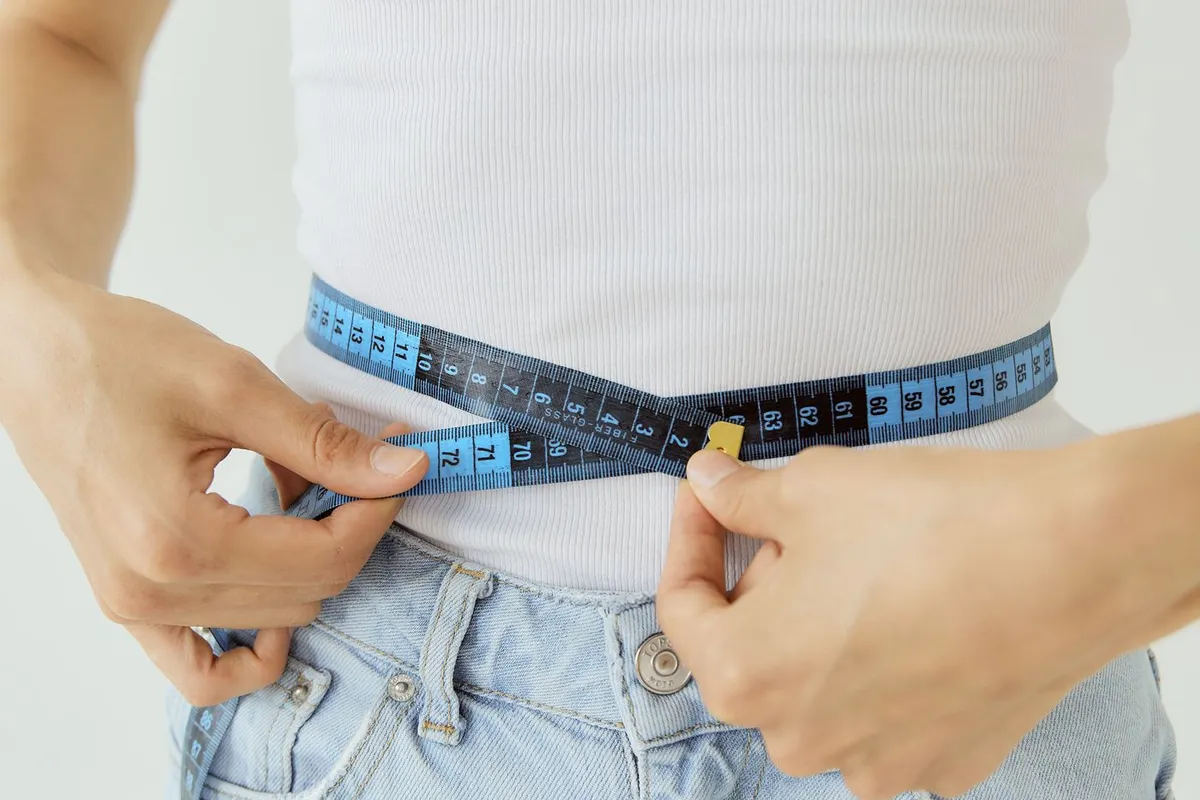
Write the number down once a month, at the same time of day, and ignore the days in between. A waist that slowly shrinks while the scale hardly moves is a good sign that you are keeping muscle and losing the fat that matters. It also takes the pressure off the daily weigh-in, which is a stress of its own.
What Calms the Stress Side Without a Big Overhaul?
The NIMH list of ways to cope with stress is refreshingly ordinary: keep a journal, try deep breathing or another relaxation exercise, exercise and eat regular, healthy meals, stick to a sleep routine, go easy on caffeine and reach out to friends or family who help you cope. Nothing on it costs money, and each item happens to be good for your waist as well.

Four habits I would begin with
- A walk after your busiest hour. Ten or fifteen minutes outdoors gives the stress somewhere to go before it follows you to the couch.
- A fixed end to the evening. Same lights-out window, phone out of the bedroom. When night sweats or early waking cut your sleep short, my menopause and sleep guide covers that side.
- Meals at regular times. A protein and a plant at each one keeps the afternoon craving smaller, and the always hungry after 50 guide shows what a steady day of eating looks like.
- Strength work twice a week. Muscle is what you want more of around a changing waist, and the weight gain guide above has a simple plan.
If you are curious about stress-focused supplements, I looked at five studies in my ashwagandha for women over 50 guide, and my hormonal balance guide covers the wider picture.
How Can You Track Belly Fat Beyond the Scale?
A tape measure shows the waist, but not what is changing inside the number. That is where a body-composition scale can help. Instead of weight alone, it estimates body fat, muscle and visceral fat, so weeks of better sleep and more walking may show up as a trend even when the weight stays put. On Primaurea, that role goes to the Hume Body Pod.
Hume Body Pod: a hand-grip scale that follows fat and muscle
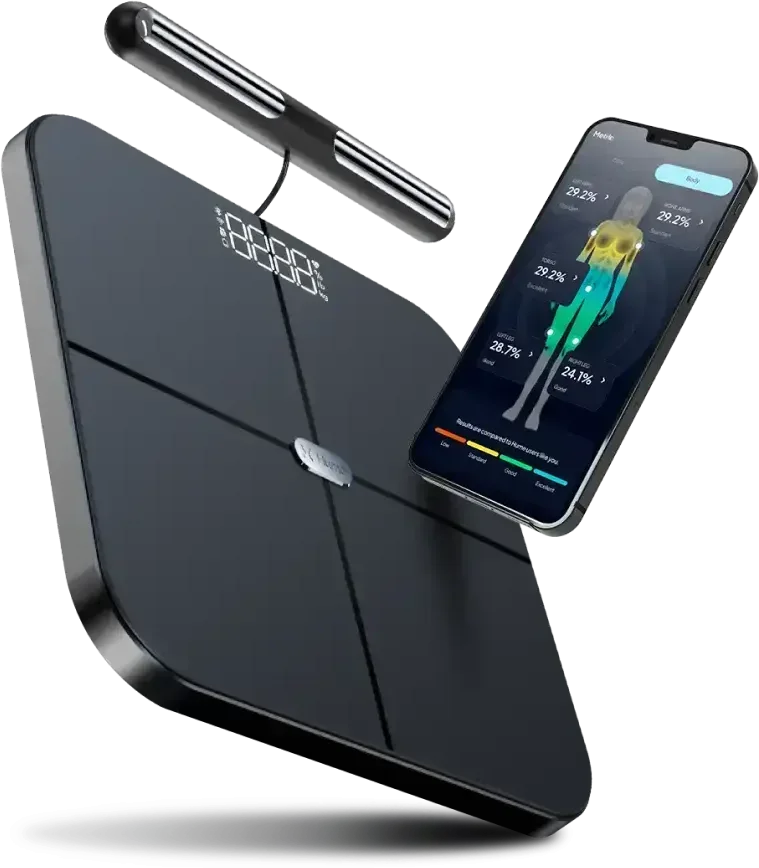
You stand on the foot plates, hold the grip and the readings land in the Hume app. Among its metrics, Hume lists body fat, muscle mass, visceral fat and fat percentage for the trunk, with trend graphs that show changes over weeks and months. These are estimates, so the best habit is to step on at the same time each morning and read the trend, not any one day. As Hume's official page advises, anyone with a pacemaker should check with their doctor first.
The Hume Body Pod costs $229 with free shipping, and it comes with a 45-day return window on devices bought directly from Hume and a 1-year warranty. I go through the readings and the app in my Hume Body Pod review.
Does a Gut-Support Capsule Belong in This Routine?
I would not promise that a capsule changes your cortisol, and SlimTide does not claim to. It is built for the gut side of weight, and some readers like it as a small daily anchor next to the habits above. The research on the gut and weight is in my gut health after 50 guide.
SlimTide: one capsule a day with prebiotics and probiotics
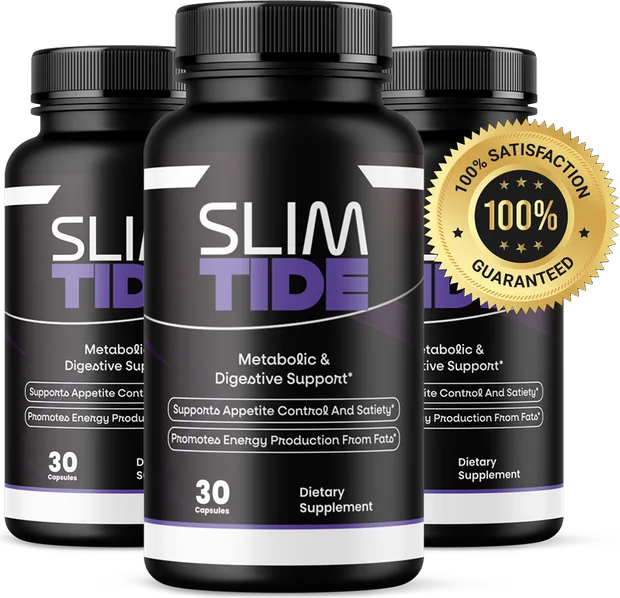
SlimTide is one vegetarian capsule a day, built around two prebiotic fibers (chicory root inulin and potato resistant starch) and three probiotic strains, Akkermansia muciniphila among them. Each bottle holds a month of capsules, there is no subscription and a 60-day money-back guarantee covers every order. The six-bottle option comes to $49 a bottle with free US shipping. The official page asks anyone who is pregnant, nursing, under 18 or living with a medical condition to show the label to a doctor first. My SlimTide review has the full details.
Cortisol and Belly Fat After 50: My Verdict
Belly fat after 50 has more than one cause, and stress is one of the few you can work on today. A walk, a steadier evening and a monthly waist measurement cost nothing and give you real numbers. If you want a closer look at fat and muscle, a body-composition scale like the Hume Body Pod turns those weeks of effort into a trend you can see, and a daily gut-support capsule like SlimTide can sit beside the routine.
My slow metabolism after 40 guide puts these pieces together and shows where to go next.
Frequently Asked Questions
What is cortisol and what does it do?
MedlinePlus describes cortisol as a hormone made by the adrenal glands. It plays a role in how the body handles fats, carbohydrates and protein, in blood pressure, in immune function and in the stress response, and its level changes through the day.
Does stress cause belly fat after 50?
Research suggests a link, not a proven cause. In a study of 59 premenopausal women, those with more fat around the middle released more cortisol during repeated stress tasks, and the authors say stress-induced cortisol may contribute to central fat. After menopause, changes in estrogen and muscle can add to the effect.
What waist size is considered a concern for women?
The National Heart, Lung, and Blood Institute says a waist circumference above 35 inches for women increases the risk of heart disease and type 2 diabetes when fat sits mostly around the waist. Measure just above your hipbones, right after you breathe out.
How can I lower stress without supplements?
The National Institute of Mental Health suggests keeping a journal, trying deep breathing or other relaxation exercises, exercising, eating regular healthy meals, sticking to a sleep routine, limiting excess caffeine and reaching out to friends or family.
Does menopause cause belly fat?
The National Institute on Aging notes that your waist could get larger and that you could lose muscle and gain fat after menopause. A four-year study of 156 women found more visceral fat in those who became postmenopausal.
Can a smart scale show belly fat?
A body-composition scale such as the Hume Body Pod estimates body fat, muscle and visceral fat and shows trend graphs in its app. They are estimates, so weigh in at the same time each morning and follow the trend over weeks, together with a monthly waist measurement.
How much is the Hume Body Pod and what is the return policy?
The Hume Body Pod costs $229 with free shipping. It comes with a 45-day return window for devices bought directly from Hume and a 1-year warranty.
What is SlimTide?
SlimTide is a daily vegetarian capsule that combines two prebiotic fibers with three probiotic strains and is designed for the gut side of weight. It is a one-time purchase with no subscription, and every order is covered by a 60-day money-back guarantee. The official page has the label and the directions.
Want to See the Official Pages?
Visit the official websites to see the current offers.
Statements about dietary supplements on this page have not been evaluated by the Food and Drug Administration. This product is not intended to diagnose, treat, cure or prevent any disease.
Sources
- Psychosomatic Medicine (2000): stress and body shape, cortisol secretion in women with central fat
- MedlinePlus: cortisol blood test
- National Institute of Mental Health: I'm so stressed out! fact sheet
- National Heart, Lung, and Blood Institute: aim for a healthy weight
- National Institute on Aging: what is menopause?
- International Journal of Obesity (2008): increased visceral fat during the menopausal transition (PubMed Central)