
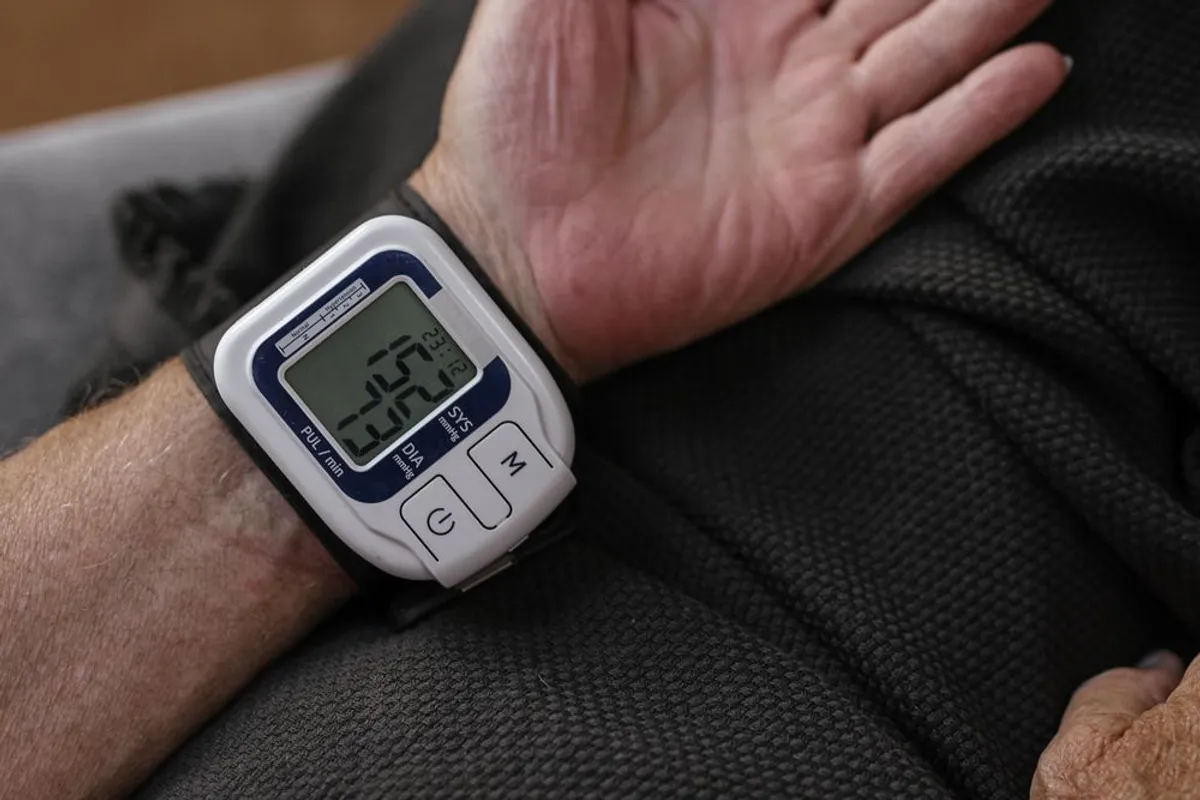
A blood pressure check usually means a trip to the doctor's office, a waiting room and a cuff that squeezes right when you are a little nervous. Plenty of people now keep a small monitor at home, and after 50 it is a sensible thing to want.
I am not a clinician, so for this guide I read the Centers for Disease Control and Prevention (CDC) pages on blood pressure and the Mayo Clinic advice on wrist monitors. Below you will find why home checks matter, what I would look for in a wrist monitor, how to take a reading that holds steady and where NovaMedic Pro fits.
Why Measure Your Blood Pressure at Home After 50?
The CDC puts it plainly: most people with high blood pressure have no signs or symptoms, so measuring is the only way to know where you stand. Blood pressure also moves through the day with what you are doing, and the CDC says a normal reading is less than 120/80 mm Hg, while high blood pressure means numbers that stay at or above 130/80.
Home checks add something an office visit cannot. The CDC notes that as many as 1 in 3 people with a high reading at the doctor's office may have normal readings outside of it, the so-called white coat effect, and it says your health care team may suggest a validated monitor at home to help confirm a diagnosis. A few calm readings in your own kitchen give a fuller picture.
Wrist Monitor or Upper-Arm Cuff?
Both exist, and both are sold for home use. Many guides start with the upper-arm cuff, which is what clinics use. The American Heart Association, as the Mayo Clinic summarizes it, lists it as the first choice when it is available. A wrist monitor is the compact alternative: nothing to roll your sleeve over, a small cuff that is easy to wear and easy to carry.
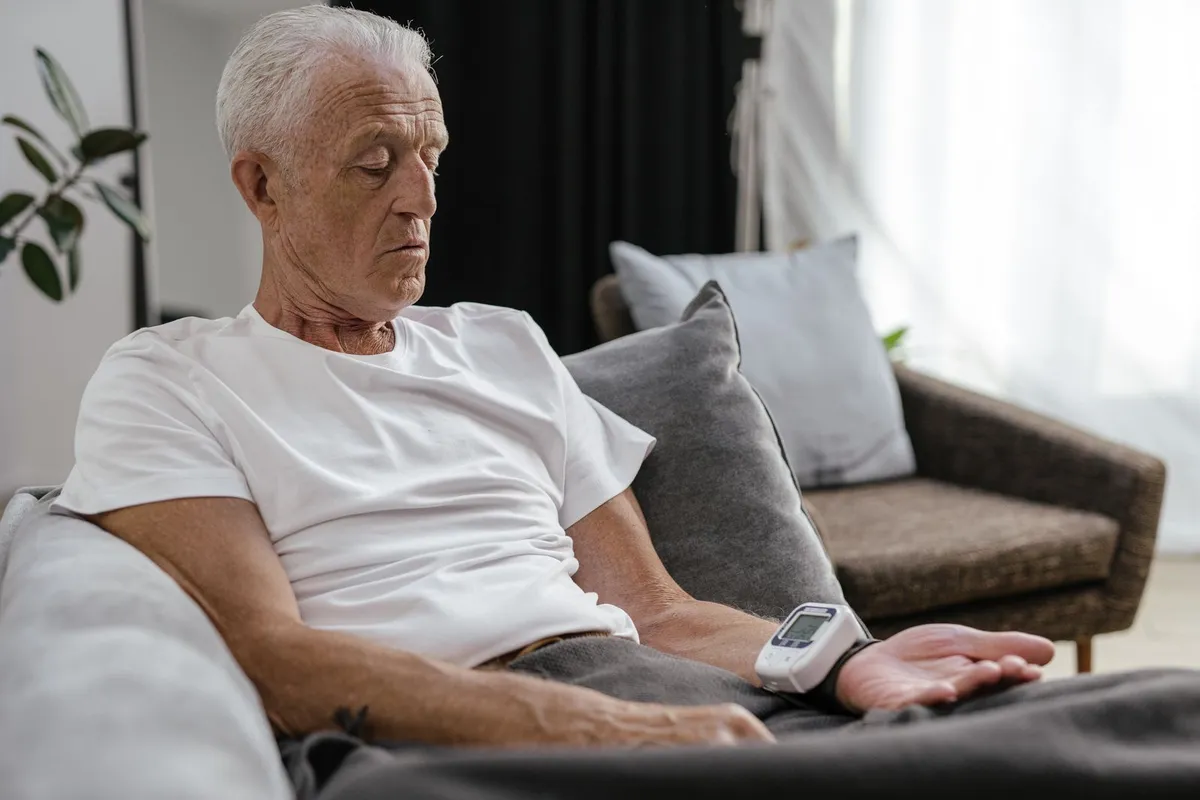
The Mayo Clinic adds that the common slip with a wrist monitor is poor positioning, and the fix is simple. Place it directly over the wrist artery, where you can feel your pulse, and not over clothes. Keep your wrist at heart level, stay still and do not bend the wrist. It also suggests bringing the monitor to your next appointment so your care team can compare its numbers with their own. If you choose a wrist monitor, those habits matter more than any feature on the box.
What Should You Look for in a Wrist Blood Pressure Monitor?
Here is the checklist I would use after 50, in the order I would care about it:
- A cuff that adjusts and fits snugly. The Mayo Clinic says a cuff that fits poorly will not give good measurements, so look for one you can tighten to your wrist without fuss.
- A large, clear display. The Mayo Clinic's advice on home monitors is that the screen should be clear and easy to read. Big digits and color-coded readings help a lot when your reading glasses are in another room.
- A voice readout. Optional, but it is lovely when you would rather listen than squint.
- Automatic inflation and one-button use. No pumping a bulb, just press and wait.
- Memory for past readings. The CDC suggests recording every reading in a log, and a monitor that stores them does half of that for you.
- A rechargeable battery. One less thing to remember, and no hunting for small batteries.
- Compact size. If it fits in a drawer or a handbag, you are more likely to use it and take it along when you travel.
- A clear return window. Buying from the official site with a money-back guarantee lets you try the routine with confidence.
How Do You Take a Reading You Can Trust?
The CDC lists a short routine that works with any home monitor. I would keep it on a card next to the device:
- Wait 30 minutes after eating, drinking, smoking, caffeine or exercise, since all of them can push the reading up.
- Empty your bladder first.
- Sit with your back supported for at least 5 minutes, feet flat on the floor and legs uncrossed.
- Keep your arm still and supported. For a wrist monitor, that means the wrist at heart level, as the Mayo Clinic advises.
- Do not talk while the monitor is measuring.
- Measure at the same time each day, and take at least two readings, 1 or 2 minutes apart.
That last pair is the part I like most, because a steady time of day makes the numbers easy to compare. A calm routine also fits nicely with an evening wind-down, and my guide to waking up at 3 a.m. has simple ideas for that hour.
How Do You Keep a Simple Log (and What Do the Numbers Mean)?
A paper notebook is enough: date, time, the two readings and a word about how the day went. The CDC offers a printable blood pressure log, and many monitors, NovaMedic Pro included, keep the numbers in memory as well. Bring the notebook or the monitor to your appointments, so your doctor sees the trend and not just one number.
For reference, the CDC reads 120 to 129 over less than 80 as elevated, 130 to 139 or 80 to 89 as stage 1 high blood pressure and 140 or 90 and above as stage 2. Its table also says that a reading higher than 180 and/or 120 with symptoms such as chest pain, shortness of breath, numbness, weakness, a change in vision or trouble speaking calls for 911, and without symptoms for a call to your health care professional. If you think your numbers are high, the CDC says to talk with your health care team about it.
Home readings are one piece of the wider picture. My articles on cholesterol after menopause, blood sugar after 50 and my healthy aging guide cover the other numbers many of us watch.
Where Does NovaMedic Pro Fit In?
NovaMedic Pro is the home blood pressure monitor I review on Primaurea, and it lines up with the checklist above: a rechargeable wrist monitor with an adjustable cuff and automatic inflation, a large color LED display, a voice broadcast that reads each result out loud and memory for up to 200 readings. It is compact, and a low-battery indicator tells you when to recharge. You can read more in my NovaMedic Pro review.
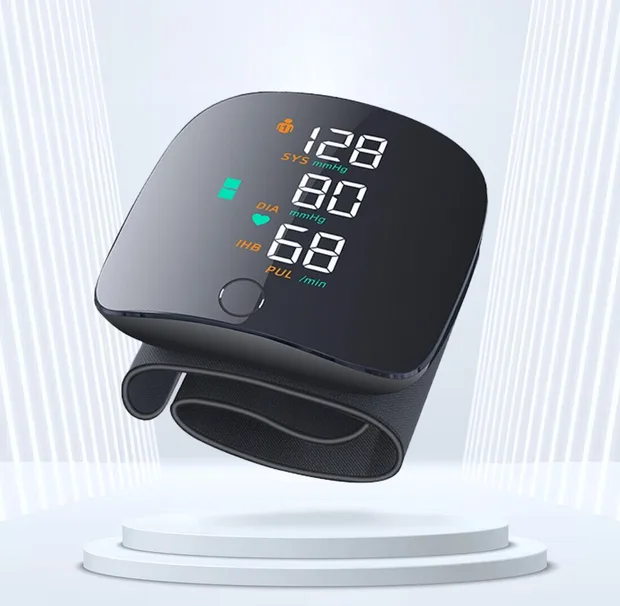
The official site lists NovaMedic Pro from $39.99 per monitor. On October 20, 2026, one monitor was $69.99, two were $52.99 each, three were $44.99 each and four were $39.99 each, and every order is covered by a 30-day money-back guarantee. As the official page notes, how often you measure depends on your needs and your doctor's recommendations.
Prices are in US dollars, as listed on the official site, and may change.
Home Blood Pressure Monitors After 50: What I Would Do
I would pick a monitor for how easily it fits my routine: a cuff that adjusts, big numbers, a voice if I want one, memory and a battery I can recharge. Then I would build the habit around it, with the same time every day, five calm minutes in a chair, two readings and a notebook for the doctor.
If a wrist monitor suits you, NovaMedic Pro is the one I would look at, and the button above takes you to the official site.
Frequently Asked Questions
Is a wrist blood pressure monitor a good choice after 50?
It can be, especially if you like a compact monitor that is easy to wear and carry. The Mayo Clinic says the common slip with a wrist monitor is poor positioning, so place it over the wrist artery, not over clothes, keep your wrist at heart level, stay still and do not bend the wrist.
What should I look for in a wrist blood pressure monitor?
A cuff that adjusts and fits snugly, a large clear display, automatic inflation, memory for past readings, a rechargeable battery and a compact size. A voice readout is a nice extra if you would rather listen than read, and a money-back guarantee from the official seller lets you try it with confidence.
How do I take a home blood pressure reading correctly?
The CDC suggests waiting 30 minutes after eating, drinking, smoking, caffeine or exercise, emptying your bladder, sitting for at least 5 minutes with your back supported, feet flat and legs uncrossed, and not talking during the reading. With a wrist monitor, keep your wrist at heart level, as the Mayo Clinic advises.
How often should I check my blood pressure at home?
The CDC says to measure at the same time each day and take at least two readings, 1 or 2 minutes apart, and that people with high blood pressure may need to check more often. How often is right for you depends on your needs and your doctor's recommendations.
What is a normal blood pressure reading?
The CDC says normal blood pressure is less than 120/80 mm Hg. Readings of 120 to 129 over less than 80 are called elevated, and high blood pressure is numbers that stay at or above 130/80. Your doctor is the one to interpret your own numbers.
Why is my reading at home different from the doctor's office?
It is common. The CDC says nervousness at the office can raise a reading, and that as many as 1 in 3 people with a high office reading may have normal readings outside it. The Mayo Clinic suggests bringing your monitor to an appointment so your care team can compare it with theirs.
What is NovaMedic Pro and how much does it cost?
NovaMedic Pro is a rechargeable wrist blood pressure monitor with an adjustable cuff, automatic inflation, a large color LED display, a voice broadcast and memory for up to 200 readings. The official site lists it from $39.99 per monitor; on October 20, 2026, one monitor was $69.99, two were $52.99 each, three were $44.99 each and four were $39.99 each.
Does NovaMedic Pro have a money-back guarantee?
Yes. Every order from the official NovaMedic Pro website is covered by a 30-day money-back guarantee.
This article is educational and is not medical advice. NovaMedic Pro is a home blood pressure monitor and is not intended to diagnose, treat, cure or prevent any disease.
Photos: SHVETS production (cover and sofa) and Mikhail Nilov (notebook), on Pexels.