

It is two in the afternoon, lunch was not that long ago and your energy has already slipped. Your eyes feel heavy, you reach for something sweet and you wonder whether your blood sugar is to blame. If that sounds familiar, you are in good company, and you are not imagining it.
I write Primaurea from my own experience after menopause, and I am not a doctor. So I went to the NIDDK, the CDC, Harvard Health, MedlinePlus, the federal dietary guidelines and a published review of walking breaks to see what they say about steady energy. Below are the everyday things that came up, a simple day that puts them together and a short look at where a daily blood sugar dropper can fit.
Why Do Energy Dips Hit After 50?
There is rarely one cause. Tiredness after lunch can come from a short night, a stressful morning, a meal that was mostly refined carbs or a long stretch in the chair. The National Institute of Diabetes and Digestive and Kidney Diseases (NIDDK) describes insulin resistance as a condition in which your body does not respond to insulin the way it should, and it says people with insulin resistance and prediabetes usually have no symptoms. It also reports that about 97.6 million US adults had prediabetes in 2021.
That is why I read an afternoon slump as a nudge to look at my habits, not as a measurement of anything. The same NIDDK page names what is within reach: reaching and maintaining a healthy weight, being physically active and choosing healthy foods and drinks. The rest of this guide is about those everyday pieces: what is on the plate, a walk after eating, sleep and stress.
If weight is part of the picture, my guide to weight gain after 50 covers the strength and walking side, and the slow metabolism after 40 guide explains what really changes in the body.
Which Meals Keep Your Energy Steadier?
The Dietary Guidelines for Americans, 2025 to 2030, keep the message simple: eat real food. They ask you to prioritize protein foods at every meal, to prioritize fiber-rich whole grains and to significantly reduce highly processed, refined carbohydrates such as white bread, ready-to-eat or packaged breakfast options, flour tortillas and crackers.
On sugar, they say to avoid sugar-sweetened beverages such as sodas, fruit drinks and energy drinks, and that one meal should contain no more than 10 grams of added sugars. To spot added sugar on a label, they suggest looking for ingredients that include the word “sugar” or “syrup” or end in “-ose.”
Fiber has its own role. MedlinePlus explains that soluble fiber attracts water and turns to gel during digestion, and that fiber makes you feel full faster. It gives a range of 21 to 38 grams a day for older children, adolescents and adults. You do not need to count: a vegetable, a fruit, beans or whole grains at each meal gets you close.
Four easy swaps
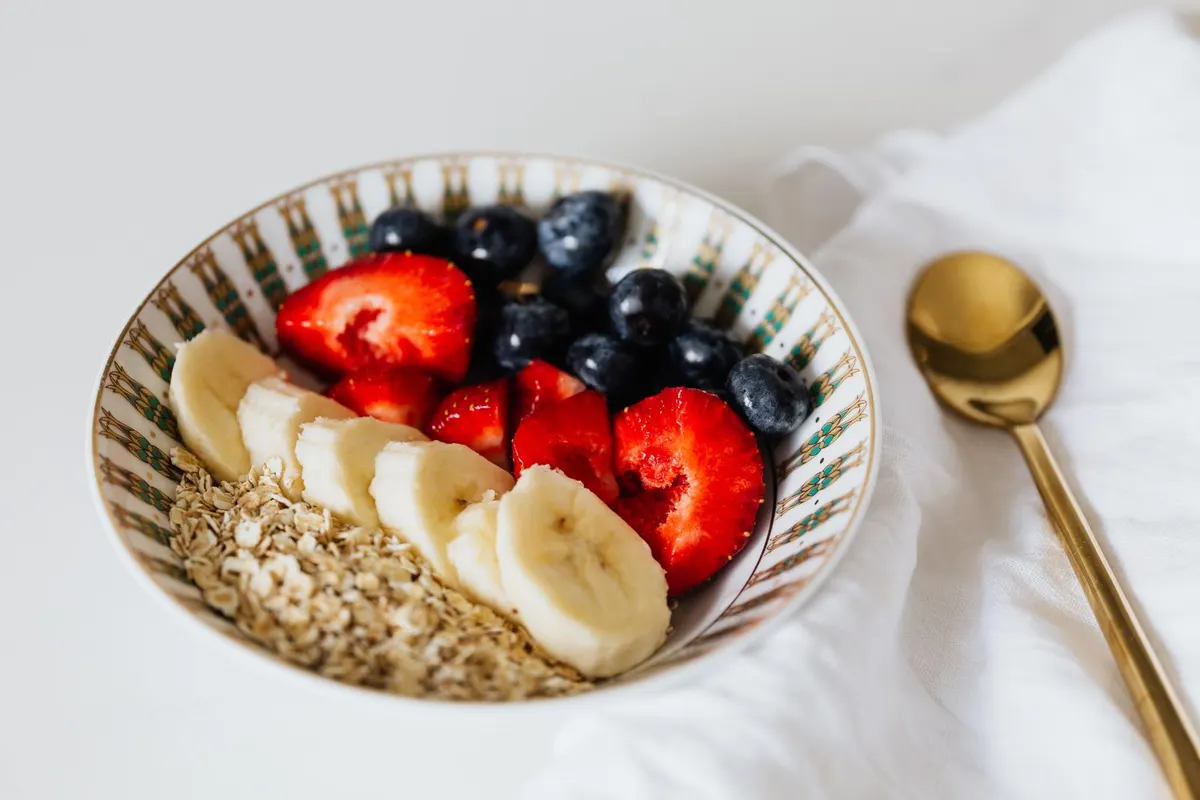
- Trade the packaged breakfast for a real one. Oats with berries and a few nuts, or plain Greek yogurt with fruit, bring fiber and protein to the first meal of the day.
- Pair your carb with a protein. Toast with an egg, or apple slices with peanut butter, work better than the carb alone.
- Swap the sweet drink. Water, sparkling water or unsweetened tea instead of soda or a sweetened coffee drink.
- Read the label once. If the ingredients say sugar, syrup or end in “-ose,” you know where the added sugar is. My list of best foods to ease menopause symptoms has more ideas for the plate.
Does a Short Walk After Eating Help?
Movement is the other piece that stands out. The CDC says adults need 150 minutes of moderate-intensity physical activity a week, plus at least 2 days of muscle-strengthening activity. A short walk after dinner is an easy way to start building toward that.
A 2022 review in Sports Medicine pooled seven one-day trials, mostly in adults with overweight or obesity, and compared breaking up long sitting with standing or with light walking. Standing breaks lowered blood sugar after meals compared with sitting. Light walking breaks lowered both blood sugar and insulin after meals, and did better than standing. These were short studies, and the authors call for testing in everyday life, so I take the result as encouragement and not as a promise. Still, a walk costs nothing.

Does Poor Sleep Make Energy Dips Worse?
It can. The CDC recommends 7 or more hours of sleep for adults, and its table shows 7 to 9 hours for ages 61 to 64 and 7 to 8 hours from 65 on. In a small sleep-lab study described by Harvard Health, seven healthy young adults slept 8.5 hours for four nights and 4.5 hours for four nights, in random order. After the short nights, their fat cells were 30% less able to respond to insulin.
Seven young people is a handful, so I read it as a clue, not a rule. It does match what many of us notice: the day after a bad night is all about carbs and coffee. If hot flashes or 3 a.m. wake-ups are cutting your sleep short, my guide on menopause and sleep walks through what helps.
What Does Stress Have to Do With Blood Sugar and Cravings?
Harvard Health Publishing explains the stress response in plain terms. Epinephrine triggers the release of blood sugar (glucose) and fats from temporary storage sites in the body. Elevated cortisol levels then help replenish the body’s energy stores, and cortisol increases appetite, so people want to eat more to obtain extra energy. That is a useful reaction in an emergency and an unhelpful one at your desk on a long Tuesday.
Its gentle tools are the ones you can use anywhere: slow, deep belly breathing, a short brisk walk soon after you feel stressed, yoga, tai chi or qi gong, and close relationships with friends and family. For more on the hormone side, see my guide to hormonal balance after menopause, and if cravings are the hard part, read why you are always hungry after 50.
What Does a Steadier Day of Eating and Moving Look Like?
You do not need to change everything at once. Here is one way to spread the ideas across a normal day:
- Breakfast: oats with berries and nuts, or eggs with whole-grain toast, with water or unsweetened tea.
- Lunch: a bowl built on beans or lentils with vegetables and a protein you like, eaten away from the screen when you can.
- After lunch: a short walk, even around the block.
- Afternoon: fruit with a few almonds, or carrots with hummus, instead of crackers or candy.
- Dinner: protein, vegetables and a whole grain, then another short walk if the evening allows.
- Night: a calm last hour and a regular bedtime, so you can aim for the 7 or more hours the CDC recommends.

Give it two or three weeks before you judge. If one change feels easy, keep it and add another.
Where Can a Daily Blood Sugar Dropper Fit In?
Meals, movement, sleep and a calmer evening come first, and no dropper replaces them. Some readers like to add a daily supplement to the routine, and if you are one of them, the label is where to start. The one I have on Primaurea for this is Olivaro.
Olivaro: chromium and plant extracts in a liquid dropper
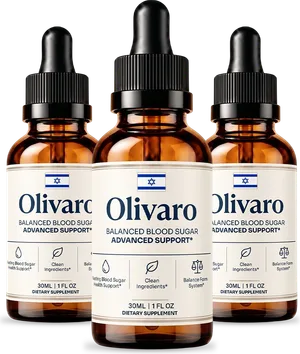
Olivaro is a liquid dietary supplement in a 30 mL dropper bottle with 30 servings. Its label calls it Balanced Blood Sugar Advanced Support and describes it as support for fasting blood sugar health. It combines chromium (as picolinate) with a blend of plant extracts and amino acids that includes gymnema leaf, African mango seed, green tea leaf and Panax ginseng. It is made in the USA in an FDA-registered facility.
You shake the bottle, take 1 or 2 droppers a day and swallow, and the official page suggests the morning, ideally before a meal. On the official order page on October 19, 2026, two bottles were $158 ($79 each, plus $9.99 shipping), three bottles were $207 ($69 each, free US shipping) and six bottles were $294 ($49 each, free US shipping). It is a one-time purchase with no subscription, and every order comes with a 60-day money-back guarantee. As the official Olivaro pages advise, ask your doctor first if you are pregnant, nursing, under 18 or have a medical condition. I go through the details in my Olivaro review.
Prices are in US dollars, as listed on the official site on October 19, 2026, and may change.
Blood Sugar After 50: My Verdict
Start with the things you control today: protein and fiber at every meal, a short walk after you eat, a regular bedtime and one calming break in a busy afternoon. Those steps are free and each one makes the next easier. Give them a few weeks of steady effort before you decide how you feel.
If you would like a daily dropper alongside those habits, read the Olivaro label first and keep the habits going next to it. My slow metabolism after 40 guide brings the rest of the picture together in one place.
Frequently Asked Questions
Why do I get an energy dip after lunch after 50?
Usually several everyday things add up: a short night, a stressful morning, a meal heavy in refined carbs and light on protein and fiber, and long hours of sitting. The NIDDK notes that people with insulin resistance and prediabetes usually have no symptoms, so a slump on its own does not tell you what your blood sugar is. It is a good nudge to look at meals, movement, sleep and stress.
What should I eat for steadier energy after 50?
The Dietary Guidelines for Americans, 2025 to 2030, say to prioritize protein foods at every meal, choose fiber-rich whole grains and significantly reduce highly processed, refined carbohydrates such as white bread, packaged breakfast options and crackers. They also say to avoid sugar-sweetened beverages and to keep added sugars to no more than 10 grams in a meal.
Does walking after a meal help blood sugar?
A 2022 review in Sports Medicine pooled seven one-day trials and found that light walking breaks lowered blood sugar and insulin after meals compared with sitting, and did better than standing breaks. The studies were short and mostly in adults with overweight or obesity, so it is encouraging but not a promise. The CDC recommends 150 minutes of moderate activity a week for adults.
Does poor sleep affect blood sugar?
In a small sleep-lab study described by Harvard Health, seven healthy young adults slept 4.5 hours a night for four nights, and their fat cells were 30% less able to respond to insulin than after nights of 8.5 hours. It was a small study, but it fits what many people notice after a bad night. The CDC recommends 7 or more hours for adults.
Can stress affect blood sugar and cravings?
Harvard Health Publishing explains that during the stress response, epinephrine triggers the release of blood sugar (glucose) and fats from storage, and elevated cortisol increases appetite so people want to eat more. Slow belly breathing, a brisk walk, yoga or tai chi and time with friends and family are the gentle tools it mentions.
How much fiber do I need?
MedlinePlus says fiber makes you feel full faster and gives a range of 21 to 38 grams a day for older children, adolescents and adults. A vegetable, a fruit, beans or whole grains at each meal is an easy way to get closer.
What is in Olivaro?
Olivaro is a liquid dietary supplement in a 30 mL dropper bottle. It combines chromium (as picolinate) with a blend of plant extracts and amino acids that includes gymnema leaf, African mango seed, green tea leaf and Panax ginseng. It is made in the USA in an FDA-registered facility.
How much does Olivaro cost and how do I take it?
On October 19, 2026, Olivaro was $158 for two bottles (plus $9.99 shipping), $207 for three and $294 for six, with free US shipping on three and six bottles and a 60-day money-back guarantee. Shake the bottle, take 1 or 2 droppers a day and swallow, ideally in the morning before a meal. One bottle lasts 30 days.
Want to See the Label for Yourself?
Visit the official website to read the full label and see the current offer.
Statements about dietary supplements on this page have not been evaluated by the Food and Drug Administration. This product is not intended to diagnose, treat, cure or prevent any disease.
Sources
- NIDDK: insulin resistance and prediabetes
- Dietary Guidelines for Americans, 2025-2030 (summary)
- MedlinePlus: fiber
- CDC: physical activity guidelines for adults
- Sports Medicine (2022): interrupting prolonged sitting with standing and light-intensity walking, systematic review and meta-analysis
- CDC: about sleep
- Harvard Health: lack of sleep may fuel insulin resistance
- Harvard Health Publishing: understanding the stress response