
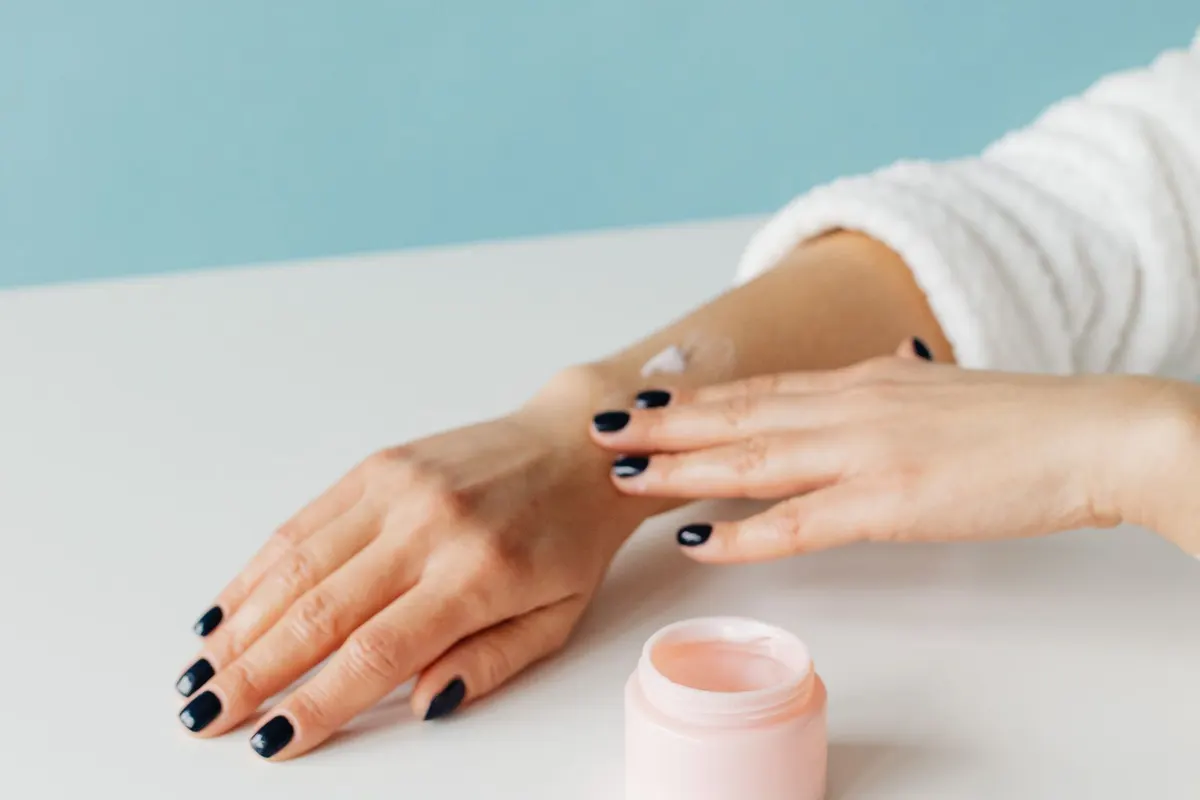
You reach for a high shelf or wave goodbye, and the skin under your upper arm keeps moving for a beat after your arm has stopped. That soft, fine-lined, slightly loose look is called crepey skin, and arms are often where women notice it first. I am not a dermatologist, so this guide stays with what the National Institute on Aging, the American Academy of Dermatology and published studies say, and then turns it into a short routine you can keep.
Why Does the Skin on Your Arms Get Crepey After 50?
According to the National Institute on Aging, skin gets thinner as the years pass and no longer looks as plump and smooth as it once did. Part of the reason is a loss of elastic fibers (elastin) and collagen, the proteins that let skin spring back, and that loss shows up as wrinkles and more fragile skin.
Menopause adds its own push. The NIA lists thinner and drier skin among the changes you may notice, and a review of skin and menopause in the American Journal of Clinical Dermatology reports that skin collagen and water content both fall after menopause, which lowers the skin's elasticity and strength. I go through the collagen side in my collagen after 50 guide.
Then there is the sun. The NIA notes that UV damage adds up over the years and leads to changes in skin texture, earlier aging and wrinkles. Arms collect plenty of daylight over a lifetime, which is why sun protection is the first habit below.
What Daily Habits Help Crepey Arms?
None of these is glamorous, and each one has a reliable source behind it.
Sunscreen on every bare arm
The label to look for, per the American Academy of Dermatology, reads broad-spectrum, SPF 30 or higher and water resistant. Most adults need about an ounce, roughly a shot glass, to cover all the skin that clothing does not, and outdoors it should be reapplied about every two hours. The AAD adds that the best sunscreen is the one you will use again and again, so pick a texture you like and keep it by the door.

A cream on damp skin
The AAD advises patting your skin dry after a shower and applying a fragrance-free moisturizer right away, while the skin is still damp. It also notes that creams and ointments add more moisture than lotions. The NIA's tips for dry skin are just as plain: a mild soap, warm rather than hot water and a moisturizer every day. For the nutrition side of skin, my vitamins for skin elasticity guide has the details.
Do Arm Exercises Help Loose Skin on the Upper Arms?
An arm is skin over muscle, and the NIA points out that menopause can bring less muscle and more fat. Strength work will not rewrite the skin itself, but muscle is the part of the arm you can build, and it also makes carrying bags and lifting boxes easier.

The NIA suggests muscle-strengthening activity at least two days a week, working the major muscle groups, arms included, without training the same group two days in a row. It says strength exercise helps maintain existing strength and slows the loss of muscle mass. Breathe out during the effort, and avoid locking your joints straight. A resistance band is an easy place to start, and my weight gain after 50 guide has a simple weekly plan.
Does Red Light Help Arm Skin?
The AAD says studies suggest red-light LED devices can give subtle to noticeable results for fine lines, rough-feeling skin and loose skin on the face. In one study it cites, 90 patients had eight red-light treatments to the face over four weeks, and more than 90% noticed some improvement. In a controlled trial of 136 volunteers, the 113 who were treated twice a week with red light had better skin feeling, less roughness and higher collagen density after 30 sessions than the 23 controls.
Most of that research looks at the face and at stronger clinical lights, and the AAD says more research is still needed on at-home devices. So I see a home device as a pleasant daily routine that supports how your skin looks, to be judged after a few weeks of steady use. For a woman who likes a routine, that is a good reason to try one.
MyoGlow: red, blue and amber light, warmth and sonic massage for the arms
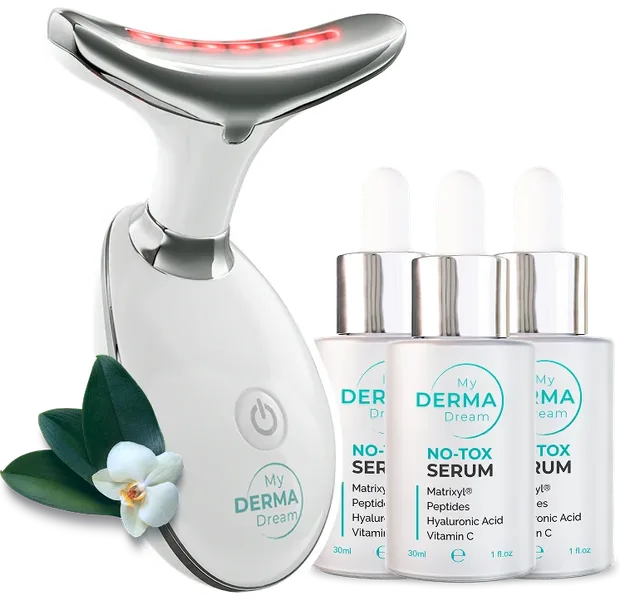
MyoGlow, from My Derma Dream, is a handheld device built around the arms. It combines red, blue and amber LED light, gentle heat, sonic massage and an electroporation step, and a session takes about 5 to 10 minutes a day with the included No-Tox peptide serum: serum first, then the device in upward strokes along each arm. The brand says it is as quiet as an electric toothbrush and needs no downtime.
Every option includes the device, a USB power cord, a user manual and a storage box, plus one, three or six 30 ml bottles of serum. Prices are $79 with one serum, $127 with three ($42 a month) and $214 with six ($35 a month), all with free shipping. A 90-day satisfaction guarantee covers every order, with a free swap to another device or an alternative serum, and the device carries a 1-year warranty. As the official page lists, MyoGlow is not recommended for people with epilepsy, heart conditions, a pacemaker, or who are pregnant or planning a pregnancy, among others. I go through each technology in my MyoGlow review.
Crepey Arms After 50: My Verdict
Crepey arms have layers: thinner skin, years of sun, less moisture and a little less muscle underneath. That is good news, because three of those layers answer to habits you control. A broad-spectrum sunscreen every day, a cream on damp skin after the shower and two strength sessions a week are the base. If you want something extra that feels like a small ritual, a red-light device like MyoGlow gives that routine a fixed daily slot, backed by a 90-day guarantee.
For the wider routine, nails and hands included, my guide to skin and nail care after 50 is the place to start.
Frequently Asked Questions
Why do my arms look crepey after 50?
Skin gets thinner with age as it loses elastin and collagen, and the National Institute on Aging lists thinner, drier skin among the changes after menopause. Years of UV exposure add to the texture changes, so arms often show it first.
Can crepey arms be reversed?
Skin changes with age are normal, so the realistic goal is arm skin that looks smoother and better moisturized, with the sun damage kept from adding up. Daily sunscreen, a good moisturizer and strength work are the steady habits that help.
Does moisturizer help crepey skin on the arms?
It helps the skin feel and look better. The American Academy of Dermatology suggests a fragrance-free moisturizer applied right after the shower, while the skin is still damp, and notes that creams and ointments add more moisture than lotions.
What sunscreen should I use on my arms?
The American Academy of Dermatology says to choose one labeled broad-spectrum, SPF 30 or higher and water resistant. Most adults need about an ounce to cover skin that clothing does not, and it should be reapplied about every two hours outdoors.
Do arm exercises tighten loose skin?
Exercise builds the muscle under the skin rather than changing the skin itself. The National Institute on Aging suggests strength exercises at least two days a week, arms included, to maintain strength and slow the loss of muscle mass.
Does red light therapy work on arm skin?
The American Academy of Dermatology says studies suggest red-light LED devices can give subtle to noticeable results for fine lines, rough skin and loose skin, mostly studied on the face, with regular use needed. At-home devices are best judged after several weeks of steady use.
What is MyoGlow and how much does it cost?
MyoGlow is a handheld arm device that combines red, blue and amber LED light, gentle heat, sonic massage and an electroporation step, used for about 5 to 10 minutes each day with a No-Tox serum. It costs $79 with one serum, $127 with three and $214 with six, all with free shipping, and a 90-day satisfaction guarantee covers every order.
Want to See the Official Page?
Visit the official website to see the current offer.
MyoGlow is a cosmetic beauty device for external use and is not intended to diagnose, treat, cure or prevent any disease. Individual results may vary.
Sources
- National Institute on Aging: skin care and aging
- National Institute on Aging: what is menopause?
- American Journal of Clinical Dermatology (2003): skin aging and menopause
- American Academy of Dermatology: sunscreen FAQs
- American Academy of Dermatology: dry skin self-care
- National Institute on Aging: four types of exercise
- American Academy of Dermatology: is red light therapy right for your skin?
- Photomedicine and Laser Surgery (2014): red and near-infrared light, skin roughness and collagen density