

You finish lunch and, an hour or two later, your mind is already back in the kitchen. The afternoon slump comes with a craving for something sweet, and by 9 p.m. you are standing at the open fridge again. If that sounds like you, you are in good company, and it is not a lack of willpower.
I write Primaurea from my own experience after menopause, and I am not a doctor. So I went to the CDC, MedlinePlus, Harvard Health, the federal dietary guidelines and a published sleep study to see what they say about hunger. Below are the four everyday things that came up again and again, a simple day of eating that puts them together and a short look at where a daily gut-support capsule can fit.
Why Do I Feel Hungry All the Time After 50?
There is rarely one cause. MedlinePlus lists sleeping problems among the common symptoms of menopause, along with the drop in estrogen and progesterone behind them. The Office on Women's Health says it can be harder to lose weight after menopause and names less-healthful eating habits among the possible causes of weight gain after menopause, and it points to more sleep and dealing with stress as steps that help. I could not find a settled answer on how much hormones alone change appetite, so I focus on what these sources do agree on: sleep, stress and the way we eat shape how hungry we feel, and all three are easier to change than you might think.
If you are also watching your weight, my guide to weight gain after 50 covers the movement and strength side, and the slow metabolism after 40 guide explains what really changes in the body. If your energy dips along with the hunger, I look at that side in blood sugar after 50.
Could Short Sleep Be Making You Hungrier?
It is one of the best-studied links. The CDC recommends 7 or more hours of sleep for adults, and its table shows 7 to 9 hours for ages 61 to 64 and 7 to 8 hours from 65 on. In a University of Chicago study published in the Annals of Internal Medicine, 12 healthy young men spent two days sleeping less and two days sleeping more, under the same controlled meals and activity. After the short nights, their leptin (the hormone that tells you that you are full) fell by 18% on average, ghrelin (the hormone that nudges you to eat) rose by 28%, hunger rose by 24% and appetite by 23%, with the strongest pull toward sweet and starchy foods (up 33% to 45%).
That was a small study of young men, so I read it as a clue, not a promise. Still, it matches what many of us notice after a bad night: the next day is all about carbs and coffee. If hot flashes or 3 a.m. wake-ups are what is cutting your sleep short, my guide on menopause and sleep walks through what helps.
Does Stress Make You Crave Sweet and Salty Food?
Harvard Health Publishing explains it in two steps. In the short term, stress can shut down appetite. But if stress persists, the body keeps releasing cortisol, which increases appetite and may also raise the motivation to eat. Harvard adds that stress seems to push people toward foods high in fat, sugar or both, and that eating them may calm stress-related activity in the brain, which could be part of why the habit sticks. In a British study it cites, people with higher cortisol responses to stress in the lab were more likely to snack when everyday hassles came up.
Its practical ideas are gentle ones. Meditation can help you notice the urge to grab a comfort food. Low-intensity exercise seems to lower cortisol, while intense exercise raises it for a short time, so a walk is a good choice on a stressful day. Support from friends and family also seems to buffer stress. For more on the hormone side, see my guide to hormonal balance after menopause.

Are Your Meals Leaving You Hungry?
Sometimes the answer is simply on the plate. The Dietary Guidelines for Americans, 2025 to 2030, ask you to prioritize protein foods at every meal and fiber-rich whole grains, and to cut back significantly on highly processed, refined carbohydrates such as white bread, packaged breakfast items and crackers. Swapping some of them for whole foods is the simplest place to start.
Fiber has its own role. MedlinePlus says fiber adds bulk to your diet and makes you feel full faster, and it gives a range of 21 to 38 grams a day for older children, teens and adults, depending on age and sex. You do not need to count. Aim for a vegetable, a fruit, beans or whole grains at each meal and you will be closer than most of us.
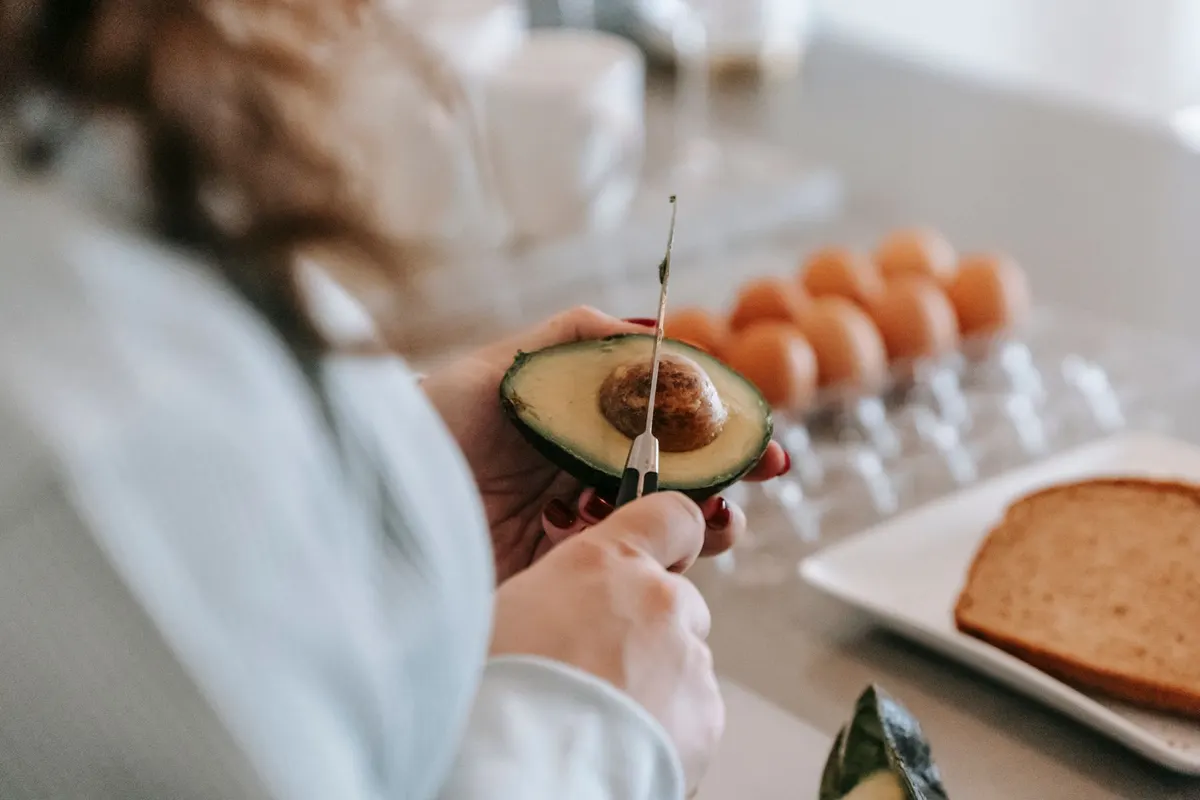
Three easy swaps
- Start the day with protein. Eggs, Greek yogurt or cottage cheese with fruit make an easy protein-first breakfast.
- Add a plant to every plate. Beans, lentils, a side salad or a handful of berries bring the fiber the guidelines ask for. My list of best foods to ease menopause symptoms has more ideas.
- Make the snack a pair. Fruit with a few nuts, or carrots with hummus, brings protein or healthy fat along with the fiber.
What Does Your Gut Have to Do With Hunger?
The Dietary Guidelines point out that your gut holds trillions of bacteria and other microorganisms, known as the microbiome, and that a healthy diet supports a well-balanced one. They say vegetables, fruits, fermented foods (such as sauerkraut, kimchi, kefir and miso) and high-fiber foods support a diverse microbiome, while highly processed foods can disrupt that balance.
I want to be clear about what that does and does not tell us. It does not prove that a particular food or supplement will switch off hunger. What it does tell us is that the fiber and fermented foods that help you feel full are the same ones your gut likes, so a plate built for fullness and a plate built for the gut end up looking alike.

What Does a Simple Day of Eating for Steadier Hunger Look Like?
You do not need to change everything at once. Here is one way to spread the ideas across a normal day:
- Breakfast: eggs with avocado on whole-grain toast, or Greek yogurt with berries and nuts.
- Lunch: a bowl built on beans or lentils with vegetables and a protein you like.
- Afternoon: a piece of fruit with a few almonds, and a short walk if the day has been stressful.
- Dinner: protein, a vegetable or salad and a whole grain, eaten at the table and not in front of the phone.
- Evening: close the kitchen after dinner, then a warm drink and a screen-free wind-down so you can aim for the 7 or more hours the CDC recommends.
Give it two or three weeks before you judge. If one change feels easy, keep it and add another.
Where Can a Daily Gut-Support Capsule Fit In?
Sleep, calmer evenings and better plates come first, and no capsule replaces them. Some readers like to add a daily supplement to the routine, and if you are one of them, the label is where to start. The one I have on Primaurea for this is Sodatide.
Sodatide: prebiotic fibers and a three-strain probiotic blend

Sodatide is a once-daily vegetarian capsule, 30 per bottle. Its label describes it as metabolic and digestive support and says it supports appetite control and satiety. It pairs two prebiotic fibers, chicory root inulin and potato resistant starch, with a probiotic blend of three strains: Bifidobacterium, Clostridium butyricum and Akkermansia muciniphila. It is lactose-free, made without artificial stimulants and made in the USA in an FDA-registered facility.
You take 1 capsule a day with a glass of water (8 oz), in the morning and ideally before a meal, and keep the bottle in the fridge once it is open. On the official order page on October 19, 2026, two bottles were $158 ($79 each, plus $9.99 shipping), three bottles were $207 ($69 each, free US shipping) and six bottles were $294 ($49 each, free US shipping). It is a one-time purchase with no subscription, and every order comes with a 60-day money-back guarantee. As the official Sodatide page advises, show the label to your doctor first if you are pregnant, nursing, under 18 or have a medical condition. I go through the details in my Sodatide review.
Prices are in US dollars, as listed on the official site on October 19, 2026, and may change.
Always Hungry After 50: My Verdict
Start with the things you control tonight: a regular bedtime, a calmer last hour of the day, protein and fiber at every meal and a snack that comes as a pair. Those four steps are free and each one makes the next easier. Give them a few weeks of steady effort before you decide how you feel.
If you would like a daily gut-support capsule alongside those habits, read the Sodatide label first and keep the habits going next to it. My slow metabolism after 40 guide brings the rest of the picture together in one place.
Frequently Asked Questions
Why am I always hungry after 50?
Usually several small things add up: lighter sleep, long-running stress, meals low in protein and fiber and a gut that gets less of the fiber it likes. The CDC, Harvard Health and the federal dietary guidelines all point to sleep, stress and what is on your plate as the places to start.
Does lack of sleep make you hungrier?
In a University of Chicago study of 12 healthy young men, two days of short sleep lowered leptin by 18%, raised ghrelin by 28% and raised hunger by 24%, with the strongest pull toward sweet and starchy foods. It was a small study, but it fits what many people notice after a bad night. The CDC recommends 7 or more hours for adults.
Can stress cause cravings after 50?
Harvard Health Publishing explains that short-term stress can shut down appetite, but if stress persists, cortisol increases appetite and may raise the motivation to eat, often for foods high in fat, sugar or both. Meditation, low-intensity exercise and social support are the gentle tools it mentions.
How much fiber do I need to feel full?
MedlinePlus says fiber makes you feel full faster and gives a range of 21 to 38 grams a day for older children, teens and adults, depending on age and sex. A vegetable, a fruit, beans or whole grains at each meal is an easy way to get closer.
Should I eat protein at every meal?
The Dietary Guidelines for Americans, 2025 to 2030, say to prioritize protein foods at every meal and to include fiber-rich whole grains. Eggs, poultry, seafood, beans, lentils and dairy are all named among the options.
Does gut health affect hunger?
The Dietary Guidelines say a healthy diet supports a well-balanced microbiome, and that vegetables, fruits, fermented foods and high-fiber foods support a diverse one. That does not prove any one food or supplement will turn off hunger, but the foods that fill you up are also the ones your gut likes.
What is in Sodatide?
Sodatide is a once-daily vegetarian capsule with two prebiotic fibers, chicory root inulin and potato resistant starch, and a three-strain probiotic blend (Bifidobacterium, Clostridium butyricum and Akkermansia muciniphila). It is lactose-free, made without artificial stimulants and made in the USA in an FDA-registered facility.
How much does Sodatide cost and how do I take it?
On October 19, 2026, Sodatide was $158 for two bottles (plus $9.99 shipping), $207 for three and $294 for six, with free US shipping on three and six bottles and a 60-day money-back guarantee. Take 1 capsule a day with a glass of water, in the morning and ideally before a meal, and keep the bottle in the fridge once it is open.
Want to See the Label for Yourself?
Visit the official website to read the full label and see the current offer.
Statements about dietary supplements on this page have not been evaluated by the Food and Drug Administration. This product is not intended to diagnose, treat, cure or prevent any disease.
Sources
- Office on Women's Health: weight loss and women
- MedlinePlus: menopause
- CDC: about sleep
- Annals of Internal Medicine (2004): sleep curtailment, leptin, ghrelin, hunger and appetite in healthy young men
- Harvard Health Publishing: how stress can make us overeat
- MedlinePlus: fiber
- Dietary Guidelines for Americans, 2025-2030 (summary)