
Stiff fingers when you get out of bed, a knee that complains on the stairs, a hip that aches after an afternoon in the garden. Joint pain after 50 shows up in the most ordinary moments, and the good news is that the ordinary moments are also where most of the help is.
I write Primaurea from my own experience after menopause. I am not a doctor, so I went to the National Institute on Aging, the arthritis institute (NIAMS), the federal activity guidelines and the Arthritis Foundation. Below are seven habits they describe, a simple day that puts them together and a short look at where a supplement can fit.
Why Do Joints Hurt More After 50?
The National Institute on Aging explains that osteoarthritis is the most common form of arthritis among older adults, and that it is more common in women than in men, especially after age 50. The tissues that cushion the ends of the bones break down slowly over time, which is why the changes tend to arrive gradually: stiffness after getting out of bed or sitting for a long time, tenderness, and sometimes a crunching feeling in the joint.
Hormones add to the picture. The NIA notes that for most women, osteoarthritis of the hands develops after menopause, and that the knees, hips, neck and lower back are the other places it shows up most. If you want the wider picture of how sleep, memory and joints change together, my healthy aging after 50 guide puts it in one place.
One thing worth knowing: the National Center for Complementary and Integrative Health points out that joint pain that comes with a fever, a rash or hot, red skin over the joint usually has a different cause, so that combination is one to bring to your doctor first. For the everyday aches, the habits below are where to start.
What Everyday Habits Help Joint Pain After 50?
1. Keep moving with low-impact activity
It feels backwards when a joint hurts, but gentle movement is the habit every source puts first. The NIA lists walking, cycling, swimming and tai chi, and NIAMS adds water exercise and low-impact aerobics classes: all of them keep you active without pounding the joints. Water is especially kind, since NIAMS notes that exercising in the water lowers the stress on your joints.
For how much, the federal Physical Activity Guidelines for Americans suggest at least 150 minutes of moderate activity a week, spread through the week. That is 30 minutes on five days, and it can be three 10-minute walks. If your joints keep you below that, the guidelines say to be as active as your abilities allow, because some activity is better than none. Start slowly and give yourself time to adjust to each new level.
2. Stretch to keep joints limber
NIAMS includes range-of-motion and stretching activities in a well-rounded routine because they keep joints limber. A few minutes after your morning shower, when the muscles are warm, is an easy slot: gentle neck turns, shoulder rolls, wrist and finger opening and closing, and a slow hip or calf stretch.
3. Build the muscles that hold your joints
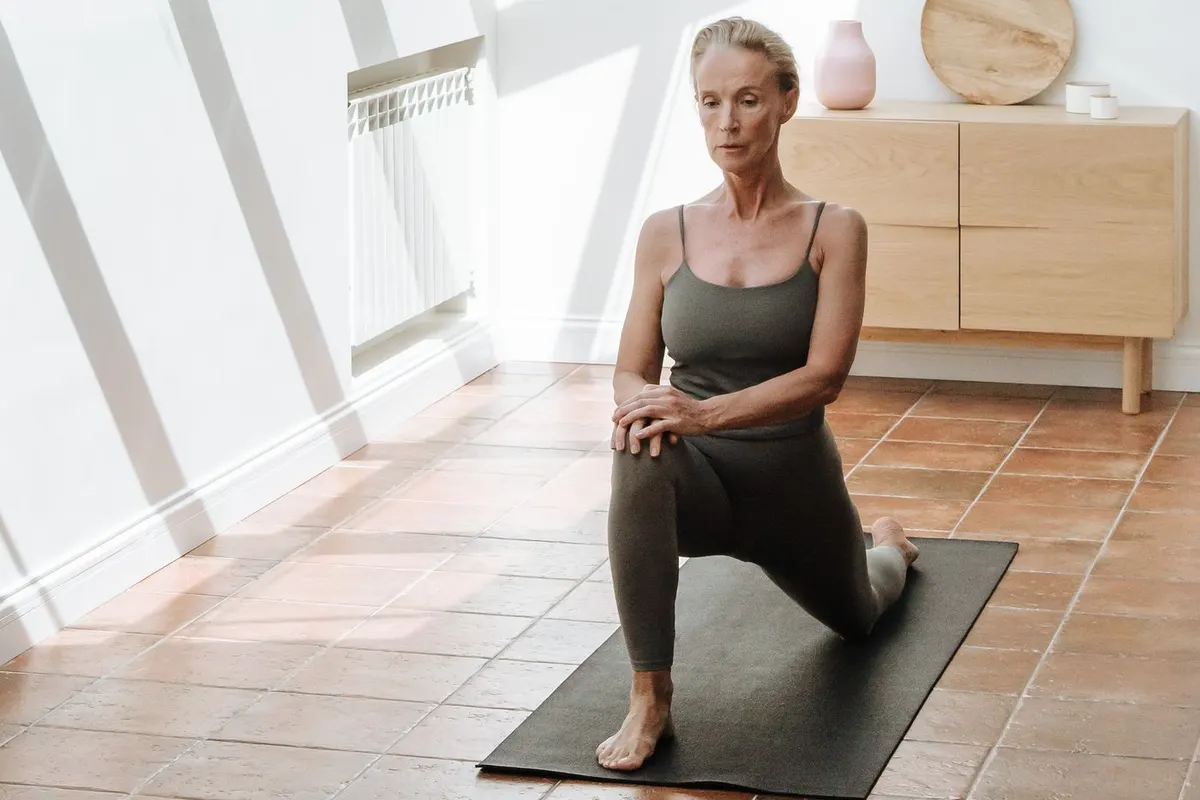
Strong muscles share the load with your joints. NIAMS recommends strengthening exercises with weights or exercise bands for the muscles that support the joints, and the activity guidelines call for muscle strengthening on two or more days a week. Older adults are also advised to include balance training, which makes the stairs and uneven pavements feel steadier. A band around the thighs and a few slow sit-to-stands from a chair are a simple place to begin.
4. Keep a steady weight
The NIA and NIAMS agree that managing your weight can reduce stress on the joints, which may reduce pain and increase mobility, especially in weight-bearing joints such as the knees and hips. This is about a steady, kind pace, not a crash plan. My guide to weight gain after 50 and the slow metabolism after 40 guide cover the food and strength side in detail.
5. Use heat and cold on sore days
NIAMS describes how each one helps. Heat increases blood flow, tolerance for pain and flexibility, so a warm shower or a warm pack before you stretch suits stiff mornings. Cold numbs the nerves around the joint and may relieve inflammation, which suits a joint that is sore after a busy day. Keep a cloth between your skin and the pack, and use whichever one feels better to you.
6. Make the day easier on your joints
Small changes add up, and the NIA and NIAMS list several you can start today:
- Good posture reduces the pressure on joints.
- Several light trips instead of one heavy load when you bring in the groceries.
- Less repetitive bending, especially bending at the waist.
- Grip helpers such as jar openers if your hands get stiff.
- Supportive shoes or inserts, which NIAMS says can lower pressure on the joint when you stand or walk.
7. Protect your sleep
The Arthritis Foundation reports that as many as 80% of people with arthritis have trouble sleeping, and that the link runs both ways: sleeping badly can make joint pain worse the next day. Its sleep tips are the classics: avoid electronic devices and caffeine in the evening and keep a regular bedtime. If hot flashes or 3 a.m. wake-ups are part of your nights, my guide to why you wake up at 3AM in menopause goes through what helps.
What Does a Simple Day for Your Joints Look Like?
You do not need to do all seven at once. This is one way to spread them across a normal day:
- Morning: a warm shower, then five minutes of gentle stretching.
- Midday: a 10-minute walk after lunch, in comfortable shoes.
- Afternoon: a short walk or a few chair stands. On two days a week, add your band exercises.
- Evening: a cold pack on any joint that is sore, then screens off and a steady bedtime.
Check in with yourself every week. If one habit feels easy, nudge it up a little. If a joint is unhappy, ease back and keep the rest going. Starting slowly and building up is the pace the NIA and NIAMS both recommend.
Where Can a Joint Supplement Fit In?
Movement, strong muscles and good sleep come first, and a capsule does not take their place. Some readers also like to add a daily supplement to the routine, and if you are one of them, the label is where to start. Here are the two joint formulas I have on Primaurea. They are built differently, so they suit different preferences.
JointBrex: glucosamine and chondroitin, with six more ingredients
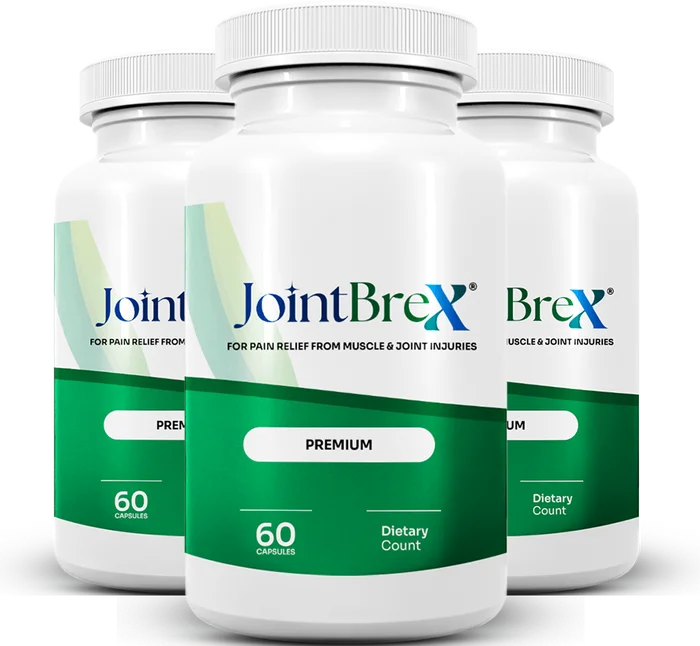
JointBrex prints every amount on its Supplement Facts panel. Two capsules provide glucosamine sulfate (1,000 mg), Boswellia serrata extract (133.3 mg), chondroitin sulfate (100 mg), turmeric root (100 mg), and 16.7 mg each of quercetin, methionine, MSM and bromelain. The routine is two capsules a day before a meal, a bottle holds 60 capsules (a 30-day supply), and the brand describes every order as a one-time purchase with a 60-day money-back guarantee. The producer lists two bottles at $79 each, three at $69 each and six at $49 each, in US dollars. The label declares crustacean shellfish (crayfish), so check it if you have a seafood allergy.
I go through each ingredient in my JointBrex review. As the official JointBrex page advises, show the label to your doctor first if you are pregnant, nursing, under 18 or have a known medical condition.
Artivorin: four ingredients, turmeric first
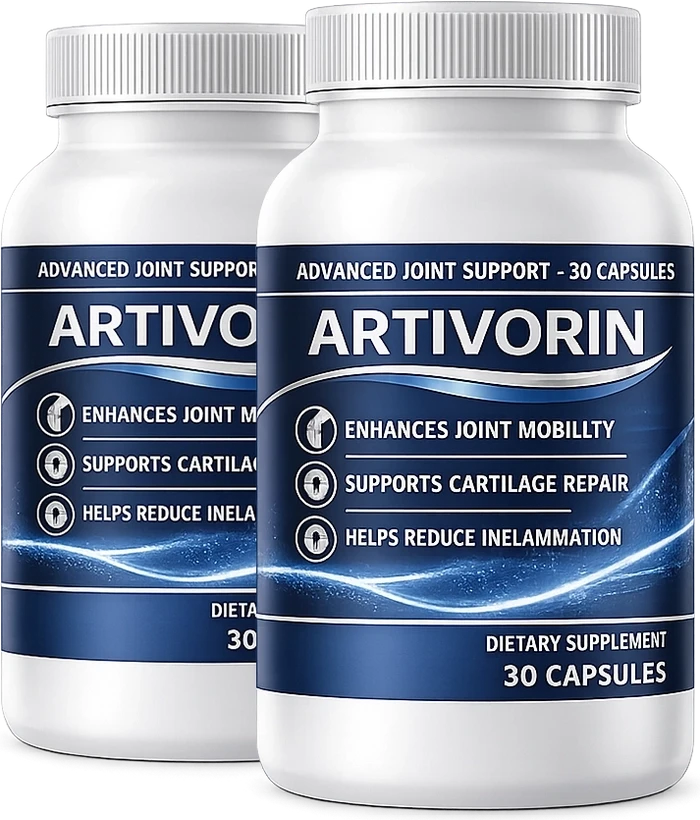
Artivorin keeps the formula short: turmeric extract standardized to 95% curcuminoids, CoQ10, Butcher’s Broom and alpha lipoic acid, taken as a daily capsule. A two-bottle package is a 60-day supply. On the official order page on October 19, 2026, two bottles were $178 ($89 each, plus shipping), three bottles were $216 ($72 each, free US shipping) and six bottles were $294 ($49 each, free shipping). Every package comes with a 60-day money-back guarantee. More detail is on my Artivorin page.
Artivorin prices are in US dollars, as listed on the official site on October 19, 2026, and may change.
A simple way to choose: if you like a glucosamine and chondroitin formula with several supporting ingredients, JointBrex is the one to look at. If you prefer a short, turmeric-led label, look at Artivorin. Either one works best as a companion to the seven habits above.
Joint Pain After 50: My Verdict
Start with the habits, because they are free, they work together and each one gets easier with practice: walk a little every day, stretch, strengthen two days a week, keep a steady weight, use heat and cold, make the day easier on your joints and protect your sleep. Give them a few weeks of steady effort before you judge how you feel.
If you want a supplement as one more step in the routine, read the label first, pick the style that suits you and keep the habits going alongside it. My healthy aging after 50 guide brings sleep, memory and joint comfort together in one place.
Frequently Asked Questions
What helps joint pain after 50 the most?
Everyday movement is the habit every source puts first: low-impact activity such as walking, swimming or tai chi, gentle stretching and strength work two days a week. A steady weight, heat or cold on sore days, joint-friendly daily routines and good sleep add to it.
What is the best exercise for joint pain after 50?
There is no single best one. The NIA lists walking, cycling, swimming and tai chi, and NIAMS adds water exercise and low-impact aerobics. Pick the one you enjoy enough to repeat, start slowly and add stretching and light strength work.
Is walking good for sore joints?
Yes. Walking is on both the NIA and NIAMS lists of low-impact activities. The federal guidelines suggest at least 150 minutes of moderate activity a week, spread through the week, which can be three 10-minute walks a day. If your joints keep you below that, be as active as your abilities allow.
Does weight affect joint pain?
It can. The NIA and NIAMS explain that managing your weight reduces stress on the joints, especially the knees and hips, and may reduce pain and increase mobility. A steady, gradual pace works best.
Should I use heat or cold on sore joints?
Both can help. NIAMS says heat increases blood flow, tolerance for pain and flexibility, which suits stiff mornings, while cold numbs the nerves around the joint and may relieve inflammation, which suits a joint that is sore after a busy day. Use whichever feels better.
Can poor sleep make joint pain worse?
The Arthritis Foundation reports that the link runs both ways: poor sleep can make joint pain worse the next day. A regular bedtime, less caffeine and screen time in the evening, and a calm wind-down are the basics.
Why do joints ache more after menopause?
The NIA notes that osteoarthritis is more common in women than in men, especially after age 50, and that for most women osteoarthritis of the hands develops after menopause. Joints change gradually, which is why daily movement and strength work matter.
What is in JointBrex and Artivorin?
JointBrex has eight ingredients: glucosamine sulfate, Boswellia serrata, chondroitin sulfate, turmeric root, quercetin, methionine, MSM and bromelain. Artivorin has four: turmeric extract standardized to 95% curcuminoids, CoQ10, Butcher's Broom and alpha lipoic acid. Both are daily capsules with a 60-day money-back guarantee.
Want to See the Labels for Yourself?
Visit the official websites to read the full label and see the current offer.
Statements about dietary supplements on this page have not been evaluated by the Food and Drug Administration. These products are not intended to diagnose, treat, cure or prevent any disease.