

You are halfway through a sentence when the word you need simply steps out of the room. You laugh it off, but it keeps happening: the name on the tip of your tongue, the reason you opened the fridge, the email you have now read three times. If that sounds like your week, you are in very good company, and it is one of the things women ask me about most.
I write Primaurea from my own experience after menopause, and I am not a doctor. So I read what the Office on Women's Health, the National Institute on Aging and the SWAN study (a long-running U.S. study of women through midlife) have to say. Below you will find why the fog happens, four everyday habits that support memory and focus, and where a daily memory capsule can fit if you would like one.
Is Brain Fog Real After 50?
Yes, and it has a name in the research. The Office on Women's Health lists brain fog and memory changes among the symptoms of the menopause transition: you may forget words or find it hard to focus, and these changes are common in perimenopause and often improve after menopause.
The best numbers come from SWAN, the Study of Women's Health Across the Nation. In 2009 its researchers followed 2,362 women for four years and tested processing speed, verbal memory and working memory. Women who were premenopausal or postmenopausal scored higher with repeated testing, which is what people usually do. In late perimenopause that practice gain disappeared on the speed test, and memory scores did not rise during early or late perimenopause either. The researchers wrote that this matches what women describe, not learning quite as well as before, and that scores rebounded to premenopausal levels after menopause, so the difficulties may be time-limited.
That is why I find the SWAN result so reassuring: the foggy stretch is real, and for many women it lifts. A later SWAN analysis followed 2,124 women for a median of 6.5 years and measured the ordinary slope of aging at about 4.9% in processing speed and 2% in delayed memory over ten years, a gentle slope that everyday habits are well placed to support. For the bigger hormone picture, my guide to hormonal balance after menopause is a good next read.
Which Everyday Habits Support Memory and Focus?
The National Institute on Aging notes that scientific research points to steps you can take to help maintain cognitive health, and that these small changes can add up when you make them part of your routine. These are the four that fit most easily into an ordinary week.
1. Protect your sleep
The institute puts healthy sleep at generally seven to nine hours each night. A regular bedtime and a screen-free last half hour make that number easier to reach, and if hot flashes or 3 a.m. wake-ups keep chopping up your nights, my guide to menopause and sleep walks through what helps.
2. Keep moving
Federal guidelines recommend at least 150 minutes (2.5 hours) of physical activity a week, and the institute calls walking a good start. It also describes a randomized controlled trial in which exercise increased the size of a brain structure important to memory and learning, with better spatial memory as a result, while adding that more research is needed. A ten-minute walk after lunch is an easy way to begin, and my guide to blood sugar and energy dips after 50 shows why a short walk after eating also helps your afternoon.
3. Learn something new
In one study the institute cites, older adults who learned quilting or digital photography had more memory improvement than those who only socialized or did less demanding activities. It adds that music, theater, dance and creative writing have shown promise for well-being, from better memory and self-esteem to less stress. A new recipe, a language class, a card game or a crossword all give your attention something enjoyable to work on.

4. Stay connected
The Health and Retirement Study, which the institute describes, analyzed data from more than 7,000 participants age 65 and older. High social engagement, such as visiting with neighbors and doing volunteer work, was associated with better cognitive health in later life. A weekly walk or coffee with a friend covers habits two and four at once.

Food counts too. The institute describes a healthy, balanced diet as fruits and vegetables, whole grains, lean meats, fish and poultry, and low-fat or nonfat dairy, with plenty of water. My list of best foods to ease menopause symptoms has easy ideas, and if hunger swings are part of your afternoon slump, see why you are always hungry after 50.
What Does a Calm First Week Look Like?
You do not need to change everything at once. Here is one way to start:
- Tonight: pick a bedtime and keep it all week.
- Tomorrow: walk for ten minutes after lunch.
- Midweek: choose something new for your mind, such as a crossword or a recipe you have never tried.
- Weekend: take a walk or have a coffee with a friend.
Give it two or three weeks before you judge. If one change feels easy, keep it and add the next.
Where Can a Daily Memory Capsule Fit In?
Sleep, movement, a curious mind and good company come first, and no capsule takes their place. Some readers like to add one daily supplement on top as a simple extra step. If that sounds like you, these are the two memory capsules I review on Primaurea. They are built differently, so they suit different tastes.
MemoHoney: a plant blend for everyday memory and focus
★ Diane's Pick for everyday memory and focus
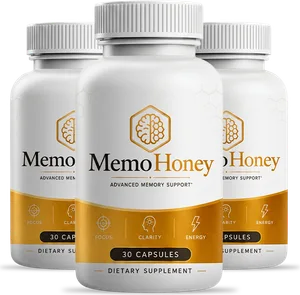
MemoHoney is a two-capsule daily supplement made to support memory, focus and mental clarity. One 695 mg blend brings together 15 plant and nutrient ingredients, including bacopa, rhodiola, green tea leaf extract, choline bitartrate and maca, in plant-based capsules. It is made in the USA in an FDA-registered facility, and the label names every ingredient.
You take 2 capsules a day with an 8 oz glass of water, and one bottle lasts 30 days. That is why it is my Pick here: familiar plant ingredients in one simple daily habit, with a 60-day money-back guarantee that gives you a fair stretch of weeks to see how it feels in your routine. I go through the label in my MemoHoney review.
Memocept: a caffeine-free capsule, one a day
Memocept takes a different route. It is a once-daily, caffeine-free capsule built on two forms of L-arginine, two forms of L-citrulline, beta-alanine and niacin, with every amount printed on the label. One capsule a day, 30 to a bottle, sits easily next to your morning glass of water, and it carries the same 60-day guarantee. My Memocept review reads that label line by line. Visit official site: Memocept
How to choose: if you like the idea of a plant blend with familiar herbs, MemoHoney is my Pick. If you would rather have one capsule a day with a caffeine-free formula, Memocept is an easy morning habit. Both sit comfortably beside the four habits above.
On the official order pages on October 21, 2026, both were priced the same: 2 bottles for $158 ($79 each plus $9.99 shipping), 3 bottles for $207 ($69 each, free US shipping) and 6 bottles for $294 ($49 each, free US shipping), and each order comes with a 60-day money-back guarantee. As the official pages of MemoHoney and Memocept advise, consult your physician or healthcare provider before use, for example if you are pregnant, nursing, taking medication or have a medical condition.
Prices are in US dollars, as listed on the official sites on October 21, 2026, and may change.
Brain Fog After 50: My Verdict
Brain fog after 50 is real and common, and the SWAN research gives good reason for patience: for many women the foggiest stretch passes. Start with what you control this week: a steady bedtime, a daily walk, something new for your mind and time with people you enjoy.
If you would like one daily capsule beside those habits, MemoHoney is my Pick for everyday memory and focus, and Memocept is a caffeine-free, one-a-day alternative. My healthy aging after 50 guide brings sleep, memory and everyday habits together in one place.
Frequently Asked Questions
Is brain fog normal after 50?
Yes. The Office on Women's Health lists brain fog and memory changes among common symptoms of the menopause transition. You may forget words or find it hard to focus, and these changes are common in perimenopause and often improve after menopause.
How long does menopause brain fog last?
It varies from woman to woman. In the SWAN study of 2,362 women, memory and speed scores stopped improving during perimenopause and rebounded to premenopausal levels after menopause, which suggests the difficulties may be time-limited.
What helps memory and focus besides supplements?
The National Institute on Aging points to generally seven to nine hours of sleep a night, at least 150 minutes of physical activity a week, learning something new, staying socially connected and a balanced diet.
Can a supplement help with brain fog?
A supplement works best as an extra step on top of those habits. MemoHoney and Memocept are both made to support memory, focus and mental clarity, and each comes with a 60-day money-back guarantee, so you can try one with confidence.
What is in MemoHoney and how do I take it?
MemoHoney is a 695 mg blend of 15 plant and nutrient ingredients in plant-based capsules, including bacopa, rhodiola, green tea leaf extract, choline bitartrate, maca root, inositol, mulberry leaf and fenugreek. Take 2 capsules a day with an 8 oz glass of water; one bottle is a 30-day supply.
What is in Memocept and how do I take it?
Memocept is a once-daily, caffeine-free capsule with two forms of L-arginine, two forms of L-citrulline, beta-alanine and niacin, and every amount is printed on the label. Each bottle holds 30 capsules, a 30-day supply.
How much do MemoHoney and Memocept cost?
On October 21, 2026, both were $158 for two bottles (plus $9.99 shipping), $207 for three and $294 for six on their official sites, which works out to $49 a bottle with free US shipping on the six-bottle option.
Is there a money-back guarantee?
Yes. Every MemoHoney and Memocept order from the official website comes with a 60-day money-back guarantee.
Statements about dietary supplements on this page have not been evaluated by the Food and Drug Administration. These products are not intended to diagnose, treat, cure or prevent any disease.