
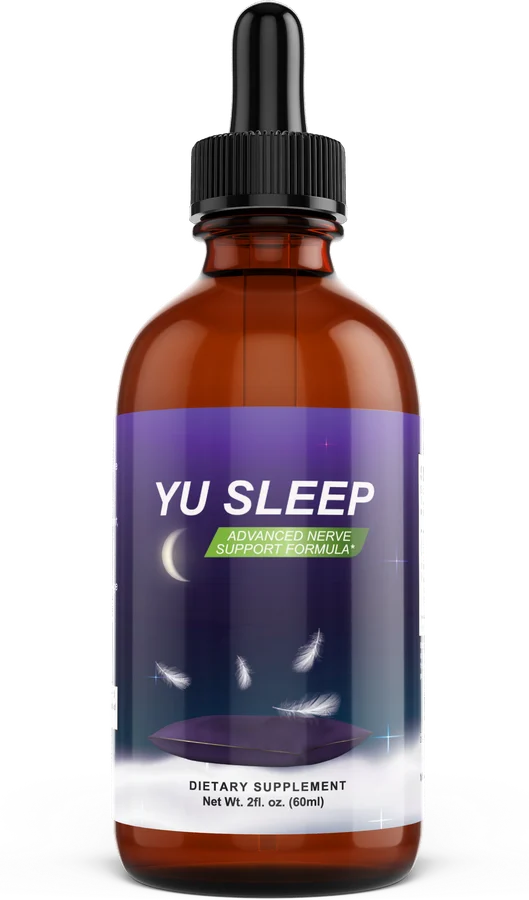
Is Yu Sleep Worth Trying? The Short Answer
Short answer: Yu Sleep is a liquid sleep supplement held under the tongue 30 minutes before bed. Each 2 mL serving has 0.9 mg of melatonin, vitamins B2 and B6, and a 637 mg blend of tart cherry, magnesium glycinate, apigenin, lemon balm, 5-HTP, L-theanine and GABA. A gentle option for lighter, broken sleep after 50.
A quick note on how I wrote this: I have not tested Yu Sleep myself. This is an in-depth research review. I went through the full Supplement Facts label, the maker's official page and the published research on each ingredient, the same way I'd read a label in the pharmacy aisle before buying.
I score every product on the same seven criteria, explained on my about page. Here is how Yu Sleep came out:
| Criterion | Score | Why |
|---|---|---|
| What it promises | 4.0 | Built for staying asleep, with a sensible formula for that exact goal. |
| Ease of use | 4.5 | Two droppers under the tongue once a night, no pills to swallow. |
| How it's built and what it publishes | 4.0 | The calming herbs share a 637 mg blend, while melatonin and B vitamins are printed exactly. |
| Evidence and honest claims | 3.5 | Early research behind each ingredient, and a low melatonin dose that matches expert advice. |
| Price for what it is | 3.5 | From about $1.63 a night on the 6-month kit, with free shipping. |
| Checkout | 5.0 | Secure checkout on the official website. |
| Guarantee | 5.0 | 60-day money-back guarantee on every package. |
| Final score | 4.2 / 5 | A gentle nightly routine for 3 a.m. wake-ups. |
What Is Yu Sleep, and Who Is It For?
Yu Sleep is a dietary supplement sold as a 2 fl oz (60 mL) dropper bottle. You take two full droppers under your tongue about half an hour before bed, and one bottle holds roughly 30 servings, so it lasts about a month.
The idea behind the formula is simple. Instead of a big dose of melatonin, it uses a small one and surrounds it with ingredients chosen to quiet a busy mind and support steadier sleep through the night.
That makes it a natural fit for a very specific kind of sleeper, and one I hear from constantly: the woman who falls asleep without much trouble, then finds herself wide awake at 2 or 3 a.m., running through tomorrow's to-do list. If that sounds like you, keep reading. If your main problem is lying awake for hours at bedtime, it can still help, but the low melatonin dose is built with the middle of the night in mind.
Why Do So Many Women Wake Up at 3 A.M. After 50?
You are far from alone. Older adults still need about seven to nine hours of sleep, but according to the National Institute on Aging (NIA), sleep tends to become shorter and lighter with age, and you may wake up more often during the night. The NIA also notes that insomnia is the most common sleep problem in adults 60 and older.
For women, menopause adds its own layer. The NIA explains that hot flashes, especially night sweats, and mood changes can contribute to poor sleep. It also points to research suggesting that waking from sleep may itself trigger hot flashes, rather than only the other way around.
I lived this one. During my own transition, hot flashes woke me up three times a night, and even after they eased, the 3 a.m. habit stuck around for months. If night sweats are part of your picture, my guide to hot flashes after 50 covers what helps, and my article on hormonal balance after menopause explains the bigger hormonal picture.
Your sleep runs on two systems. One is the body clock, which uses melatonin to signal that it's dark. The other is a steady drive to sleep that builds the longer you're awake, partly through a brain chemical called adenosine. When the pull of that second system fades in the early morning hours, a lighter sleeper surfaces more easily. My healthy aging after 50 guide goes deeper into both systems.
What's Inside Yu Sleep? The Label, Decoded
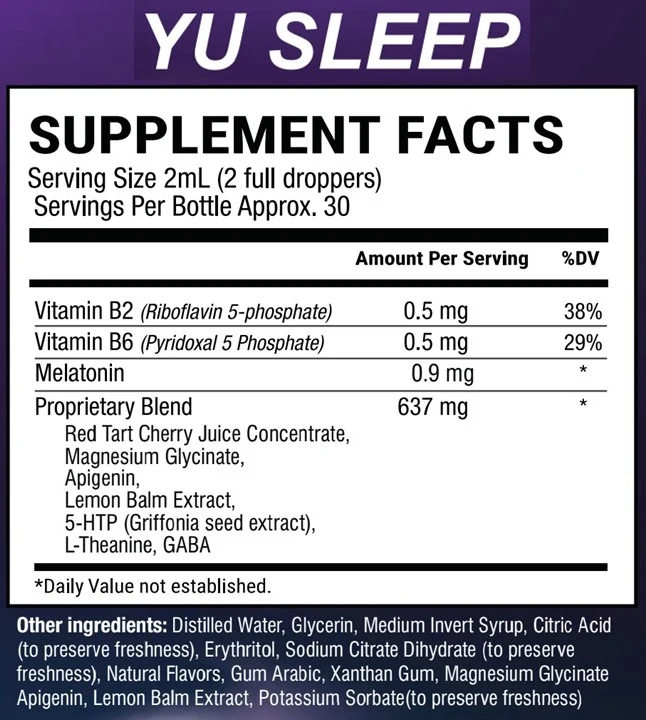
Here is the full Supplement Facts panel, per 2 mL serving (two full droppers), exactly as the maker publishes it:
| Ingredient | Per serving |
|---|---|
| Vitamin B2 (riboflavin 5-phosphate) | 0.5 mg 38% DV |
| Vitamin B6 (pyridoxal 5-phosphate) | 0.5 mg 29% DV |
| Melatonin | 0.9 mg |
| Blend: red tart cherry juice concentrate, magnesium glycinate, apigenin, lemon balm extract, 5-HTP (griffonia seed extract), L-theanine, GABA | 637 mg |
Other ingredients: distilled water, glycerin, medium invert syrup, citric acid, erythritol, sodium citrate dihydrate, natural flavors, gum arabic, xanthan gum and potassium sorbate (to keep it fresh).
Two details stood out to me. The B vitamins come in their active forms, riboflavin 5-phosphate and pyridoxal 5-phosphate, which is a thoughtful choice for a small daily dose. And the melatonin is printed down to the tenth of a milligram. Here is what each ingredient brings to the formula.
Melatonin (0.9 mg)
Melatonin is the hormone your body releases when it gets dark. The Sleep Foundation says most adults are advised to start with 0.5 to 1 mg, and that older adults should use the lowest possible dose. At 0.9 mg, Yu Sleep sits right inside that starting range.
Red tart cherry juice concentrate
Tart cherries naturally contain melatonin. In a small placebo-controlled study, a tart cherry juice concentrate raised melatonin levels and improved total sleep time in 20 healthy adults over seven days. A pilot study in adults over 50 with insomnia found that tart cherry juice increased sleep time by 84 minutes on overnight sleep testing. Both studies were small and used full glasses of juice, so I see it as a supporting player alongside the melatonin.

L-theanine and GABA
L-theanine is an amino acid found in tea, best known for a calm, relaxed kind of alertness. GABA is the brain's main calming messenger. Together they target the racing-mind side of a 3 a.m. wake-up, which is the part many women tell me bothers them most.
Lemon balm and apigenin
Lemon balm is a mint-family herb with a long history of use for relaxation. Apigenin is a plant compound found in chamomile, the reason a cup of chamomile tea has been a bedtime classic for generations. Both add to the wind-down side of the formula.
Magnesium glycinate
Magnesium glycinate is a gentle form of magnesium. The National Center for Complementary and Integrative Health (NCCIH) describes a 2021 review of three studies suggesting magnesium may help older adults with insomnia fall asleep faster, while noting that more research is needed.
5-HTP (griffonia seed extract)
5-HTP is a building block the body can turn into serotonin and, from there, into melatonin, as NCCIH explains. It's a smart companion for a low melatonin dose, because it works one step earlier in the same pathway. Because it's related to serotonin, it's also the main reason I include a medication check further down.
Vitamins B2 and B6 (0.5 mg each)
These two B vitamins support normal energy metabolism, and B6 is one of the nutrients the body uses to make neurotransmitters. At 38% and 29% of the Daily Value, the amounts are modest and easy to fit around a regular multivitamin.
How Does Yu Sleep Work?
Yu Sleep works on both sleep systems at once. The small melatonin dose gives your body clock a gentle "it's night" signal. The rest of the formula, from L-theanine and GABA to lemon balm and magnesium, aims at the relaxation side, so a busy mind has an easier time settling and staying settled.
The delivery is the other half of the design. The maker describes Yu Sleep as a nano-emulsified liquid, meaning the ingredients are broken into very small droplets so they can be absorbed through the tissue under your tongue instead of waiting on digestion. For anyone who dislikes swallowing capsules at night, that alone is a plus.
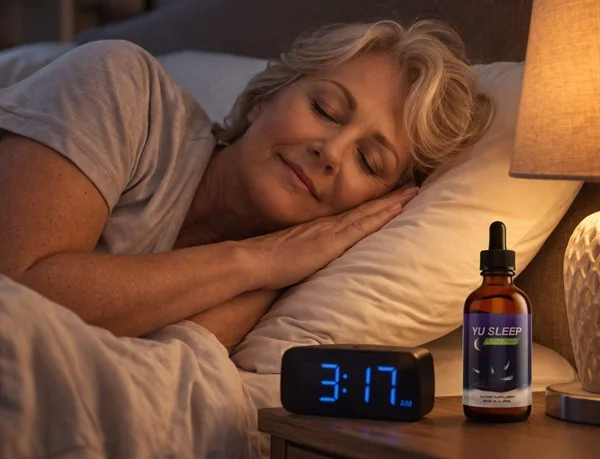
How to take it
- Dose: two full droppers (2 mL), per the label.
- Timing: about 30 minutes before bed, held under the tongue.
- Supply: one bottle holds about 30 servings, roughly one month.
- Consistency: the maker recommends at least two months of nightly use to judge the full effect.
Why Does a Low Melatonin Dose Matter After 50?
Many melatonin gummies and tablets on store shelves come in 5 or 10 mg doses. According to NCCIH, melatonin may stay active longer in older people than in younger people and cause daytime drowsiness. A smaller dose is one of the easiest ways to wake up feeling clear.
NCCIH also reports that when researchers tested 31 melatonin supplements in a 2017 study, most didn't contain the amount listed on the label. That's one more reason I like formulas that print an exact melatonin figure and keep it low.
Yu Sleep Pros and Cons
What I like
- Only 0.9 mg of melatonin, inside the recommended starting range.
- Liquid held under the tongue, so there's no capsule to swallow at night.
- Active forms of vitamins B2 and B6, with exact amounts on the label.
- A calm-focused blend aimed at the racing mind behind 3 a.m. wake-ups.
- Tart cherry, with small placebo-controlled studies behind it, one of them in adults over 50.
- Ships within 24 hours in discreet packaging.
- 60-day money-back guarantee on every package.
Worth knowing before you buy
- The seven calming ingredients share one 637 mg blend, so their single amounts aren't listed, while the melatonin and B vitamins are printed exactly.
- It comes in 2, 3 or 6-month kits, which matches the maker's advice of two steady months, and the larger kits bring the price per night down.
- With melatonin and 5-HTP inside, a quick word with your doctor first makes it an easy, safe fit if you take prescription medicine.
Who Should (and Shouldn't) Use Yu Sleep?
A good fit if you
- Fall asleep fine but wake in the small hours and struggle to drift back off.
- Want a lower melatonin dose than typical store-shelf products.
- Prefer a liquid over capsules or gummies.
- Are ready to give a nightly routine at least two months.
Talk to your doctor first if you
- Are pregnant or breastfeeding. NCCIH notes there's little research on melatonin in pregnancy.
- Take an antidepressant or any medicine that affects serotonin, because of the 5-HTP.
- Take a blood thinner or have epilepsy, groups NCCIH says need medical supervision with melatonin.
- Use other sleep aids or sedatives, or drink alcohol in the evening.
- Snore loudly or wake up gasping, which can point to sleep apnea and needs a proper diagnosis.
Two practical notes. Take Yu Sleep only when you're settled in for the night, and don't drive or operate machinery afterward. And if poor sleep has lasted more than three months, the NIA describes that as chronic insomnia, which is worth a conversation with your doctor alongside any supplement. Keep the bottle out of reach of children.
How Much Does Yu Sleep Cost?
Yu Sleep is sold in three kits on the official website. These are the prices I found there on September 30, 2026. Each bottle holds about 30 servings, so I've added the cost per night to make the kits easy to compare.
| Kit | Per bottle | Total | Per night* | Extras |
|---|---|---|---|---|
| 2-month supply 2 bottles | $69 | $138 | $2.30 | Shipping added at checkout |
| 3-month supply 3 bottles | $59 | $177 | $1.97 | Free shipping, free digital bonuses |
| 6-month supply Best value 6 bottles | $49 | $294 | $1.63 | Free shipping, all 3 digital bonuses |
*Approximate cost per night: kit total divided by 30 servings per bottle.
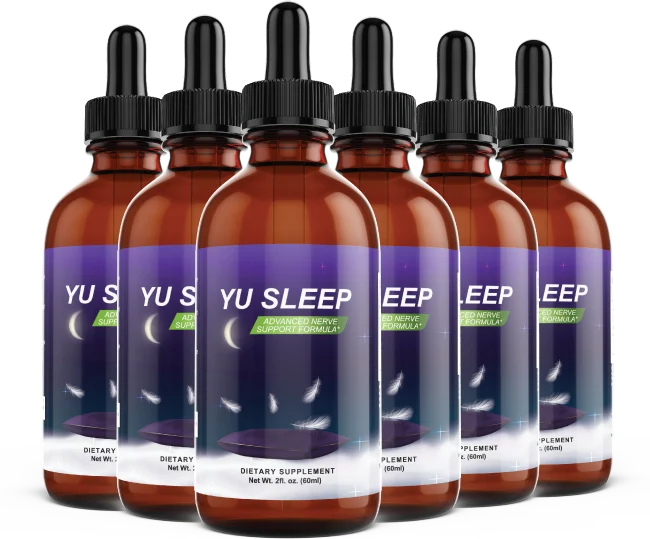
The 6-month kit is the best value by a clear margin, and six months also matches the longer routine the maker describes. The 3-month kit is a comfortable middle ground with free shipping.
The digital bonuses include a bedtime-story collection called The Wind Down Routine and two short guides on evening habits. Prices can change, so the official website always has the current offer.
Go to Official Yu Sleep Website
Does Yu Sleep Have a Money-Back Guarantee?
Yes. Every package is covered by a 60-day money-back guarantee from the maker. Since the recommendation is at least two months of nightly use, the guarantee covers the whole trial period, which takes the pressure off trying it.
How Can You Get the Most Out of Yu Sleep?
A sleep supplement works best on top of good sleep habits. These are the ones the NIA recommends for older adults, and the ones that made the biggest difference for me:
- Same bedtime, same wake time, weekends included. Take your drops as part of that routine.
- Keep the bedroom cool. This matters twice as much if night sweats are part of your nights.
- Cut caffeine early and skip late-afternoon naps.
- Go easy on alcohol and big meals in the two to three hours before bed.
- Keep a sleep diary for the first few weeks, noting wake-ups, caffeine and exercise, so you can see your own progress.

If stress is the main thing keeping you up, my Elixir of Youth review looks at an ashwagandha and L-theanine formula built around daytime stress and sleep. And for the wider picture of hormones, sleep and mood during the transition, my menopause supplements guide is a good next read.
Yu Sleep FAQ
What is Yu Sleep and how does it work?
Yu Sleep is a liquid sleep supplement you hold under your tongue about 30 minutes before bed. It pairs a low 0.9 mg dose of melatonin, the body's darkness signal, with ingredients chosen to help you relax, such as tart cherry, L-theanine, GABA, lemon balm and magnesium glycinate, plus vitamins B2 and B6.
How much melatonin is in Yu Sleep?
Each 2 mL serving (two full droppers) contains 0.9 mg of melatonin, according to the Supplement Facts label. That sits inside the 0.5 to 1 mg starting range the Sleep Foundation describes for adults, and well below the 5 or 10 mg found in many store-shelf melatonin products.
How do I take Yu Sleep?
The maker's directions are two full droppers (2 mL) held under the tongue about 30 minutes before bed. One 2 fl oz (60 mL) bottle holds about 30 servings, so each bottle lasts roughly a month of nightly use. Keep the same bedtime routine every night for the most consistent results.
How long does Yu Sleep take to work?
The maker says many people notice easier sleep within the first week and recommends at least two months of steady nightly use to judge the full effect. Individual results vary. Keeping a simple sleep diary during the first weeks, as the National Institute on Aging suggests, makes it easier to see your own progress.
Is Yu Sleep safe to take every night?
Its ingredients are common in sleep supplements and the melatonin dose is low, but it contains melatonin and 5-HTP, so talk to your doctor first if you take prescription medicine, especially antidepressants, blood thinners or other sleep aids, or if you are pregnant or breastfeeding. Don't drive after taking it.
Can Yu Sleep help with menopause sleep problems?
Yu Sleep is designed to support falling asleep and staying asleep, which is exactly where many women struggle during and after menopause. It is not made to treat hot flashes. Pairing it with a cool bedroom and a steady schedule covers both sides of menopause-related wake-ups.
Does Yu Sleep have a money-back guarantee?
Yes. Every Yu Sleep package, from the 2-month kit to the 6-month kit, is covered by a 60-day money-back guarantee from the maker, so you have two full months of nightly use to decide whether it fits your routine.
Where can I buy Yu Sleep?
I recommend the official Yu Sleep website, which lists the current 2, 3 and 6-month kits, ships orders within 24 hours in discreet packaging and covers every package with the 60-day guarantee. Buying there also makes sure you receive the genuine formula described on this page.
Ready for Calmer Nights?
Yu Sleep brings a low 0.9 mg melatonin dose, a calming blend and easy under-the-tongue drops together in one nightly step, with 60 days to see how it fits your routine.
Go to Official Yu Sleep WebsiteEvery package includes a 60-day money-back guarantee.

About the author: Diane Foster
Founder & writer, Primaurea · Updated
I'm 54 and went through a rough menopause transition, including the hot flashes that woke me up three times a night. I write Primaurea from that experience and from independent research. I'm not a doctor or a licensed nutritionist, and nothing here is medical advice. Read my story.
How this review was made: I have not taken Yu Sleep myself. This research review is based on the official Supplement Facts label, the maker's website (prices checked on September 30, 2026) and the public health sources linked below. The score comes from my seven fixed criteria.
Sources: NIA, Sleep and Older Adults; NIA, Sleep Problems and Menopause; NCCIH, Melatonin; NCCIH, Sleep Disorders and Complementary Health Approaches; Sleep Foundation, Melatonin Dosage; Howatson et al., 2012; Losso et al., 2018.
Affiliate disclosure: the buttons on this page lead to the official Yu Sleep website. If you buy through them, I may earn a commission at no additional cost to you. It never changes the score or what I write.