
Your chest feels a little heavy first thing in the morning, the stairs leave you winded sooner than they used to, and every change of season seems to bring that stuffy feeling back. It is easy to shrug it off as part of getting older, and the good news is that the everyday part of breathing is also where most of the help is.
I write Primaurea from my own experience after menopause. I am not a doctor, so I went to the National Library of Medicine (MedlinePlus), the American Lung Association, the EPA and the federal activity guidelines. Below is what changes in the lungs after 50, six habits those sources describe, a simple day that puts them together and a short look at where herbal support can fit.
Why Does Breathing Feel Different After 50?
MedlinePlus explains that aging touches the lungs in a few quiet ways. The bones of the chest thin and change shape, which can limit how well the ribcage expands. The diaphragm, your main breathing muscle, weakens, so moving air in and out takes more effort. The tissue around the airways loses some of its ability to hold them fully open, and the tiny air sacs lose their shape.
Two more changes are easy to miss. The nerves that trigger your cough become less sensitive, so particles can be harder to clear, and the lungs recover more slowly after contact with smoke or other harmful particles. That is why the same stairs, the same pollen season or the same stuffy room can feel different at 55 than they did at 35.
MedlinePlus lists three ways to ease the effects of aging on the lungs: avoid smoke, exercise regularly, and avoid lying in bed or sitting for long periods. They are simple, and they are the base of the habits below. If you want the wider picture of how sleep, memory and joints change together, my healthy aging after 50 guide puts it in one place.
What Everyday Habits Help You Breathe Easier After 50?
1. Walk most days
Regular exercise is the habit MedlinePlus puts first for the lungs, and the federal Physical Activity Guidelines for Americans give a clear target: at least 150 minutes of moderate activity a week, spread through the week, which is 30 minutes on five days. It can also be three 10-minute walks. Older adults are advised to add muscle strengthening on two or more days a week and balance work, and if a health condition keeps you below 150 minutes, the guidelines say to be as active as your abilities allow. Some activity is always better than none.
Start slowly and add a few minutes each week. My guide to weight gain after 50 and the slow metabolism after 40 guide cover the walking and strength side in more detail, and the joint pain after 50 guide has low-impact options if your knees complain.

2. Practice two simple breathing exercises
The American Lung Association describes two exercises you can learn in one sitting:
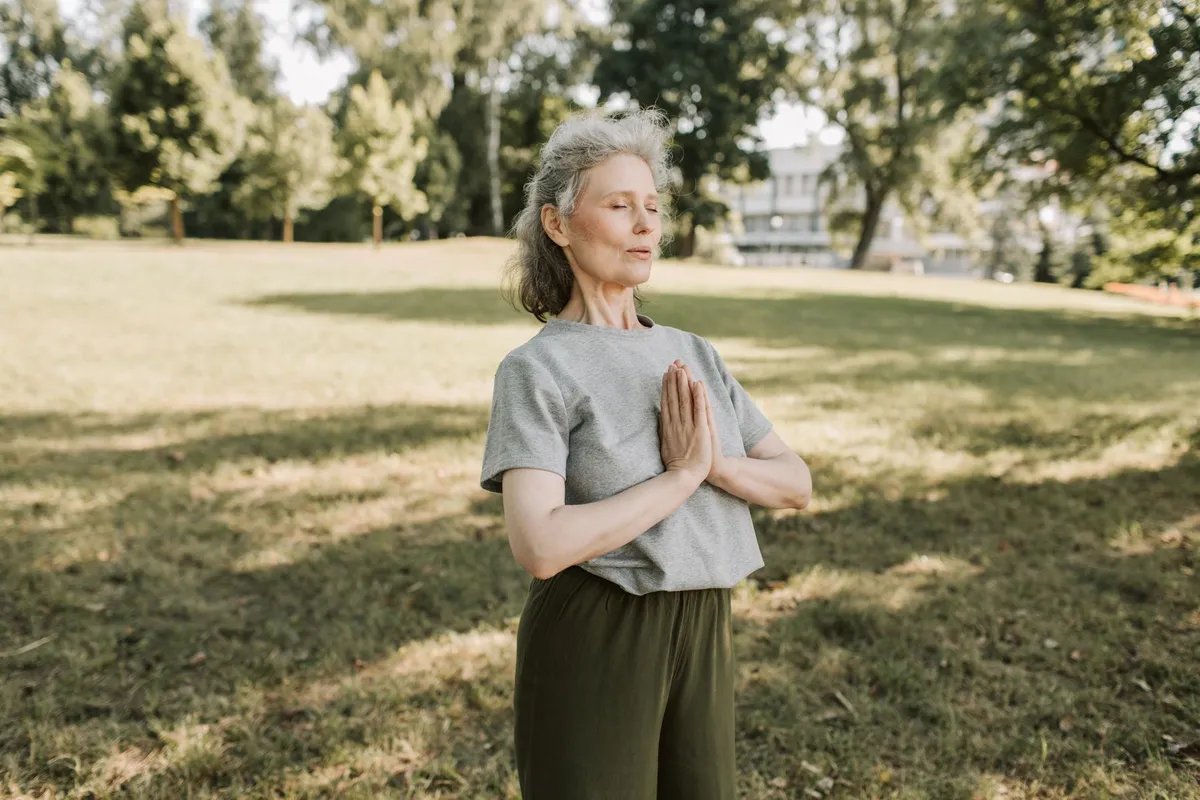
- Pursed-lip breathing. Sit in a chair and loosen your neck and shoulders. Breathe in slowly through your nose with your mouth closed, then purse your lips as if you were about to blow out a candle and breathe out slowly, making the exhale longer than the inhale.
- Belly (diaphragmatic) breathing. Sit upright or lie down with your hands on your belly. Breathe in slowly through your nose and let your belly rise, then breathe out through pursed lips, taking at least two to three times as long as the inhale. Keep your neck and shoulders relaxed.
The ALA suggests practicing both for 5 to 10 minutes a day, and learning them while you are breathing comfortably, so they are easier to use when you need them.
3. Break up long stretches of sitting
MedlinePlus notes that staying in bed or sitting for long periods lets mucus collect in the lungs. If your day is mostly a desk or a sofa, set a reminder to stand up, walk to the window and take a few belly breaths once an hour.
4. Keep the air at home clean
The EPA names three basic strategies for better indoor air, and puts them in this order:
- Remove or reduce the source. The EPA calls this usually the most effective step. The American Lung Association adds that excess moisture can cause mold, and that outdoor pollutants and allergens can come in on shoes, clothing and pets, so a shoe rack by the door is a small fix.
- Ventilate. Open windows and doors when the weather permits, and run the bathroom or kitchen fan that vents outdoors, especially while you cook or shower.
- Consider an air cleaner. The EPA says some are highly effective at removing particles while many table-top models are much less so, and that they work best when kept up as the maker directs.
5. Check the air outside before you head out
The EPA's Air Quality Index (AQI) turns outdoor air quality into one number. From 0 to 50 the air is good, from 51 to 100 it is moderate, and from 101 to 150 it is unhealthy for sensitive groups. If your chest tends to notice changes in the air, the AQI is worth a glance on your weather app before a walk. On a day in the orange range (101 to 150), you can move the walk indoors and keep the habit going.
6. Stay away from smoke
MedlinePlus says smoking speeds up lung aging, and it lists smoke exposure as something to avoid. Because the lungs recover more slowly after contact with smoke after 50, a smoke-free home, car and patio is one of the kindest things you can do for them.
What Does a Simple Day for Easier Breathing Look Like?
You do not need to do all six at once. This is one way to spread them across a normal day:
- Morning: five minutes of belly breathing before you get up or at the window, the kitchen fan on while you cook, and a glance at the AQI.
- Midday: a 10-minute walk after lunch, indoors if the air outside is poor.
- Afternoon: stand up once an hour and take a few slow breaths. On two days a week, add some light strength work.
- Evening: shoes off at the door, a window open for a few minutes when the weather allows and five minutes of pursed-lip breathing.
Check in with yourself every week. If one habit feels easy, nudge it up a little. Building up slowly is the pace the federal guidelines recommend.
Where Can Herbal Support Fit In?
Walking, clean air and good breathing habits come first, and a spray or a capsule does not take their place. Some readers like to add a daily supplement to the routine, and if you are one of them, the label is where to start. Here are the two breathing formulas I have on Primaurea. One is a morning spray and the other is a daily capsule, so they suit different preferences.
BreathiZen: a herbal spray with five plant ingredients
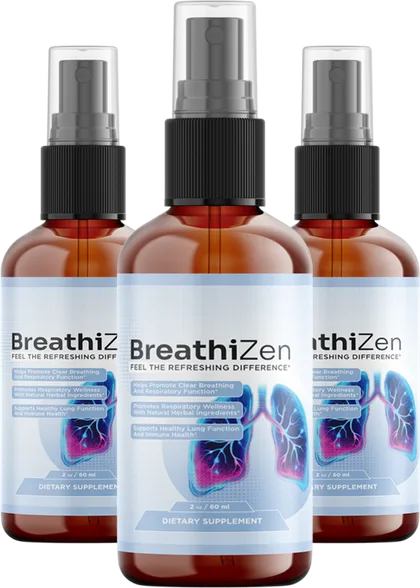
BreathiZen is a herbal spray made to support clear airways and comfortable everyday breathing. It combines mullein leaf extract, ginger root extract, bromelain, organic lemon extract and organic Cordyceps militaris extract. You shake the bottle well and spray 4 pumps (0.60 mL) into your mouth or onto your tongue once a day, so there is nothing to mix or swallow whole. It is made in the USA in an FDA-registered facility.
On the official order page on October 19, 2026, two bottles were $158 ($79 each, plus $9.99 shipping), three bottles were $207 ($69 each, free US shipping) and six bottles were $294 ($49 each, free US shipping). It is a one-time purchase with no subscription, and every order comes with a 60-day money-back guarantee. As the official BreathiZen page advises, show the label to your doctor first if you take medication, are pregnant or nursing, are under 18 or have a medical condition. I go through the details in my BreathiZen review.
Lungora: a daily capsule with six ingredients
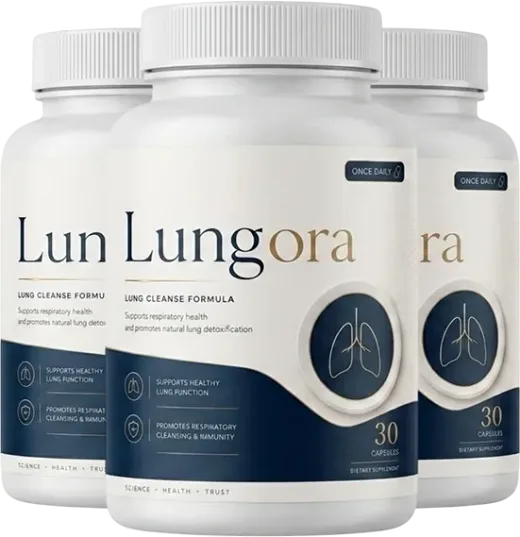
Lungora is a once-daily capsule designed to support comfortable everyday breathing and energy after 50. Its label combines magnesium glycinate, alpha lipoic acid, butcher’s broom root extract, L-carnitine, turmeric extract standardized to 95% curcuminoids and coenzyme Q10. The suggested routine is one capsule a day, and a bottle holds 30 capsules, a month’s supply.
On the official page on October 19, 2026, two bottles were $178 ($89 each, plus shipping), three bottles were $216 ($72 each, free US shipping) and six bottles were $294 ($49 each, free shipping). Lungora ships to the US and Canada, and every order comes with a 60-day money-back guarantee. The full label is in my Lungora review.
Prices are in US dollars, as listed on the official sites on October 19, 2026, and may change.
A simple way to choose: if you like a quick morning spray, look at BreathiZen. If you would rather take one capsule with a glass of water, look at Lungora. Either one works best as a companion to the six habits above.
Breathing Easier After 50: My Verdict
Start with the habits, because they are free, they work together and each one gets easier with practice: walk a little every day, learn the two breathing exercises, get up from the sofa, keep the air at home clean, check the air outside and keep smoke away. Give them a few weeks of steady effort before you judge how you feel.
If you want herbal support as one more step in the routine, read the label first, pick the style that suits you, spray or capsule, and keep the habits going alongside it. My healthy aging after 50 guide brings sleep, memory and joint comfort together in one place.
Frequently Asked Questions
How can I breathe easier after 50?
Build a few daily habits: walk most days (the federal guidelines suggest at least 150 minutes of moderate activity a week), practice pursed-lip and belly breathing for 5 to 10 minutes a day, avoid long stretches of sitting, keep the air at home clean and stay away from smoke. A herbal spray or capsule can sit alongside them.
Why does breathing feel different as you get older?
MedlinePlus explains that the bones of the chest change shape, the diaphragm weakens, the airways close more easily and the nerves that trigger coughing become less sensitive. The lungs also recover more slowly after contact with smoke or other harmful particles.
What breathing exercises are good after 50?
The American Lung Association describes pursed-lip breathing (in through the nose, out slowly through pursed lips, with a longer exhale) and belly breathing (hands on your belly, letting it rise as you breathe in). It suggests practicing both for 5 to 10 minutes a day while you are breathing comfortably.
How much should I walk for my lungs?
The Physical Activity Guidelines for Americans suggest at least 150 minutes of moderate activity a week, spread through the week, which can be three 10-minute walks a day. If a health condition keeps you below that, be as active as your abilities allow.
Does the air in my home matter for breathing?
Yes. The EPA names three strategies: remove or reduce the source of pollutants, ventilate (open windows, run bathroom and kitchen fans that vent outdoors) and consider an air cleaner. It calls source control usually the most effective step.
Should I check the air quality before walking outside?
It is a good habit. The Air Quality Index runs from 0 to 50 (good) and 51 to 100 (moderate) to 101 to 150 (unhealthy for sensitive groups). On a day in the orange range, you can take your walk indoors and keep the habit going.
What is in BreathiZen and Lungora?
BreathiZen is a herbal spray with mullein leaf extract, ginger root extract, bromelain, organic lemon extract and organic Cordyceps militaris extract, taken as 4 pumps once a day. Lungora is a daily capsule with magnesium glycinate, alpha lipoic acid, butcher's broom, L-carnitine, turmeric extract standardized to 95% curcuminoids and coenzyme Q10.
How much do BreathiZen and Lungora cost?
On October 19, 2026, BreathiZen was $158 for two bottles, $207 for three and $294 for six, and Lungora was $178 for two bottles, $216 for three and $294 for six. The three and six-bottle options ship free in the US, and both come with a 60-day money-back guarantee.
Want to See the Labels for Yourself?
Visit the official websites to read the full label and see the current offer.
Statements about dietary supplements on this page have not been evaluated by the Food and Drug Administration. These products are not intended to diagnose, treat, cure or prevent any disease.