
You open a jar and your grip is not what it was. You step out of bed in the morning and take a second to find your balance. You still do everything you always did, but your hands and feet seem to be the first to tell you that something has changed. If that sounds familiar, you are not alone, and it is worth knowing what is going on.
I write Primaurea from my own experience after menopause, and I am not a doctor. So I went to MedlinePlus, the CDC, the National Institute on Aging (NIA) and Harvard Health to see what they say about nerves as we age. Below are the everyday things that came up, a simple day that puts them together and a short look at where a daily nerve-health capsule can fit.
Why Do the Hands and Feet Feel It First After 50?
Your hands and your feet do the most detailed work of the day. They grip, balance, feel the floor and tell you where you are in space, so any small change in how your nerves carry messages is easy to notice there. MedlinePlus explains that with age, your brain and spinal cord lose nerve cells, and that nerve cells may begin to pass messages more slowly than in the past.
The same page adds that you may have reduced reflexes or reduced sensation, and that this can affect movement and safety and raise the risk of falls. That is why I like to treat this topic as a “look after the basics” subject: the habits below keep you moving, steady and rested, and they are all within reach today.
If you want the bigger picture of sleep, memory and joints after 50, my healthy aging guide brings it together in one place.

Does Moving More Help Your Nerves?
Movement is the habit that comes up everywhere. MedlinePlus says that physical exercise promotes blood flow to your brain and helps reduce the loss of brain cells. The CDC says adults need at least 150 minutes of moderate-intensity physical activity a week, such as 30 minutes a day, 5 days a week, plus at least 2 days of muscle-strengthening activity. It also says you do not have to do it all at once, and that some activity is better than none.
For balance, the NIA suggests yoga, Pilates and tai chi, which can all improve balance and muscle strength, and says you can also lift weights or use resistance bands. If joints are part of the picture, my guide to joint pain after 50 has gentle ways to start.

Four small moves for hands and feet
- Open and close your hands. A slow fist, then fingers spread wide, ten times, while the kettle boils.
- Wiggle your toes. Lift them, spread them and press them down while you sit.
- Circle your ankles. Five slow circles each way, once in the morning and once at night.
- Stand up often. A short walk around the house after a long sit keeps the whole body moving.
Which Shoes and Foot Habits Keep You Steady?
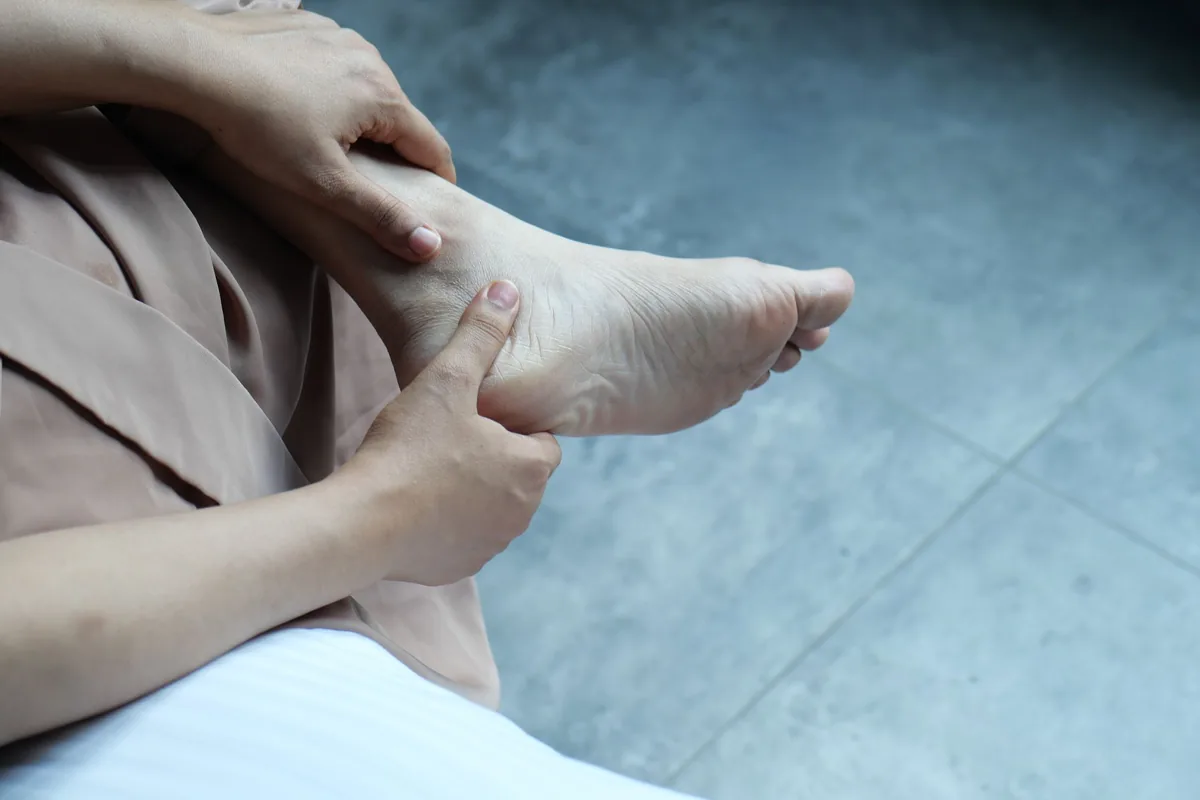
Your feet are the base of every step, so it pays to give them good support. The NIA says to wear nonskid, rubber-soled, low-heeled shoes to fully support your feet, and not to walk on stairs or floors in socks or in shoes and slippers with smooth soles. It also notes that foot problems that cause pain, and unsafe footwear such as backless shoes or high heels, can increase your risk of falling.
A simple routine follows: keep one pair of supportive shoes by the door for walks, wear real slippers with a grip at home, and look at your feet at the end of the day while you put your cream on. If I had to pick one change, it would be the slippers, because that is where most of us cut corners.
Does Sleep Matter for Your Nerves?
Sleep is when the whole body resets, and it is worth protecting. The CDC recommends 7 or more hours of sleep for adults, and its table shows 7 to 9 hours for ages 61 to 64 and 7 to 8 hours from 65 on. It says better sleep habits include going to bed and getting up at the same time every day, keeping your bedroom quiet, relaxing and at a cool temperature, turning off electronic devices at least 30 minutes before bedtime, and avoiding large meals, alcohol and afternoon or evening caffeine.
If hot flashes or 3 a.m. wake-ups are cutting your night short, my guide on menopause and sleep walks through what helps.
What Does Stress Do to Your Nervous System?
Harvard Health Publishing describes two sides of the autonomic nervous system. The sympathetic side works like a gas pedal and triggers the fight-or-flight response, and the parasympathetic side acts like a brake that promotes the “rest and digest” response once the danger has passed. It adds that chronic low-level stress keeps the body’s stress system activated, much like a motor that is idling too high for too long.
Its tools for putting the brakes on are the ones you can use anywhere: deep abdominal breathing, a brisk walk soon after you feel stressed, yoga, tai chi or qi gong, and time with friends and family. For more on the hormone side, see my guide to hormonal balance after menopause.

Which Foods Bring Magnesium?
Magnesium is a good one to know. MedlinePlus says it is needed for more than 300 biochemical reactions in the body and that it helps maintain normal nerve and muscle function. It also says most dietary magnesium comes from dark green, leafy vegetables, and names other good sources: bananas, dried apricots and avocados, nuts such as almonds and cashews, peas, beans and seeds, tofu, whole grains such as brown rice and millet, and milk.
You do not need to count anything. A handful of almonds in the afternoon, spinach in your lunch, beans in your soup and a banana at breakfast bring a few of those foods into an ordinary day. My list of best foods to ease menopause symptoms has more ideas for the plate.
What Does a Nerve-Friendly Day Look Like?
You do not need to change everything at once. Here is one way to spread the ideas across a normal day:
- Morning: a few slow ankle circles before you get out of bed, supportive slippers on, and a breakfast with a banana or a handful of almonds.
- Midday: a lunch with leafy greens or beans, then a 10-minute walk.
- Afternoon: open and close your hands and stand up for a stretch every hour or so.
- Strength days: two days a week, a short session with resistance bands or light weights, as the CDC suggests.
- Evening: a few slow belly breaths, devices off 30 minutes before bed, and a look at your feet while you apply your cream.
- Night: a regular bedtime that leaves room for the 7 or more hours the CDC recommends.
Give it three or four weeks before you judge. If one change feels easy, keep it and add another.
Where Can a Daily Nerve-Health Capsule Fit In?
Movement, good shoes, sleep, a calmer evening and magnesium-rich foods come first, and no capsule replaces them. Some readers like to add a daily supplement to the routine, and if you are one of them, the label is where to start. The one I have on Primaurea for this is Nerve Alive.
Nerve Alive: magnesium and natural-source nutrients in a daily capsule

Nerve Alive is a daily dietary supplement in capsule form, made to support nerve health. Each bottle holds 60 capsules and counts as a 30-day supply. The bottle says “With Magnesium,” and the formula adds a selection of nutrients from natural sources. It is manufactured in the USA, and you take it daily as the directions on the bottle say.
On the official order page on October 20, 2026, two bottles were $158 ($79 each, plus shipping), three bottles were $207 ($69 each, free US shipping, with two free digital guides) and six bottles were $294 ($49 each, free US shipping, with two free digital guides). It is a one-time purchase with no subscription, and every order comes with a 60-day money-back guarantee. As the official Nerve Alive pages advise, talk to your doctor first if you take other supplements or have a medical condition. I go through the details in my Nerve Alive review.
Prices are in US dollars, as listed on the official site on October 20, 2026, and may change.
Nerve Health After 50: My Verdict
Start with the things you control today: a daily walk, two short strength sessions a week, supportive shoes and slippers, a regular bedtime, a few slow breaths in the evening and a bit of magnesium-rich food on the plate. Those steps are free and each one makes the next easier. Give them a few weeks of steady effort before you decide how you feel.
If you would like a daily capsule alongside those habits, read the Nerve Alive label first and keep the habits going next to it. My healthy aging guide brings the rest of the picture together in one place.
Frequently Asked Questions
Why do my hands and feet feel changes first after 50?
Hands and feet do the most detailed work of the day, so small changes show up there. MedlinePlus explains that with age, nerve cells may begin to pass messages more slowly, and that you may have reduced reflexes or sensation, which can affect movement and safety. Regular movement, good shoes and enough sleep are everyday ways to look after them.
What kind of exercise is best for balance and strength after 50?
The NIA says yoga, Pilates and tai chi can all improve balance and muscle strength, and that you can also lift weights or use resistance bands. The CDC recommends at least 150 minutes of moderate-intensity activity a week for adults, plus muscle-strengthening activity on 2 days a week.
What shoes are best for steady feet?
The NIA recommends nonskid, rubber-soled, low-heeled shoes to fully support your feet, and says not to walk on stairs or floors in socks or in shoes and slippers with smooth soles. It also says that unsafe footwear such as backless shoes or high heels can increase your risk of falling.
How much sleep do I need after 50?
The CDC recommends 7 or more hours for adults. Its table shows 7 to 9 hours for ages 61 to 64 and 7 to 8 hours for ages 65 and older. Going to bed and getting up at the same time every day and turning off devices at least 30 minutes before bed are two of the habits it lists.
Can stress affect my nervous system?
Harvard Health Publishing explains that the sympathetic nervous system works like a gas pedal for the fight-or-flight response and the parasympathetic system acts like a brake, and that chronic low-level stress keeps the stress system activated. Deep abdominal breathing, a brisk walk, yoga or tai chi and time with friends and family are tools it mentions.
Which foods have magnesium?
MedlinePlus says most dietary magnesium comes from dark green, leafy vegetables. Other good sources include bananas, dried apricots, avocados, almonds, cashews, peas, beans, seeds, tofu, whole grains such as brown rice and millet, and milk. It adds that magnesium helps maintain normal nerve and muscle function.
What is Nerve Alive?
Nerve Alive is a daily dietary supplement in capsule form, made to support nerve health. The bottle says With Magnesium, the formula adds a selection of nutrients from natural sources, and it is manufactured in the USA. Each bottle holds 60 capsules and counts as a 30-day supply.
How much does Nerve Alive cost and how do I take it?
On October 20, 2026, Nerve Alive was $158 for two bottles (plus shipping), $207 for three and $294 for six, with free US shipping on three and six bottles, two free digital guides and a 60-day money-back guarantee. Take it daily as the directions on the bottle say. As the official pages advise, talk to your doctor first if you take other supplements or have a medical condition.
Want to See the Label for Yourself?
Visit the official website to read the full label and see the current offer.
Statements about dietary supplements on this page have not been evaluated by the Food and Drug Administration. This product is not intended to diagnose, treat, cure or prevent any disease.