
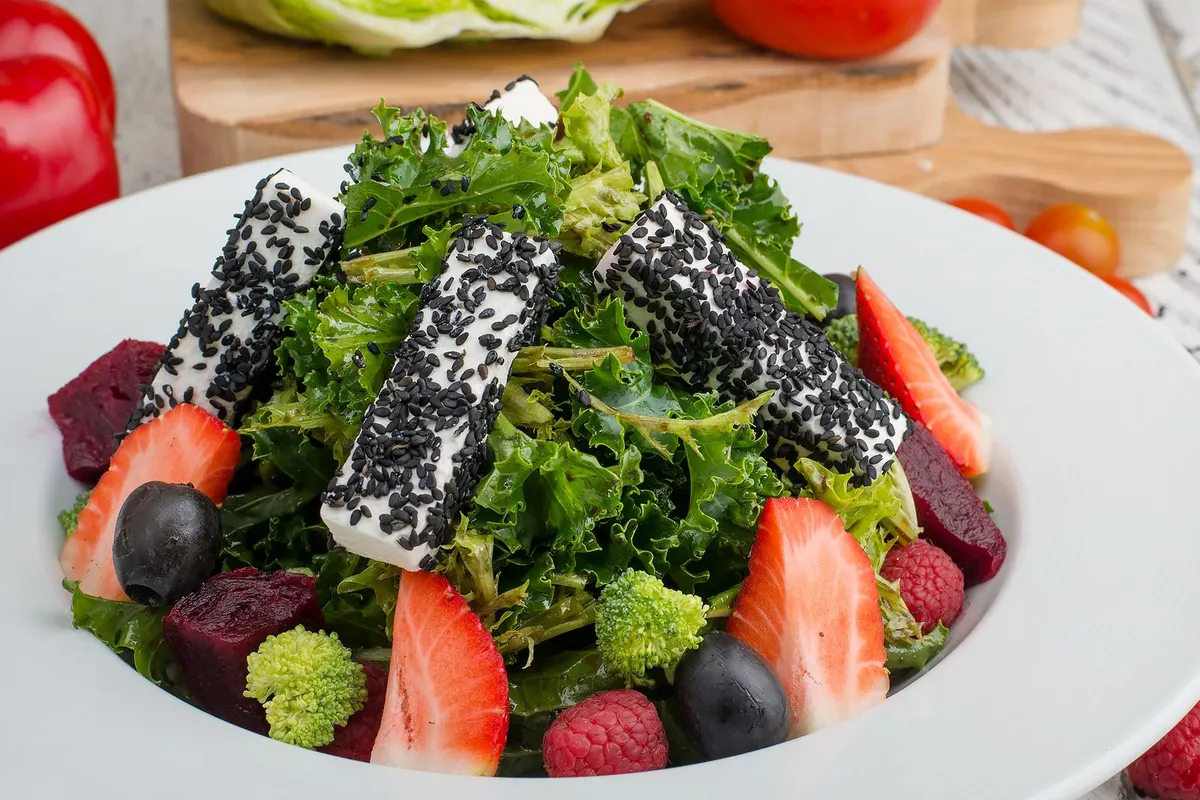
When hot flashes, night sweats and a waistline that suddenly behaves differently show up together, the kitchen is the first place most of us look. That makes sense. Food is something you control every day, it costs nothing extra, and the right choices also protect your bones and your heart at a stage of life when both start to matter more. This guide goes through the foods that have real research behind them, the ones that do not live up to the hype, and what to limit when symptoms flare.
I write Primaurea from my own experience after menopause (my story is here). I am not a doctor or a dietitian, so what follows is a research review: every number comes from a source I read, and I link each one so you can check it yourself.
What Should You Eat to Ease Menopause Symptoms?
No single food switches hot flashes off. The National Institute on Aging (NIA) puts the big picture in one sentence: during menopause it is important to continue to eat a healthy diet, stay active, and get enough calcium and vitamin D for bone health. Inside that frame, these are the foods with the best evidence behind them:
- Soy foods such as tofu, tempeh, edamame and soy milk, which may modestly reduce hot flashes and probably help bone density.
- Calcium-rich foods (yogurt, milk, kale, broccoli, canned sardines and salmon), because after 50 you need 1,200 mg a day.
- Vitamin D foods such as egg yolks, saltwater fish and fortified milk, cereal or yogurt.
- Fruit and vegetables, eaten daily, since a large study linked a fruit-rich pattern to fewer hot flashes.
- A Mediterranean-style plate built on legumes, olive oil, vegetables and fish.
- Whole grains, the third part of the dietary change tested in a major women's health trial.
Below you will find what each one does, how much to aim for, and how to fit it into an ordinary day.
Do Soy Foods Really Help With Hot Flashes?
Soy is the food most often linked to menopause, and the reason is its isoflavones, plant compounds with a structure similar to estrogen. The National Center for Complementary and Integrative Health (NCCIH) lists common soy foods as tofu, miso, tempeh, edamame and soy milk, and says soy isoflavones or soy protein may help reduce the frequency and severity of hot flashes, although the effect may be small and results have not been completely consistent.
The same page adds two points that make soy a sensible food for this stage of life: soy isoflavones probably have a beneficial effect on bone density in postmenopausal women, and eating soy protein in place of other proteins may lower cholesterol to a small extent. So even if your hot flashes do not budge, you are still doing something useful for your bones and heart.
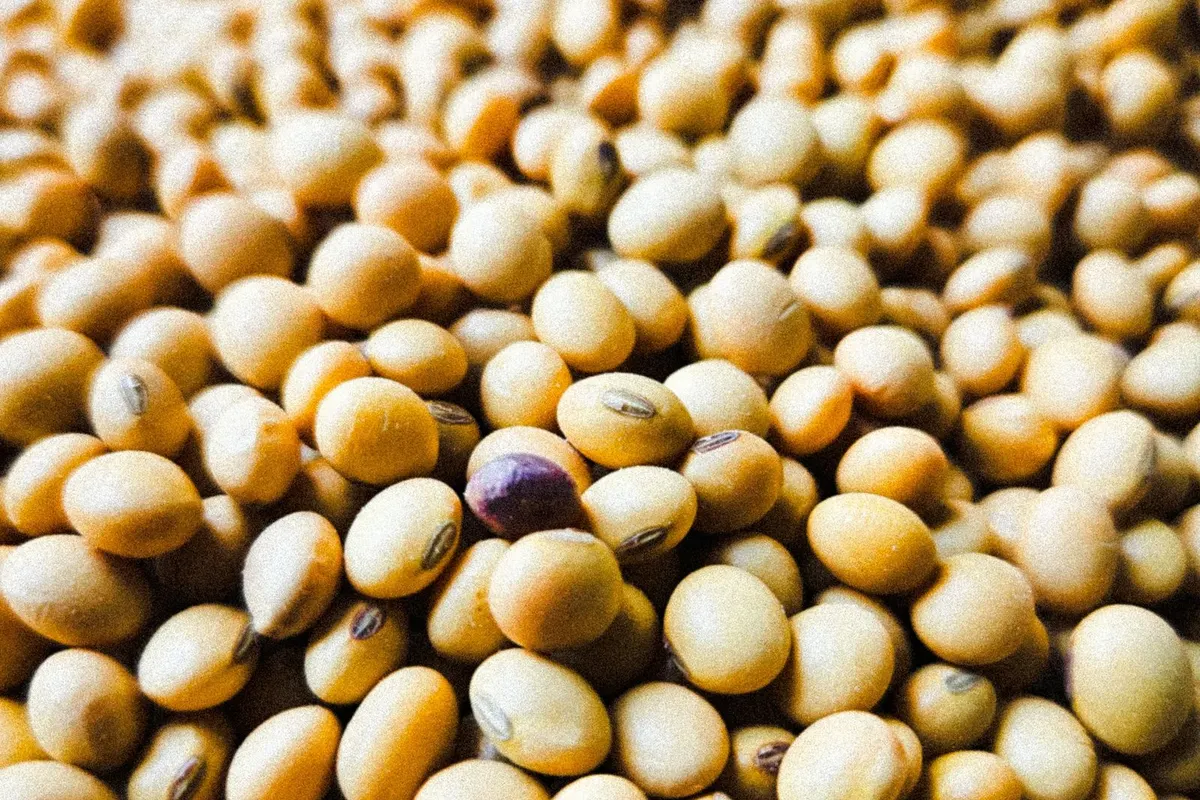
How to bring soy into your week
- Swap the milk in your coffee or cereal for unsweetened soy milk a few times a week.
- Add cubed tofu or a handful of edamame to a stir-fry or a salad.
- Try tempeh as a dinner protein once a week; it has a firm, nutty bite and holds up well in the pan.
- Stir a spoonful of miso into soup at the end of cooking.
Two cautions from the NCCIH are worth knowing. Some people are allergic to soy, and tofu and soy sauce contain tyramine, which can interact with a group of antidepressants called monoamine oxidase inhibitors. If you take any medicine, mention soy to your doctor or pharmacist first. Food amounts are far gentler than concentrated extracts, but a quick check costs nothing.
Which Foods Give You Enough Calcium After 50?
Bones are the quiet part of menopause. According to MedlinePlus, your body absorbs and retains less calcium after menopause, and the recommended amount for women aged 51 to 70 is 1,200 mg a day, up from 1,000 mg earlier in adult life. The good news is that food can cover a lot of that.
- Dairy: milk, cheese and yogurt are the main calcium sources for most people in the United States.
- Leafy greens: kale, broccoli and Chinese cabbage (bok choy).
- Fish with soft, edible bones: canned sardines and salmon.
- Calcium-enriched foods: some breakfast cereals, fruit juices, soy and rice drinks, and tofu. Check the label for the amount.
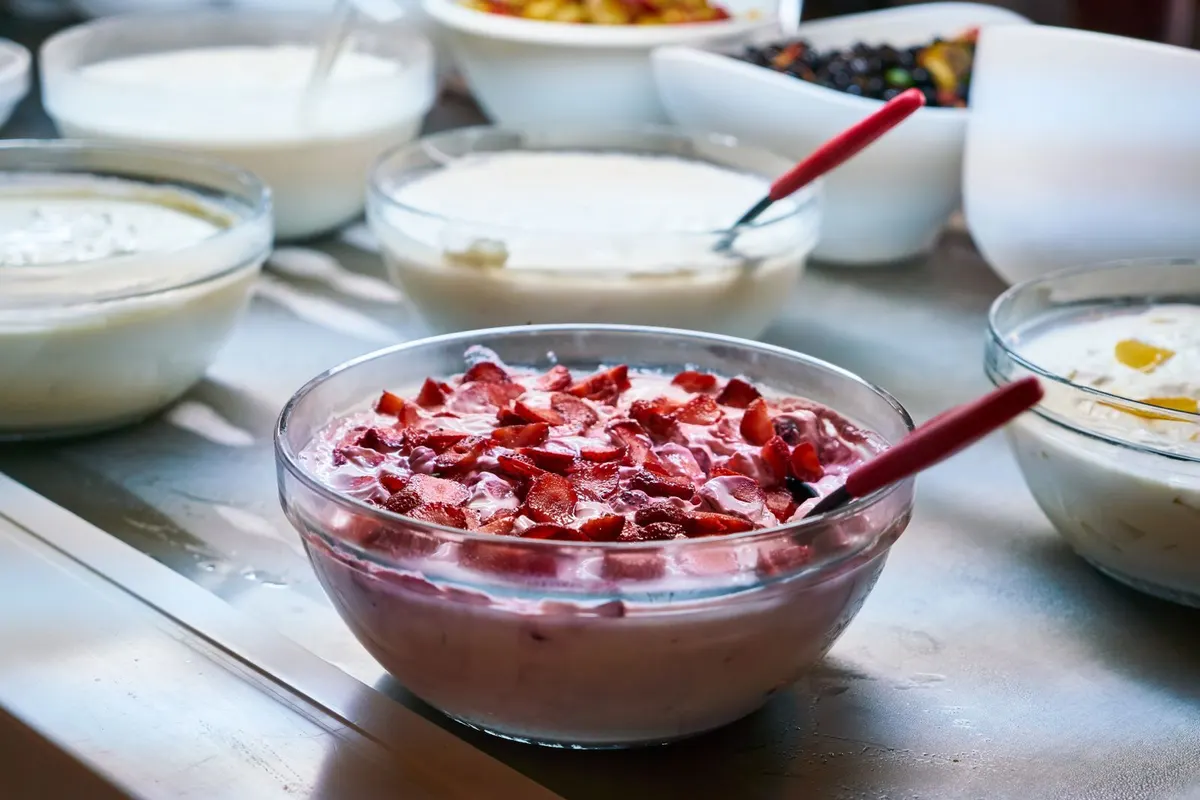
A practical tip from the same MedlinePlus page: calcium is absorbed best in portions of 500 mg or less at one time, so spreading it across breakfast, lunch and dinner works better than one big dose. A bowl of yogurt with fruit at breakfast, greens at lunch and a calcium-fortified soy drink in the evening gets you most of the way there without counting anything.
Where Does Vitamin D Come From?
Vitamin D is calcium's partner: MedlinePlus explains that it helps your body absorb calcium. The recommended amount is 600 IU a day for adults aged 19 to 70, rising to 800 IU from age 71. Your skin makes vitamin D in sunlight, but too much sun can age the skin, so many women rely on food for part of it.
Very few foods contain vitamin D naturally. The ones that do are egg yolks, saltwater fish and liver. Most of the rest comes from fortified foods, which can include milk, cereal and yogurt. A breakfast of fortified yogurt and an egg, or a salmon dinner a couple of times a week, is a simple way to include it. If you are not sure you are getting enough, a blood test and a conversation with your doctor will tell you far more than guessing.
Do Fruit and Vegetables Make a Difference?
The strongest support for an everyday, ordinary food pattern comes from large studies that followed women for years. In the Australian Longitudinal Study on Women's Health, researchers followed 6,040 women through menopause and found that those who ate the most fruit, or the most in a Mediterranean style, had roughly 20% lower odds of reporting hot flushes and night sweats (odds ratios of 0.81 and 0.80) than those who ate the least. A diet high in fat and sugar went the other way, with 23% higher odds.
The Women's Health Initiative, a major US trial, tested a diet lower in fat and richer in fruit, vegetables and whole grains in 17,473 postmenopausal women. Women who followed it were somewhat more likely to see their hot flashes or night sweats disappear, and weight loss of 10% or more was linked to an even higher chance of the symptoms ending. The authors concluded that weight loss as part of a healthy dietary change may help.
Both are observational findings or secondary analyses, so they show a link, not a promise. Still, the message is encouraging: you do not need an exotic ingredient, you need more colorful plants on the plate. A simple aim is two handfuls of vegetables at lunch and dinner and a piece of fruit with breakfast or as a snack.
Are Legumes, Olive Oil and Whole Grains Worth Making Staples?
A small study of 100 postmenopausal women with obesity, published in 2022, looked at how closely they followed a Mediterranean diet. Women with marked menopause symptoms scored lower on the diet, eating more legumes was linked to milder symptoms, and more extra-virgin olive oil was linked to fewer psychological symptoms such as low mood. It was a cross-sectional study, meaning a snapshot, so it cannot prove cause and effect, but it fits the wider picture.
- Legumes: lentils, chickpeas and beans in soups, salads or a warm bowl with rice.
- Olive oil: for cooking and dressing, in place of butter where you can.
- Whole grains: oats, brown rice, barley and whole-wheat bread, the third part of the Women's Health Initiative diet.
- Fish: salmon and sardines do double duty, adding protein and vitamin D.
If you already cook this way, you are ahead of the curve. If you do not, change one meal a day, not the whole kitchen. Habits stick when they are small.
What About Flaxseed and Other Phytoestrogen Foods?
Flaxseed is a popular suggestion because it is a source of phytoestrogens. The NCCIH's review of menopausal symptoms says studies of flaxseed products found them no more effective than a placebo in reducing hot flashes, and results for soy and red clover isoflavones have been inconsistent. In other words, enjoy flaxseed for its fiber and taste if you like it, but do not count on it to quiet hot flashes.
Two safety notes from the NCCIH: do not eat raw or unripe flaxseeds, and because phytoestrogen products may have estrogen-like effects, they may not suit women who should not take estrogen. If that applies to you, ask your doctor before building a plan around them.
Which Foods and Drinks Can Make Symptoms Worse?
MedlinePlus is direct about it: avoid alcohol, spicy foods and caffeine, because they can make your menopause symptoms worse. Triggers differ from woman to woman, so you do not have to give up everything. A useful experiment is to keep a short symptom journal for two weeks and write down what you ate or drank before each hot flash. Many women find that one or two items, often an evening glass of wine or a late coffee, account for most of the trouble.
- Alcohol: try a smaller pour, or move it away from bedtime if night sweats are your problem.
- Caffeine: keep coffee to the morning and see whether the afternoon flashes ease.
- Spicy dishes: keep the heat milder at dinner.
- High-fat, high-sugar foods: the pattern tied to more hot flushes in the Australian study.
MedlinePlus also notes that being overweight can make hot flashes worse, which is one more reason a plant-rich, balanced plate pays off.
What Does a Day of Menopause-Friendly Eating Look Like?
Here is an ordinary day that puts the pieces together. It is an example, not a prescription, so adjust it to your taste, budget and any medical advice you have.
- Breakfast: plain or fortified yogurt with berries and oats, plus a cup of coffee before noon.
- Lunch: a big salad with kale or other greens, chickpeas, olive oil and a piece of canned salmon or sardines.
- Snack: a piece of fruit, or a handful of edamame.
- Dinner: stir-fried tofu or tempeh with broccoli and brown rice, or baked salmon with vegetables.
- Evening: herbal tea or a calcium-fortified soy drink instead of a late glass of wine.
Should You Add a Menopause Supplement to a Good Diet?
Food is the base, and many women are happy to stop there. Others like to add a daily formula on top, especially when symptoms are bothersome and they want an extra step in their routine. That is a personal choice, and the NCCIH reminds us that natural does not always mean safe and that supplements can interact with medicines, so the only rule is to run it by your doctor or pharmacist first. If you are curious, these are the two formulas readers ask me about most for this stage of life.
MenoSoothe: three classic ingredients
MenoSoothe keeps the label short: fenugreek extract, black cohosh root and diosgenin, the compound from Mexican yam. Black cohosh is the herb with the most research behind it for menopause, and a short list also makes it easier to check against your medications. The maker backs it with a 60-day money-back guarantee. You can read more in my MenoSoothe review.
Menovelle: a ten-mushroom blend
Menovelle takes a different route, a blend of ten mushroom and fungi extracts, including Cordyceps, reishi, lion's mane and maitake. The maker's idea is to support the body's own estrogen activity, and the routine is simple: two capsules once a day, ideally in the morning. It is sold as a one-time payment with a 60-day money-back guarantee. If you want the label walked through, see my Menovelle review.
Not sure which one suits you? My side-by-side comparison of MenoRescue, Menovelle and MenoSoothe matches each formula to a main symptom, and the full menopause supplements guide covers the rest of the shelf.
When Should You Talk to Your Doctor First?
Diet changes are gentle, but a few situations call for a conversation before you change much:
- Hormone-sensitive history: the NCCIH says phytoestrogens may not be safe for women who should not take estrogen, and professional guidelines caution about soy-based treatments for women with a personal or strong family history of blood clots, cardiovascular disease, or breast, uterine or ovarian cancer.
- Antidepressants called MAO inhibitors: tofu and soy sauce contain tyramine, which can interact with them.
- Allergies and digestive trouble: soy can cause bloating, constipation, diarrhea or nausea in some people.
- Calcium supplements: they can cause gas, bloating and constipation; spreading the dose or taking it with meals often helps.
- Severe or disruptive symptoms: if hot flashes or sleep loss are wearing you down, ask about the treatments available, because diet is a support, not a replacement for medical care.
The Bottom Line: Where Should You Start?
Start with the changes that help in several ways at once. Add a soy food or two, get your calcium and vitamin D from the plate, and fill half of it with vegetables and fruit. Notice what triggers your hot flashes and trim those items without guilt. Then, if you want an extra daily step, choose a formula you are comfortable with and share the label with your doctor. Small, steady habits are what make symptoms feel lighter over the months, and every one of them also looks after your bones and heart.
Frequently Asked Questions
What is the best food to eat for menopause hot flashes?
No single food works for everyone. The best-supported choices are soy foods such as tofu, tempeh, edamame and soy milk, which the NCCIH says may modestly reduce hot flash frequency and severity, plus a fruit-rich, Mediterranean-style pattern that was linked to about 20% lower odds of hot flushes and night sweats in a study of 6,040 women.
How much calcium do women need after 50?
MedlinePlus lists 1,200 mg a day for women aged 51 to 70 and for adults 71 and older, because the body absorbs and retains less calcium after menopause. Milk, yogurt, cheese, kale, broccoli, canned sardines and salmon, and calcium-enriched foods such as tofu and soy drinks are all good sources. Calcium is absorbed best in portions of 500 mg or less.
Which foods give you vitamin D?
Foods that naturally contain vitamin D include egg yolks, saltwater fish and liver. Most dietary vitamin D comes from fortified foods such as milk, cereal and yogurt. The recommended amount is 600 IU a day for adults 19 to 70 and 800 IU from age 71, according to MedlinePlus.
Is soy safe to eat during menopause?
For most people soy foods are well tolerated. The NCCIH notes that some people are allergic to soy, that it can cause bloating, constipation, diarrhea or nausea, and that tofu and soy sauce contain tyramine, which can interact with MAO inhibitor antidepressants. Women with a hormone-sensitive history should ask their doctor before relying on soy or other phytoestrogens.
Does flaxseed help with hot flashes?
Studies of flaxseed products found them no more effective than a placebo in reducing hot flashes, according to the NCCIH review of menopausal symptoms. Flaxseed is still a fine source of fiber if you like it, but it should not be counted on for symptom relief. Do not eat raw or unripe flaxseeds.
What foods make menopause symptoms worse?
MedlinePlus advises avoiding alcohol, spicy foods and caffeine, which can make menopause symptoms worse. A high-fat, high-sugar eating pattern was also linked to 23% higher odds of hot flushes in the Australian Longitudinal Study on Women's Health. Keeping a short symptom journal helps you find your own triggers.
Can changing my diet help me lose weight in menopause?
A healthy diet can support weight control, and in the Women's Health Initiative trial, women who lost 10% or more of their body weight were more likely to see hot flashes and night sweats end. The NIA notes that fat distribution changes and weight is gained more easily during the transition, so steady habits matter more than quick fixes.
Do I need a menopause supplement if I eat well?
Not necessarily. Food is the foundation, and many women stop there. Some add a daily formula, such as MenoSoothe or Menovelle, as an extra step. Because supplements can interact with medicines, share the label with your doctor or pharmacist before starting.
Want to Add a Daily Formula to Your Routine?
Visit the official website of either formula to see the full label and current offers.
Statements about dietary supplements on this page have not been evaluated by the Food and Drug Administration. These products are not intended to diagnose, treat, cure or prevent any disease. Talk with your doctor before starting a supplement, especially if you are taking medication or have a medical condition.