

Your yearly check-up covers the numbers you know by heart: blood pressure, weight, a blood test. Yet there is one thing none of them shows, which is how the arteries themselves are doing. After menopause, many of us start to wonder about that, usually around the time a friend mentions her own screening.
I write from experience, not from a medical degree, so the facts below come straight from the Office on Women's Health, the National Heart, Lung, and Blood Institute and MedlinePlus. You will see why heart risk changes after menopause, what each part of a preventive screening visit looks at and where Life Line Screening fits.
Why Does Heart Risk Change After Menopause?
The Office on Women's Health puts it simply: lower estrogen after menopause can affect your bones, your heart and your bladder, and the chance of heart disease goes up. It also notes that heart disease is the number one killer of American women, and that most women between 40 and 60 have at least one risk factor for it.
None of that is a reason to worry. It is a reason to look a little closer at this stage of life, when small habits and a good baseline are well placed to help. If cholesterol is the number that puzzles you most, my guide to cholesterol after menopause explains why it shifts, and hormonal balance after menopause covers the wider hormone picture.
What Does a Preventive Heart Screening Visit Check?
A preventive screening is a look at your arteries and heart rhythm while you feel fine. The visit is built around ultrasound and an EKG, which are painless and do not use needles. Here is what each of the four common checks looks at, according to the health agencies above.
1. The carotid arteries in your neck
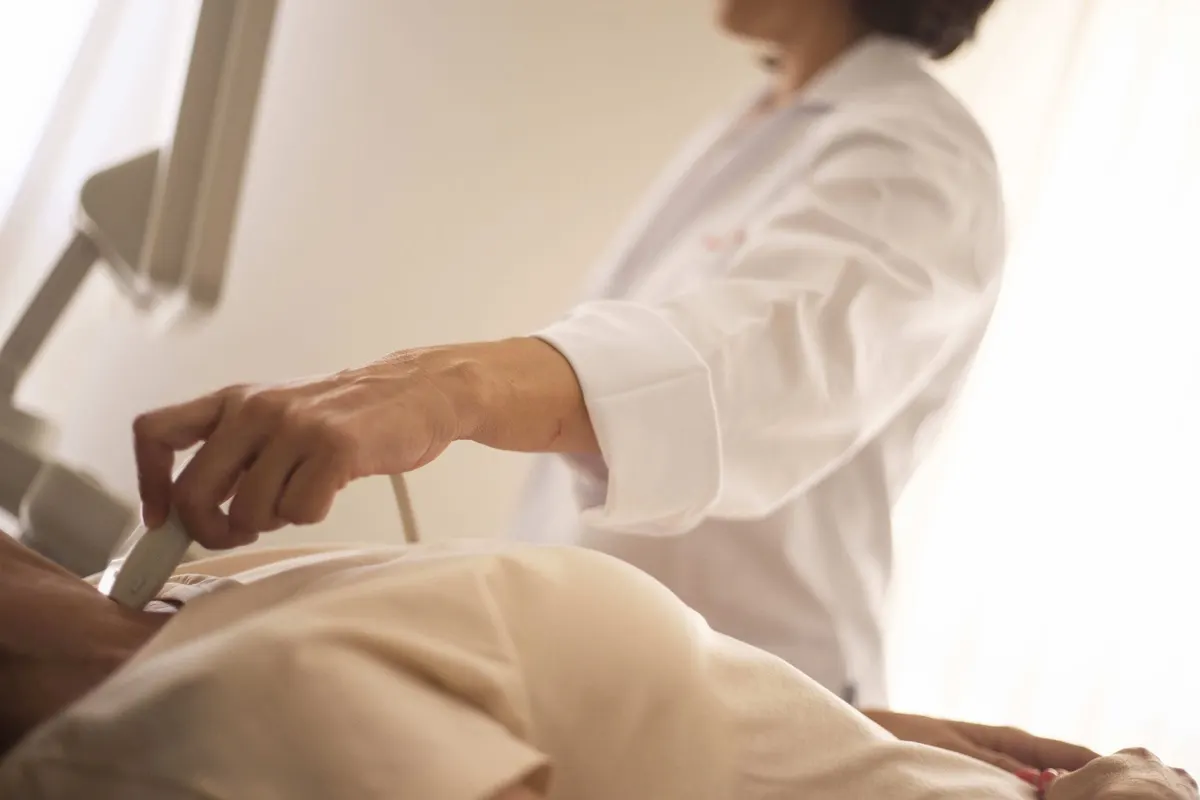
MedlinePlus explains that your carotid arteries are two large blood vessels in your neck that supply your brain and head with blood. Carotid artery disease, a narrowing from plaque, often does not cause symptoms until the narrowing is severe, and imaging tests are how it is confirmed. An ultrasound of the neck is a gentle way to take that look.
2. The aorta in your abdomen
The aorta is the main artery running from your heart through your chest and abdomen. MedlinePlus describes an abdominal aortic aneurysm as a balloon-like bulge in the wall of that artery, and notes that most aortic aneurysms do not cause symptoms. An ultrasound is the usual way to find and measure one.
3. The arteries that reach your legs and feet
According to the National Heart, Lung, and Blood Institute, more than 8 million people in the United States aged 40 and older have peripheral artery disease, plaque that reduces blood flow to the legs and feet. About 1 in 4 notice muscle pain when they walk, and others notice nothing at all. The institute adds that early diagnosis and management can help reduce the risk of serious complications.
4. Your heart rhythm
Atrial fibrillation, or A-fib, is an irregular heart rhythm. The institute says it affects more than 2 million adults in the United States, that the risk grows with age, and that it can occur without any symptoms, which can make it hard to spot. An EKG, with a few small lead wires on your skin, records the rhythm in a few minutes.
Notice the pattern: each of these can sit quietly for years. That is exactly why a screening looks at them before you have a reason to.
How Does a Screening Fit Next to Your Regular Check-Up?
Think of it as a second view, not a replacement. Your regular check-up keeps tracking your numbers year after year. A screening adds a one-time picture of the arteries and rhythm, and the results come in plain language so you can bring them to your doctor and talk them through.
A screening is not a diagnosis, and nothing here is medical advice. What it gives you is information, and for many of us that is the whole point: walking into the next appointment with something concrete on the table, next to your numbers from blood sugar and blood pressure checks.
Where Does Life Line Screening Fit In?
Life Line Screening is the preventive screening service I review on Primaurea, and its Heart Disease & Stroke Risks package covers exactly those four checks: the carotid artery, the abdominal aorta, the arteries to your legs and your heart rhythm, using ultrasound and an EKG. It is a one-visit, in-person appointment in the United States that you book online or by phone.
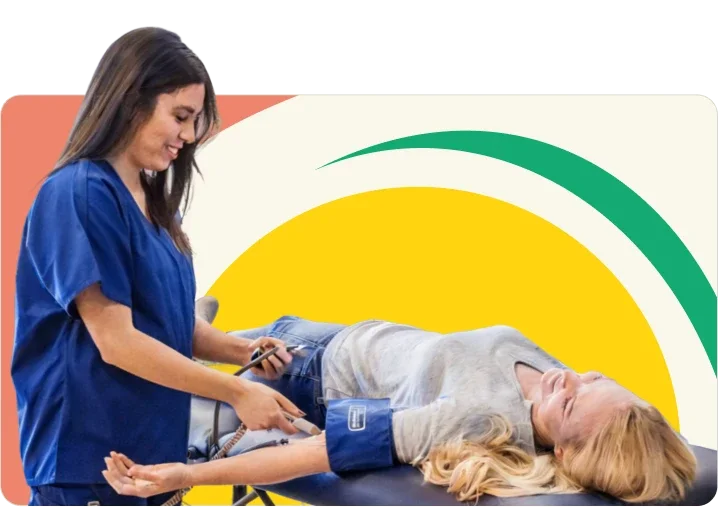
What I like for a reader in her fifties or sixties is how little it asks of you. There is no referral and no insurance paperwork, most visits take about an hour, trained technicians guide you through each step and a physician reviews your results. They appear in an online portal with plain-language explanations, ready to share with your doctor, and the packages are HSA/FSA eligible. The details are in my Life Line Screening review.
On the official site on November 6, 2026, the four-screening heart and stroke package was $186. If you want a wider picture, you can add one lab package when you book, which brings the total to $285, $384 or $483.
Prices are in US dollars, as listed on the official site, and may change.
What Can You Do for Your Heart Between Visits?
The Office on Women's Health keeps its advice short and doable: be active, because exercise can help reduce weight and waist size, and do not smoke, which it calls one of the best steps for your health. A daily walk is a lovely place to begin, and gentle ways to build on it are in weight gain after 50.
Between screenings, a home blood pressure monitor gives you a number to follow every week, which is a good companion to a yearly look at the arteries. NovaMedic Pro is the monitor I review. It closes around your wrist with an adjustable cuff, inflates by itself, shows each reading on a large color LED screen, reads it aloud and keeps up to 200 readings in memory, and the official site backs every order with a 30-day money-back guarantee. How to take a steady reading is in my home blood pressure monitor guide, and the NovaMedic Pro review has the details.
Heart Health After Menopause: My Verdict
Heart risk rises after menopause, and the conditions a screening looks at tend to be quiet. A preventive visit turns that quiet into something you can read: four checks, about an hour and a report to share with your doctor. Add a daily walk and a steady look at your blood pressure, and you have a calm, practical plan for the years ahead.
If you would like that clearer picture, Life Line Screening is where I would start, and the button above leads to the official site. For everything else that shifts at this stage, from sleep to memory, begin with my healthy aging after 50 guide.
Frequently Asked Questions
Does heart disease risk go up after menopause?
Yes. The Office on Women's Health says heart disease risk goes up after menopause, because lower estrogen can affect your heart along with your bones and bladder. It also says most women between 40 and 60 have at least one risk factor for heart disease.
What does a preventive heart screening check?
A typical heart and stroke screening looks at four things: the carotid arteries in your neck, the aorta in your abdomen, the arteries that reach your legs and feet, and your heart rhythm. The arteries are checked with ultrasound and the rhythm with an EKG.
Is a heart screening painful?
No. The screenings are non-invasive: an ultrasound of the arteries and an EKG with small lead wires on your skin for a few minutes. Most of the tests need no needles.
Do I need a referral to get a screening?
Not for Life Line Screening. The official site says no referral and no insurance are needed, and the packages are HSA/FSA eligible.
How long does a screening visit take?
Most visits take about an hour. After a quick check-in, the team guides you through each screening you chose.
How much does Life Line Screening cost?
On the official site on November 6, 2026, the heart and stroke package with four screenings was $186. You can add one lab package, which brings the total to $285, $384 or $483.
What happens to my results?
A physician reviews your results, and they appear in an online portal with plain-language explanations that you can share with your doctor.
What can I do for my heart between screenings?
The Office on Women's Health suggests being active, since exercise can help reduce weight and waist size, and not smoking. Many readers also follow their blood pressure at home with a monitor such as NovaMedic Pro.
This article is for information only and is not medical advice. A screening is not a diagnosis, and NovaMedic Pro, a home blood pressure monitor, is not intended to diagnose, treat, cure or prevent any disease.
Photos: Antoni Shkraba (cover), Paloma Gil (ultrasound) and Michelle Leman (stethoscope), on Pexels.