

If you are looking for a calmer way through the stress, the restless nights and the mood swings that can come with menopause, you have probably met one name again and again: ashwagandha. It shows up in teas, gummies, capsules and menopause blends, and the claims on the labels are big.
I write Primaurea from my own experience after menopause, and I am not a doctor. So I did what I always do: I read the studies. Below you will find what ashwagandha is, what the research says about stress, sleep and menopause symptoms, the amounts the trials used, and where two products I have reviewed, Elixir of Youth and Her Bodhi, fit in.
What Is Ashwagandha, and Why Are So Many Women Over 50 Trying It?
Ashwagandha (Withania somnifera) is a shrub whose root has long been used in Ayurveda, the traditional medicine of India. Today the root is turned into extracts and sold as capsules. The National Center for Complementary and Integrative Health (NCCIH) notes that supplements are often promoted for stress and anxiety and for sleep.
Those are exactly the areas that shift around menopause: stress feels louder, sleep gets lighter and mood can swing. Not every ashwagandha is the same either. Studies use different root extracts in different amounts, which is why I always look for the exact extract and amount a product lists. KSM-66, the extract in both products below, is a branded full-spectrum root extract. For the bigger hormone picture, my guide to hormonal balance after menopause is a good companion read.
What Does the Research Say About Stress?
In a 60-day trial published in the journal Medicine in 2019, 60 adults who described themselves as highly stressed took either a placebo or 240 mg of a standardized ashwagandha extract once a day. Compared with placebo, the ashwagandha group had a statistically significant drop on the Hamilton Anxiety Rating Scale and a bigger drop in morning cortisol, the body's main stress hormone. All 60 people finished the trial, and no adverse events were reported.
NCCIH sums up the wider picture this way: some ashwagandha preparations may be effective for insomnia and stress. It also notes that many trials are small and use different preparations, and the authors of the 2019 trial call for larger studies themselves. I read that as a promising start, with the next chapters still being written.
Can Ashwagandha Help You Sleep Better?
A 2021 review in PLoS ONE pooled five placebo-controlled trials with 400 adults and found a small but significant improvement in overall sleep. The effect was clearer in adults with insomnia, at 600 mg a day or more, and when the supplement was taken for at least 8 weeks. The review also found better mental alertness on rising and lower anxiety scores.
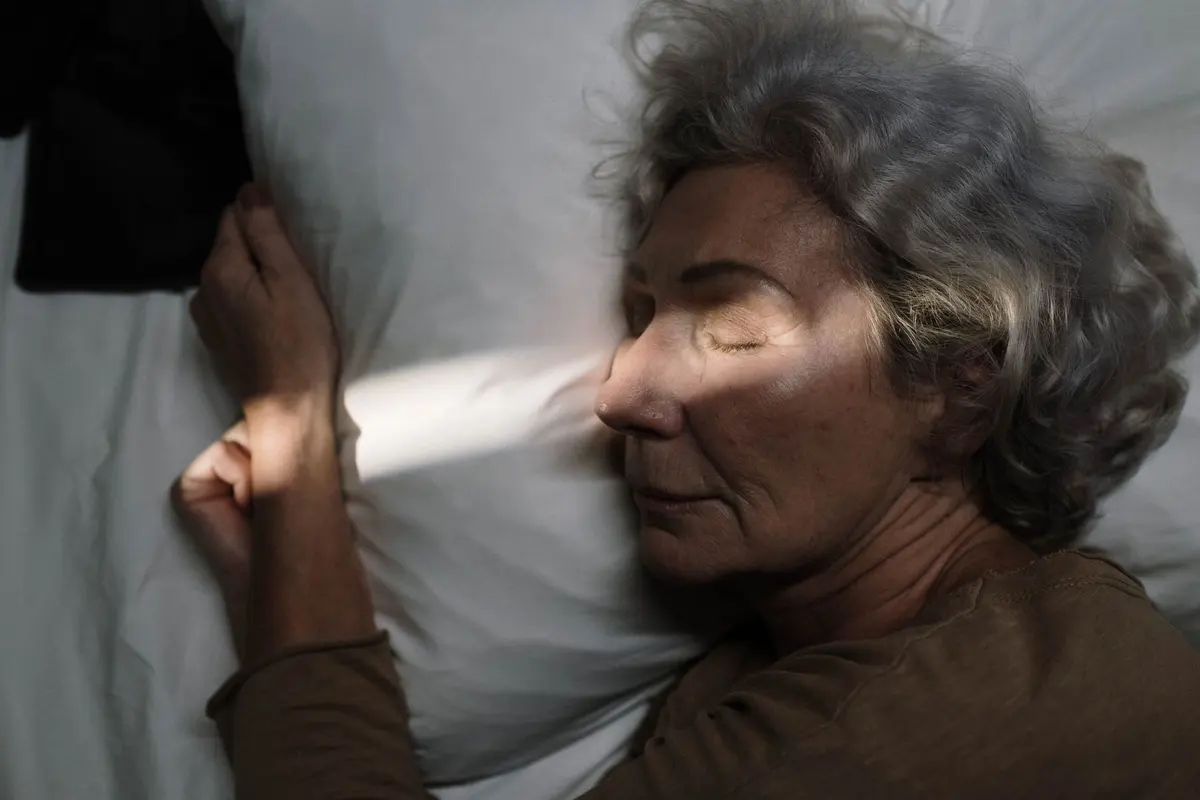
That "at least 8 weeks" detail is the useful part: think of ashwagandha as a steady daily routine you give a couple of months, not a one-night fix. If night wakings are your main worry, my guide to menopause and waking up at 3 a.m. covers what else helps.
What About Menopause Symptoms?
This is where the research gets most interesting for us, and it is still young. Three small placebo-controlled trials looked at women around and after menopause:
- 2021, Journal of Obstetrics and Gynaecology Research: 100 women in perimenopause took 300 mg of an ashwagandha root extract twice a day for 8 weeks (91 finished). Compared with placebo, they had lower total Menopause Rating Scale scores, across the psychological, physical and urogenital areas, and better menopause-specific quality of life.
- 2025, Frontiers in Reproductive Health: 60 women aged 45 to 55 took KSM-66 or a placebo for 56 days. The ashwagandha group had lower total Menopause Rating Scale scores, fewer hot flash events and lower perceived-stress scores.
- 2026, Menopause: 66 postmenopausal women aged 45 to 65 took 600 mg a day or a placebo for 12 weeks. Sleep quality scores improved more with ashwagandha (a change of -5.2 points against -0.8 on the Pittsburgh Sleep Quality Index), menopause symptom scores fell more (-8.1 against -1.2) and body fat percentage edged down (-0.6% against +0.03%). Bone density was similar in both groups, and no serious adverse events were reported.
All three were small and ran 8 to 12 weeks, and the 2026 study took place at a single center in India. NCCIH's summary also says the evidence for menopause is still limited. That is why I treat these results as an encouraging signal for a thoughtful daily routine, and why larger, longer trials are the next step to watch.
How Much Ashwagandha Did the Studies Use?
Amounts matter, because the label on a bottle only means something next to what the trials actually used. Here is a side-by-side look:
| Study | Who | Amount per day | Length |
|---|---|---|---|
| Stress trial (2019) | 60 stressed adults | 240 mg | 60 days |
| Sleep review (2021) | 400 adults, 5 trials | Clearer effect at 600 mg or more | Clearer at 8 weeks or more |
| Perimenopause trial (2021) | 100 women | 600 mg (300 mg twice a day) | 8 weeks |
| Menopause trial (2025) | 60 women, 45 to 55 | 600 mg KSM-66 (300 mg twice a day) | 56 days |
| Postmenopause trial (2026) | 66 women, 45 to 65 | 600 mg | 12 weeks |
The pattern is easy to spot: most of the menopause and sleep results sit around 600 mg a day, taken daily for 8 weeks or longer. That is a handy yardstick when you read a supplement label.
What Does a Calm Daily Routine With Ashwagandha Look Like?
The trials ran for weeks, so the best plan is a simple routine you can keep. This is the one I would follow:
- Pick one product and one time of day, and take it the same way every day.
- Protect your evenings: a steady bedtime and a screen-free last half hour.
- Move a little every day: a ten-minute walk after lunch lifts mood and energy. My joint pain after 50 guide has gentle low-impact ideas.
- Keep a two-line journal: note your sleep and your stress from 1 to 10, so you can see the trend after 8 to 12 weeks.

If racing thoughts follow you into the day, my guide to brain fog after 50 has more everyday ideas for staying clear-headed, and the healthy aging after 50 guide brings sleep, memory and daily habits together in one place.
Where Do Elixir of Youth and Her Bodhi Fit In?
Both products below use KSM-66, so most readers choose one to start with. Elixir of Youth is the simpler, ashwagandha-focused choice. Her Bodhi is a menopause blend that adds black cohosh and other botanicals.
Elixir of Youth: a one-ingredient KSM-66 ashwagandha capsule
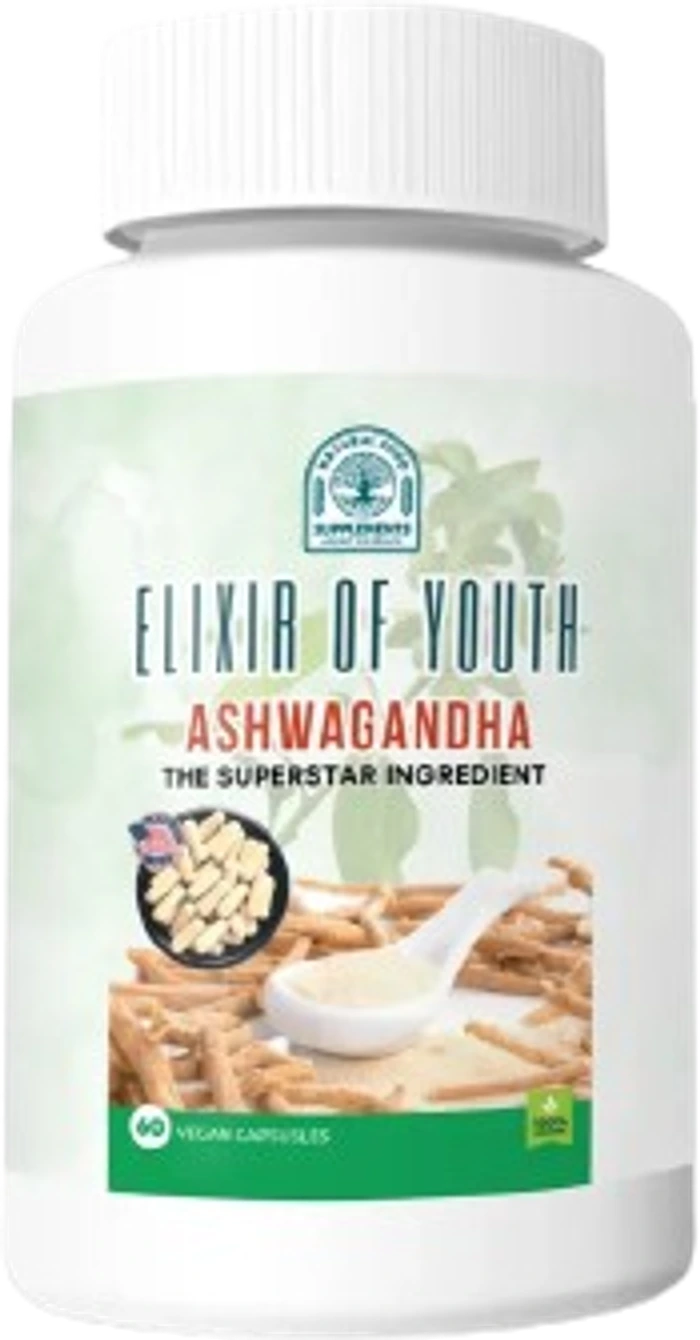
Each Elixir of Youth capsule has 600 mg of KSM-66 ashwagandha root extract, matching the amount used in the sleep and menopause trials above, with L-theanine and BioPerine (a black pepper extract). The producer calls it stimulant-free, and a bottle holds 60 vegan capsules. It is the one I would look at first if you want ashwagandha on its own. My Elixir of Youth review goes through the details.
On the official page on October 28, 2026, one bottle was $79, three bottles were $209 ($69 each) and six bottles were $294 ($49 each), and every order comes with a 60-day money-back guarantee.
Her Bodhi Menopause Balance: a hormone-free botanical blend
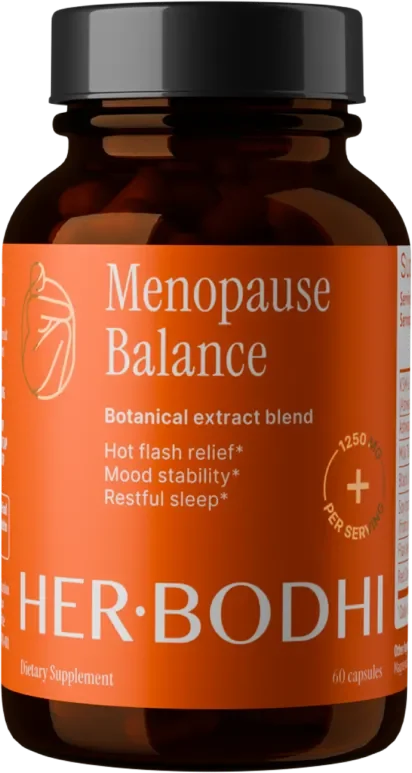
Each two-capsule serving of Her Bodhi has 300 mg of KSM-66 ashwagandha root extract and 300 mg of ashwagandha root, together with black cohosh, milk thistle, soy isoflavones, flax seed and red clover, all listed with their amounts on the label. The producer calls the formula hormone-free, and it is vegan and contains soy. You take 2 capsules a day with a meal, and a 60-capsule bottle is a 30-day supply. It suits the reader who wants one menopause-focused blend. My Her Bodhi review reads every line of the label.
On the official order page on October 28, 2026, a one-time purchase was $64.99 for one bottle, $134.97 for three and $221.94 for six, with free US shipping, and a 14-day money-back guarantee. As the official Her Bodhi pages advise, check with your healthcare provider first if you take medication, are pregnant or nursing, or have a medical condition.
Prices are in US dollars, as listed on the official sites on October 28, 2026, and may change.
Ashwagandha for Women Over 50: My Verdict
Ashwagandha has a better research story than most herbs sold for menopause: small, placebo-controlled trials around stress, sleep and menopause symptom scores, with the best results at about 600 mg a day over 8 weeks or more. It is not a shortcut, and it shines brightest next to a steady bedtime, daily movement and a few calm minutes.
If you would like to add it, Elixir of Youth is the straightforward ashwagandha-only capsule, and Her Bodhi is the menopause blend with the same KSM-66 inside. Pick the one that matches how you like to take your supplements, give it a couple of months and keep your two-line journal.
Frequently Asked Questions
What is ashwagandha used for?
Ashwagandha is a root used in Ayurveda and now sold as capsules and extracts. The National Center for Complementary and Integrative Health notes that it is often promoted for stress and anxiety and for sleep, and that some preparations may be effective for insomnia and stress.
Does ashwagandha help with menopause symptoms?
Three small placebo-controlled trials in women around and after menopause (2021, 2025 and 2026) reported lower Menopause Rating Scale scores with ashwagandha root extract than with placebo, and the 2025 trial also reported fewer hot flash events. The trials were small and short, so larger studies are the next step.
Can ashwagandha help you sleep?
A 2021 review of five placebo-controlled trials with 400 adults found a small but significant improvement in overall sleep, clearer in adults with insomnia, at 600 mg a day or more and after at least 8 weeks. A 2026 trial in postmenopausal women also reported better sleep quality scores.
How long does ashwagandha take to work?
The trials above ran from 8 weeks to 12 weeks, and the sleep review found a clearer effect after at least 8 weeks. Think of it as a daily routine you give a couple of months and judge with a simple journal.
How much ashwagandha did the studies use?
The stress trial used 240 mg a day for 60 days. The perimenopause, menopause and postmenopause trials used 600 mg a day for 8 weeks, 56 days and 12 weeks, and the sleep review found a clearer effect at 600 mg a day or more.
What is KSM-66?
KSM-66 is a branded full-spectrum ashwagandha root extract. The 2025 menopause trial used it at 300 mg twice a day, and both Elixir of Youth and Her Bodhi list it on their labels.
What is the difference between Elixir of Youth and Her Bodhi?
Elixir of Youth is a single-ingredient capsule with 600 mg of KSM-66 ashwagandha plus L-theanine and BioPerine. Her Bodhi Menopause Balance is a hormone-free blend of KSM-66 ashwagandha, ashwagandha root, black cohosh, milk thistle, soy isoflavones, flax seed and red clover, taken as 2 capsules a day with a meal.
How much do Elixir of Youth and Her Bodhi cost?
On October 28, 2026, Elixir of Youth was $79 for one bottle, $209 for three and $294 for six, with a 60-day money-back guarantee. Her Bodhi was $64.99 for one bottle, $134.97 for three and $221.94 for six as a one-time purchase, with free US shipping and a 14-day money-back guarantee, on the official sites.
Want to See the Offers for Yourself?
Visit the official websites to read about each formula and see the current offers.
Statements about dietary supplements on this page have not been evaluated by the Food and Drug Administration. This product is not intended to diagnose, treat, cure or prevent any disease.
Sources
- National Center for Complementary and Integrative Health: ashwagandha
- Medicine (2019): stress-relieving effects of an ashwagandha extract, randomized placebo-controlled study (PubMed Central)
- PLoS ONE (2021): effect of ashwagandha extract on sleep, systematic review and meta-analysis (PubMed Central)
- Journal of Obstetrics and Gynaecology Research (2021): ashwagandha root extract and climacteric symptoms in perimenopause (PubMed)
- Frontiers in Reproductive Health (2025): ashwagandha root extract for menopausal symptoms (PubMed Central)
- Menopause (2026): ashwagandha root extract, sleep quality and menopausal symptoms in postmenopausal women (PubMed)