
You eat well, you move, and yet your middle has a mind of its own, your energy fades around three o'clock and your digestion no longer behaves the way it did at 35. If that sounds like your week, you are in good company, and it is natural to wonder whether the gut is the missing piece.
I write Primaurea from my own experience after menopause, and I am not a doctor. So I read what the Dietary Guidelines for Americans, MedlinePlus and published research say about the gut. Below you will find why it matters after 50, what it may have to do with weight and energy, easy ways to feed it and where a daily gut-support capsule can fit if you would like one.
Why Does Gut Health Matter After 50?
The Dietary Guidelines for Americans, 2025 to 2030, put it simply: your gut contains trillions of bacteria and other microorganisms called the microbiome, and a healthy diet supports a well-balanced microbiome and healthy digestion. They add that vegetables, fruits, fermented foods (such as sauerkraut, kimchi, kefir and miso) and high-fiber foods support a diverse microbiome, which may be beneficial for health, while highly processed foods can disrupt that balance.
Menopause is now part of that conversation. A 2022 review in the International Journal of Women's Health summarized the research and found that menopause is associated with lower gut microbiome diversity and a shift toward a pattern closer to the male gut microbiome. The authors also say larger studies are still needed, and that the gut microbiome can be changed, which is the encouraging part: what you eat each day is one of the ways to look after it.
How Can Your Gut Affect Your Weight?
The best-explained link runs through fiber. When fiber and resistant starch reach the colon, your gut bacteria ferment them into short-chain fatty acids. A 2015 review in the International Journal of Obesity describes mounting evidence that the colonic microbiota and their metabolic activity play a significant role in energy balance, and it points to these fatty acids as part of how appetite is regulated. The authors are candid that the full picture is still being pieced together, so I read it as a promising direction and not a promise.
Fiber also works in a way you can feel on your own plate. MedlinePlus says dietary fiber adds bulk to your diet and makes you feel full faster, which can help with weight control, and it gives a range of 21 to 38 grams a day for adults, depending on age and sex. It adds that Americans now eat about 16 grams a day on average, so most of us have a comfortable amount of room to grow. If hunger is the harder part of your week, my guide to why you are always hungry after 50 goes through sleep, stress and meals, and the weight gain after 50 guide covers the movement side.
Does Your Gut Have Anything to Do With Your Energy?
It does in a practical way. MedlinePlus explains that soluble fiber attracts water and turns to gel during digestion, which slows digestion, and that insoluble fiber adds bulk and helps food move through. Oat bran, barley, nuts, seeds, beans, lentils, peas and some fruits and vegetables are the soluble kind, and a plate that digests at a gentler pace is a good friend of a steady afternoon. The same 2015 review also links the fermentation of fiber to energy balance in the body.
If your energy dips after lunch, my guide to blood sugar after 50 and why energy dips shows how meals and a short walk after eating help, and if your nights are chopping up your days, see menopause and sleep. Gut, sleep and meals all pull in the same direction, so a small win in one often makes the next one easier.
How Do You Feed Your Gut Every Day?
Two kinds of food do most of the work: fiber, which feeds the bacteria you already have, and fermented foods, which bring live cultures to the table. A Stanford trial published in Cell in 2021 put both to the test. For 17 weeks, 36 healthy adults followed either a high-fiber diet or a high-fermented-food diet (18 per group). The fermented-food group steadily gained gut microbiome diversity and showed fewer inflammatory markers. The high-fiber group kept a stable diversity while their gut bacteria added more of the enzymes that break down plant carbohydrates, so both groups showed measurable changes.
Five easy ways to start
- Add a plant to every plate. Beans, lentils, oats, berries or a side salad bring the fiber MedlinePlus recommends. My list of best foods to ease menopause symptoms has more ideas.
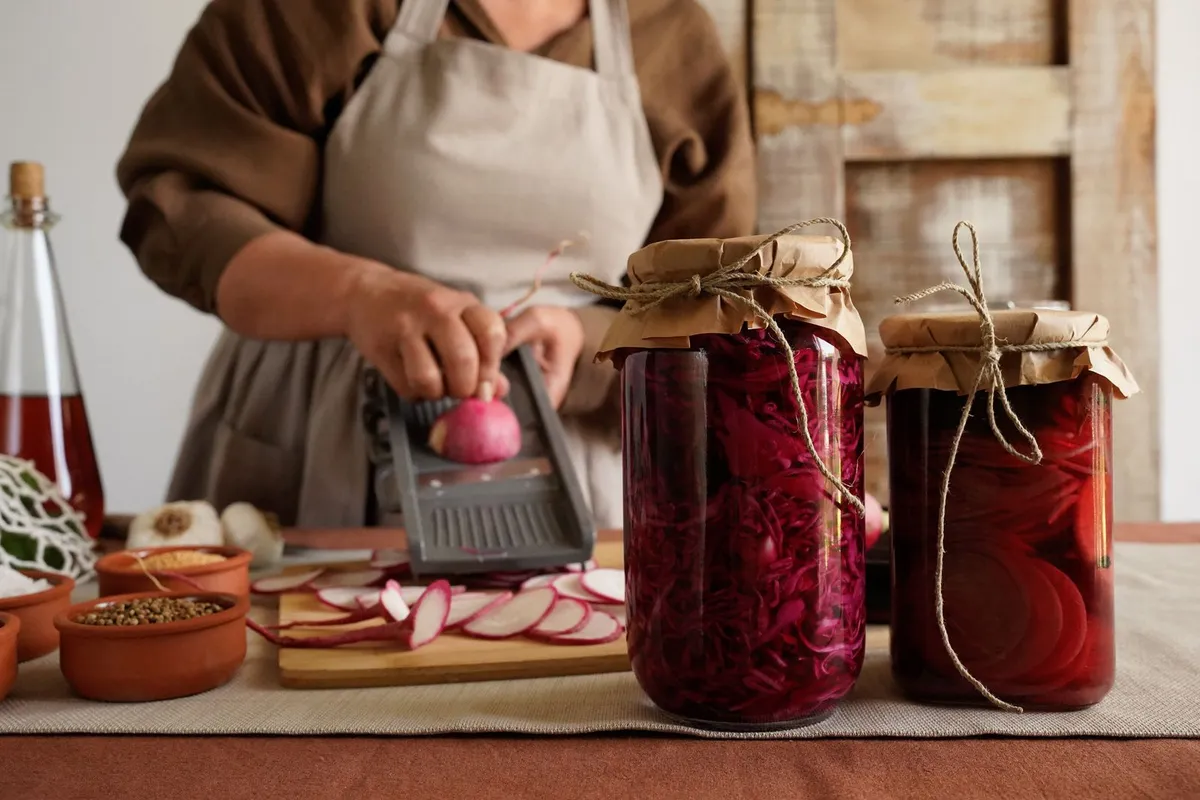
- Pick one fermented food a day. Plain yogurt or kefir at breakfast, a spoonful of sauerkraut or kimchi with lunch, or a little miso in a soup.
- Go slowly with fiber. MedlinePlus notes that a large amount in a short time can cause gas, bloating and cramps, which often settle once your gut bacteria get used to it, and it suggests adding fiber gradually over a few weeks.
- Drink water with it. MedlinePlus says water helps fiber pass through your digestive system, and it suggests about 8 glasses of water or noncaloric fluid a day.
- Keep the peel on. MedlinePlus points out that taking the peels off fruits and vegetables reduces the fiber you get.

What Does a Calm First Week Look Like?
You do not need to change everything at once. Here is one way to ease in:
- Day 1 to 2: add one fiber-rich food you already like to lunch, such as beans or berries.
- Day 3: swap breakfast for plain yogurt or kefir with fruit and a few nuts.
- Day 4 to 5: add a spoonful of sauerkraut or kimchi to a meal, and keep a water bottle within reach.
- Weekend: take a walk after a meal and cook one bowl built on beans, lentils or whole grains.
Give it two or three weeks before you judge. If one change feels easy, keep it and add the next.
Where Can a Daily Gut-Support Capsule Fit In?
Fiber, fermented foods, water and steady sleep come first, and no capsule takes their place. Some readers like to add one daily capsule on top as a simple extra step. If that sounds like you, this is the gut-support capsule I review on Primaurea.
SlimTide: prebiotic fibers and a three-strain probiotic blend
★ Diane's Pick for the gut side of weight
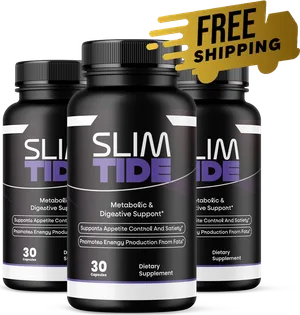
SlimTide is a once-daily vegetarian capsule, 30 per bottle, whose label describes it as metabolic and digestive support. It pairs two prebiotic fibers, chicory root inulin and potato resistant starch, with a probiotic blend of three strains that includes Akkermansia muciniphila. It is lactose-free, made without artificial stimulants and made in the USA in an FDA-registered facility. In other words, it brings the same two ideas from this article, fiber for your gut bacteria and live cultures, together in one capsule.
You take 1 capsule a day with a glass of water (8 oz), in the morning and ideally before a meal, and keep the bottle in the fridge once it is open. That is why it is my Pick here: one easy habit that matches the gut-first approach, one-time purchase with no subscription, and a 60-day money-back guarantee that gives you a fair stretch of weeks to see how it feels in your routine. I go through the details in my SlimTide review.
On the official order page on October 17, 2026, two bottles were $158 ($79 each, plus $9.99 shipping), three bottles were $207 ($69 each, free US shipping) and six bottles were $294 ($49 each, free US shipping). As the official SlimTide page advises, show the label to your doctor first if you are pregnant, nursing, under 18 or have a medical condition.
Prices are in US dollars, as listed on the official site on October 17, 2026, and may change.
Gut Health After 50: My Verdict
Your gut is one of the friendliest places to start after 50: the research says what you eat shapes it, and the foods that feed it, fiber and fermented foods, are ones you can add to tonight's dinner. Add them gently, drink your water, protect your sleep and give it a few weeks.
If you would like one daily capsule beside those habits, SlimTide is my Pick for the gut side of weight and a simple extra step. My slow metabolism after 40 guide brings weight, energy and everyday habits together in one place.
Frequently Asked Questions
Does gut health change after menopause?
A 2022 review in the International Journal of Women's Health found that menopause is associated with lower gut microbiome diversity and a shift toward a pattern closer to the male gut microbiome. The authors say larger studies are still needed, and that the gut microbiome can be changed, so everyday food choices matter.
Can gut bacteria affect your weight?
Researchers describe mounting evidence that the colonic microbiota play a significant role in energy balance, partly through the short-chain fatty acids they make when they ferment fiber and resistant starch. The picture is still being pieced together, so fiber and fermented foods are best seen as a supportive habit.
What foods are good for your gut?
The Dietary Guidelines for Americans, 2025 to 2030, say vegetables, fruits, fermented foods such as sauerkraut, kimchi, kefir and miso, and high-fiber foods support a diverse microbiome, while highly processed foods can disrupt its balance.
How much fiber do I need each day?
MedlinePlus gives a range of 21 to 38 grams a day for adults, depending on age and sex, and notes that Americans eat about 16 grams on average. Add fiber gradually over a few weeks and drink water with it to avoid gas and bloating.
Do fermented foods or fiber help the gut more?
In a 17-week Stanford trial of 36 healthy adults, the high-fermented-food diet steadily increased gut microbiome diversity and lowered inflammatory markers, while the high-fiber diet kept diversity stable and increased the enzymes bacteria use to break down plant carbohydrates. Using both is an easy way to cover each side.
What is in SlimTide and how do I take it?
SlimTide is a once-daily vegetarian capsule with two prebiotic fibers, chicory root inulin and potato resistant starch, and a three-strain probiotic blend that includes Akkermansia muciniphila. Take 1 capsule a day with a glass of water, in the morning and ideally before a meal, and keep the bottle in the fridge once it is open. Each bottle holds 30 capsules.
How much does SlimTide cost?
On October 17, 2026, SlimTide was $158 for two bottles (plus $9.99 shipping), $207 for three and $294 for six on the official order page, with free US shipping on three and six bottles, no subscription and a 60-day money-back guarantee.
Statements about dietary supplements on this page have not been evaluated by the Food and Drug Administration. This product is not intended to diagnose, treat, cure or prevent any disease.
Sources
- Dietary Guidelines for Americans, 2025-2030 (summary)
- International Journal of Women's Health (2022): spotlight on the gut microbiome in menopause (PubMed)
- International Journal of Obesity (2015): short-chain fatty acids in appetite regulation and energy homeostasis (PubMed)
- Cell (2021): gut-microbiota-targeted diets modulate human immune status (PubMed)
- MedlinePlus: fiber